Installation guide
 Owner’s manual
 Error Codes


Where to find part number on Whirlpool dishwasher?
On a Whirlpool WDF730PAYM7 dishwasher, the most important number to use when ordering parts is the model number from the rating label inside the tub; it’s located near the door on the right-hand or left-hand side. Use that model number to match the correct replacement part.
Where to look (fast checklist)
- Open the dishwasher door fully.
- Look along the right-hand or left-hand interior side near the door opening.
- Find the rating label (it lists model and serial).
- Write down the full model number exactly: WDF730PAYM7.
- Use the model number first, then confirm the specific part name and part ID.
Model number vs. part number (what to use and when)
| Number type | Where you’ll see it | What it’s used for |
|---|---|---|
| Model number (WDF730PAYM7) | Rating label inside the tub | Ensures every part you pick fits your exact dishwasher |
| Part number (example: W10441445) | On the part itself or packaging | Identifies the manufacturer’s part |
| Part ID (example: WPW10327249) | Parts listing/diagram | Helps select the exact part page and variant |
If you’re trying to identify a specific part
Many dishwasher parts do not have an easy-to-read part number once installed. If you’re replacing a common failure item, match it by function and location, then confirm fit by model:
- Heating problems: consider the element assembly W10518394
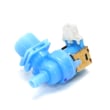
- Not filling: consider the dishwasher water inlet valve WPW10327249
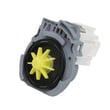
- Not draining: consider the dishwasher drain pump WPW10348269
- Poor cleaning: check the spray arm and filters for clogs
Why it matters
Whirlpool often uses similar-looking parts across multiple dishwashers. Using the WDF730PAYM7 model number from the tub label prevents ordering a look-alike part that mounts differently, has a different connector, or won’t seal correctly.
For label location and model/serial details, use the WDF730PAYM7 owner’s manual.
Last updated: February 2026
What is the lifespan of a Whirlpool dishwasher?
A Whirlpool dishwasher like model WDF730PAYM7 typically lasts 10 to 12 years with normal household use. Consistent cleaning, correct detergent use, and fixing small problems early (draining, heating, or latch issues) are the biggest factors that extend service life.
What affects lifespan the most
- Maintenance: cleaning filters and spray arms prevents strain on the pump and motor.
- Water quality: hard water can cause mineral buildup that reduces cleaning and heating efficiency.
- Loading habits: overloading blocks spray and increases wear on racks and wash components.
- Detergent choice: premeasured tablets are commonly recommended for daily use.
- Freezing protection: seasonal homes need water and power shut off; winterizing prevents line damage.
Typical lifespan expectations (what to plan for)
| Dishwasher situation | Typical lifespan | What usually ends it |
|---|---|---|
| Average daily use, basic upkeep | 10 to 12 years | Pump wear, leaks, control issues |
| Heavy use (multiple loads/day) | 7 to 10 years | Motor/pump strain, heater problems |
| Light use, strong upkeep | 12 to 15 years | Age-related seals, electronics |
Maintenance checklist that helps WDF730PAYM7 last longer
- Clean the filter regularly; replace if damaged (see dishwasher filter W10872845).
- Inspect and rinse spray arm holes; replace if cracked or warped (see dishwasher spray arm WPW10491331).
- Confirm the door closes tightly and latches; a weak latch can stop cycles (see dishwasher door latch WPW10653840).
- Use the right cycle for soil level; some cycles pause briefly during the main wash (normal operation).
- For vacations or extended non-use: shut off water and power, and protect supply lines from freezing (details in the WDF730PAYM7 owner’s manual).
Why it matters
Knowing the 10 to 12 year lifespan helps you decide whether to repair or replace. If your WDF730PAYM7 is near that range and you are seeing repeated draining, heating, or starting problems, targeted part replacement can restore performance, but multiple major repairs can add up.
Last updated: February 2026
What is the most common problem with Whirlpool dishwashers?
The most common problem we see with Whirlpool dishwashers (including model WDF730PAYM7) is a drain-related issue: water left in the tub because the filter, drain hose, or drain pump is restricted. Close behind are poor cleaning from blocked spray arms and “won’t run” symptoms caused by a door that is not fully latched.
Most common symptoms and what they usually mean
- Not draining: clogged filter area, kinked/blocked drain hose, or a failing drain pump
- Not cleaning well: spray arm holes blocked, heavy loading that blocks water flow, or low incoming water temperature
- Stops mid-cycle: normal pauses can happen during the main wash; repeated stopping often points to a latch or power issue
- Won’t fill: water supply shutoff closed or the overfill protection float stuck
- Clean light flashing: suds/foam from wrong detergent type or too much detergent; float or water supply issues can also contribute
Quick checks we recommend first (WDF730PAYM7)
Use these steps before replacing parts; they match common troubleshooting guidance in the WDF730PAYM7 owner’s manual.
- Confirm the door closes tightly and clicks into the latch
- Verify the household breaker is on and the dishwasher has power
- Make sure the water shutoff valve is fully open
- Check the tub for excess suds (use only automatic dishwasher detergent)
- Inspect the drain path for food debris and check for a kinked drain hose
- Spin and rinse the spray arms; clear any blocked jets
Common parts involved (when a repair is needed)
If the basic checks do not fix it, these parts are frequently involved in the most common Whirlpool dishwasher complaints:
| Problem you notice | Most likely area | Example part for WDF730PAYM7 |
|---|---|---|
| Standing water after cycle | Drain system | Dishwasher drain pump WPW10348269 |
| Weak wash, gritty residue | Filtration or spray | Dishwasher spray arm WPW10491331 |
| No heat, poor drying | Heating circuit | Element assembly W10518394 |
Why it matters
Drain and wash-flow problems tend to cascade: a restricted filter or drain path can leave dirty water in the sump, reduce spray pressure, and trigger longer run times while the dishwasher tries to recover. Fixing the restriction early helps prevent repeat clogs and poor cleaning.
Last updated: February 2026