Installation guide
 Owner’s manual
 Error Codes


How many cubic feet is my Whirlpool refrigerator?
Your Whirlpool ED5VHGXML13 refrigerator’s cubic-foot capacity is typically listed on the model and serial number label inside the fresh food (refrigerator) compartment. If you need a close estimate, we can calculate capacity by measuring the usable interior space and converting cubic inches to cubic feet using the steps below; see the owner's manual for label location details.
Fast ways to find the capacity
- Check the model and serial number label inside the refrigerator compartment (capacity is often shown with other specs).
- Look for a rating plate near the side wall or ceiling of the fresh food section.
- If the label is hard to read, use the measurement method below to estimate.
How to estimate cubic feet (quick math)
- Empty enough space to measure the usable interior (not the outside cabinet).
- Measure width x height x depth in inches.
- Multiply to get cubic inches.
- Divide by 1,728 to convert to cubic feet.
- Example formula:
(W x H x D) ÷ 1,728 = cu. ft. - For the most consistent estimate, measure to the inside liner, not to removable bins.
Typical capacity range for side-by-side refrigerators
Most Whirlpool side-by-side refrigerators fall in a fairly predictable range. Use this as a reality check after you calculate.
| Refrigerator style | Typical total capacity range |
|---|---|
| Side-by-side (like ED5VHGXML13) | About 20 to 26 cu. ft. |
| Top freezer | About 14 to 22 cu. ft. |
| French door | About 20 to 30 cu. ft. |
Why it matters
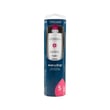
Knowing cubic feet helps us match the right storage expectations, compare replacement models, and plan airflow and clearances. It also helps when choosing accessories like a refrigerator water filter such as refrigerator filter EDR5RXD1 for your water and ice system.
Last updated: February 2026
What is the most common problem with a whirlpool refrigerator?
The most common Whirlpool refrigerator problem is a cooling complaint: the refrigerator or freezer is warm, temperatures swing, or the unit seems to run too much. On the Whirlpool ED5VHGXML13, these symptoms are often tied to airflow and temperature control issues, plus normal operating conditions that can look like a failure (long run times, intermittent noises). See the owner's manual for model-specific troubleshooting checks.
Most common symptoms we see (and what they usually point to)
- Warm fridge or freezer: restricted airflow, dirty condenser coils, or a temperature control issue
- Runs constantly: warm room, frequent door openings, large food load, or airflow restriction
- Noisy operation: normal sounds from the compressor, fans, defrost cycle, or water valve
- Ice maker or dispenser issues: water supply restriction, filter restriction, or a water valve problem
- Frost buildup: defrost system issue (heater, defrost bi-metal, control)
Quick checks to do first (ED5VHGXML13)
- Confirm controls are at mid-settings; changing to coldest does not cool faster.
- Give the refrigerator several hours to cool after initial start-up or major adjustments.
- Make sure vents inside both compartments are not blocked by food packages.
- Clean condenser coils (dirty coils are a top cause of poor cooling and long run times).
- If water or ice is slow, replace the water filter and purge air from the dispenser.
Normal sounds vs. problem sounds
Your ED5VHGXML13 can make intermittent noises that are considered normal.
| Sound | Often normal when you hear it | What it can mean if it is excessive |
|---|---|---|
| Buzzing | Ice maker fill | Water valve issue or low water pressure |
| Sizzling/gurgling | Defrost cycle | Defrost drain or heater-related issue |
| Rattling | Refrigerant flow or items on top | Loose panel, line, or something vibrating |
| Popping | Initial cool-down | Ongoing temperature swings or cabinet movement |
Parts that commonly solve the “most common” complaints
If your symptoms match, these are frequent fixes for this model:
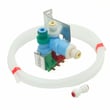
- Water and ice flow problems: refrigerator filter EDR5RXD1, refrigerator inlet valve W10408179
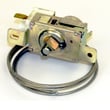
- Temperature regulation complaints: refrigerator thermostat WP2198202
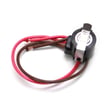
- Frost buildup and warm freezer: refrigerator heater WP2323198, refrigerator defrost bi-metal WPW10225581
Why it matters
Cooling and airflow problems can spoil food quickly and also make the compressor run longer than necessary. Addressing simple causes first (settings, airflow, coils, filter) prevents unnecessary part replacement and helps restore stable temperatures.
Last updated: February 2026
What is the disadvantage of a side-by-side fridge?
A side-by-side refrigerator like the Whirlpool ED5VHGXML13 trades wide, uninterrupted shelf space for easy access to both fresh food and frozen food. The biggest disadvantage is narrower compartments, which makes it harder to store wide items (pizza boxes, party platters) and bulky freezer items.
Common disadvantages (what you notice day to day)
- Narrow shelves and bins: Large, flat items often will not fit without rearranging.
- Less usable freezer width: Big bags, large roasts, and wide boxes can be awkward.
- More door clearance needed: You typically need more swing room to fully open doors and pull out bins.
- Dispenser-related upkeep (if equipped): Ice and water dispensers add parts that can need maintenance.
- Organization can feel “taller than wider”: You may stack more, which can hide items behind others.
Space and installation considerations
Your installation clearances matter with side-by-side doors. For this Whirlpool design, we follow the guidance in the installation guide for ventilation and door swing planning.
| What to plan for | Typical side-by-side impact | Why it matters |
|---|---|---|
| Door swing space | Needs room on both sides | Prevents door dings and improves access |
| Shelf width | Narrower than French door | Limits platters and pizza boxes |
| Freezer storage | Narrow, tall column | Bulky items can be harder to fit |
If you have an ice and water dispenser
Dispenser systems are convenient, but they can add troubleshooting points. These parts are commonly involved when water flow is weak or ice production is inconsistent:
- Refrigerator filter EDR5RXD1
- Refrigerator inlet valve W10408179
- Refrigerator water filter housing WP2186443
Why it matters
Choosing a refrigerator style is really about matching your storage habits. If you buy wide items often, the side-by-side layout can feel restrictive. If you want eye-level access to both compartments, it can be a strong fit.
Last updated: February 2026