 Installation guide
 Owner’s manual


How do I fix error code f3 e3 on Whirlpool dryer?
On the Whirlpool WGD9150WW1 gas dryer, error code F3 E3 points to a moisture-sensing issue; we fix it by resetting power, then running a timed dry cycle to confirm the code stays cleared. If it returns, focus on the moisture sensor circuit and airflow basics.
Quick reset steps (recommended first)
- Turn the dryer off.
- Shut off power at the breaker for 1 minute.
- Restore power.
- Start a Timed Dry cycle.
- Watch the display for about 1 minute to confirm the code does not reappear.
What to check if F3 E3 comes back
Moisture sensor and wiring
- Clean the two moisture sensor bars inside the drum (wax or sheet residue can cause false readings).
- Inspect the harness connections to the sensor for looseness or corrosion.
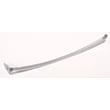
- If the sensor is damaged or tests open, replace the dryer moisture sensor WP3387223.
Airflow and heat behavior
- Clean the lint screen and confirm the exhaust vent is not restricted.
- If the dryer tumbles but heat is inconsistent, the control can misread drying status; check the burner ignition system and sensors.
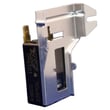
- If you suspect a temperature feedback problem, test the thermistor and replace the dryer thermistor WP8577274 if it is out of range.
Basic troubleshooting checklist
- Clean lint screen before each load.
- Avoid dryer sheets temporarily while diagnosing.
- Run Timed Dry on high heat with a small load.
- Verify strong airflow at the outside vent hood.
- Check for pinched or crushed venting behind the dryer.
Common causes and best next step
| Symptom | Most likely cause | Best next step |
|---|---|---|
| Code appears quickly after start | Sensor circuit issue | Clean sensor bars; check connections; test/replace sensor |
| Clothes overdry or underdry | Sensor contamination or airflow restriction | Clean sensor bars; clear venting |
| Heat seems erratic | Temperature sensing or burner issue | Test thermistor; inspect ignition components |
Why it matters
F3 E3 can stop Automatic cycles from sensing dryness correctly, which leads to long dry times, overheating, or repeated shutdowns. Fixing the sensor signal and airflow restores normal cycle control.
For model-specific diagnostics, wiring references, and access steps, use the WGD9150WW1 owner’s manual and the WGD9150WW1 installation guide.
Last updated: February 2026
Where is my dryer part number?
On your Whirlpool WGD9150WW1 dryer, the part number is usually printed on the part itself (often on a sticker, stamp, or molded into plastic). If you are trying to identify the correct replacement, we recommend starting with the dryer’s model/serial rating plate and then matching the part by location and description in the WGD9150WW1 owner's manual.
Where to look first (fastest checks)
- Lint screen area: pull the lint screen out and check the frame and housing for labels.
- Door opening: check the door well and inner front panel area for the model/serial rating plate.
- Inside the cabinet: many parts (motor, blower, sensors) have a label visible after removing the front or top.
- Back panel and exhaust area: ducting and some electrical components may be labeled.
- On the old part: look for a long number, sometimes starting with WP, W, or a 6 to 8 digit number.
Model number vs. part number (what each one does)
| What you have | What it identifies | What to do with it |
|---|---|---|
| Model number (WGD9150WW1) | Your exact dryer version | Use it to find the correct parts list |
| Part number / part ID | The specific replacement part | Use it to order the exact match |
| Serial number | Production run details | Helps confirm compatibility when versions vary |
If you cannot find a readable number on the part
- Use the model number WGD9150WW1 to locate the correct diagram and parts list.
- Match the part by where it installs and what it does (for example, drum support, belt drive, heating system).
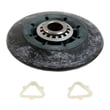
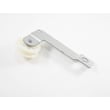
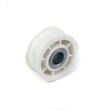
- Compare your old part to common replacements for this model, such as the dryer drum support roller WPW10314173 or the dryer idler pulley 279640, if those are the components you are servicing.
Why it matters
Dryers often have multiple versions that look similar. Using the model number first prevents ordering a part that fits a different Whirlpool gas dryer configuration, even if the old part number is missing or worn off.
Last updated: February 2026
What is the average lifespan of WGD9150WW1?
A Whirlpool 27-inch gas dryer like model WGD9150WW1 typically lasts 13 years with normal household use and proper venting. Keeping airflow strong and replacing worn drum-support parts on time are the biggest factors in reaching that lifespan.
What affects lifespan the most
- Vent restriction (long runs, crushed flex duct, lint buildup) that overheats the dryer
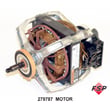
- Overloading that strains the drive motor and drum support system
- Worn drum support parts that cause thumping, squealing, or belt wear
- Heat system wear (igniter, radiant sensor, valve coils) that causes no-heat or intermittent heat
- Moisture sensor issues that lead to over-drying and extra run time
Quick maintenance checklist (high impact)
- Clean the lint screen every load; replace a damaged screen such as screen W10120998.
- Check outside vent hood for strong airflow and a fully opening damper.
- Vacuum lint from the lint duct and blower housing periodically.
- Level the dryer to reduce vibration and roller wear.
- Use timed dry occasionally to confirm heat and airflow feel normal.
Common “wear-out” parts and what they usually mean
| Symptom | Most common wear area | Example part on this model |
|---|---|---|
| Thumping or rumbling | Drum rollers or shafts | Dryer drum support roller WPW10314173 |
| Squealing | Idler pulley | Dryer idler pulley 279640 |
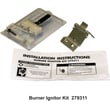
| Runs but no heat | Ignition system | Igniter 279311 |
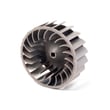
| Long dry times | Airflow or blower | Dryer blower wheel WP697772 |
Why it matters
A gas dryer that runs hot because of poor venting can shorten the life of temperature-sensing parts (like a thermistor) and safety cutoffs, and it also increases dry times and energy use. Following the maintenance and troubleshooting steps in the WGD9150WW1 owner's manual helps you prevent the most common early failures.
Last updated: March 2026








