Owner’s manual



What is the specs of WA52J8700AP?
For the Samsung WA52J8700AP washer, the key published specs include a 27 in (68.6 cm) width, 46.0 in (116.8 cm) height (lid closed), 59.8 in (152.0 cm) height with lid open, 20 to 116 psi water pressure, and 1100 RPM max spin. For the full specification sheet and cycle chart, use the WA52J8700AP owner's manual.
Core specifications (from the manual)
- Width: 27.0 in (68.6 cm)
- Height (lid closed): 46.0 in (116.8 cm)
- Height with lid open: 59.8 in (152.0 cm)
- Depth: 29.3 in (74.4 cm)
- Water pressure: 20 to 116 psi (137 to 800 kPa)
- Max spin speed: 1100 rpm
Quick spec table
| Spec | WA52J8700AP value |
|---|---|
| Width | 27.0 in |
| Height (lid closed) | 46.0 in |
| Height (lid open) | 59.8 in |
| Depth | 29.3 in |
| Water pressure range | 20 to 116 psi |
| Max spin | 1100 rpm |
Cycles and features you will see on this model
Your WA52J8700AP cycle list includes options such as Normal, Heavy Duty, Super Speed, Bedding, Delicates, Rinse+Spin, and model-specific cycles like Sanitize and Deep Steam (listed for WA52J8700A* in the manual).
- Use Bedding for bulky loads like blankets and sheets
- Use Quick Wash for lightly soiled items needed fast
- Use Sanitize/Deep Steam for heavily soiled, colorfast loads (when available on your control panel)
Why it matters
Matching washer dimensions and water pressure to your laundry space and plumbing helps prevent installation issues (like poor fill performance) and ensures the washer can reach its designed spin speed for better water extraction.
Last updated: February 2026
What is the capacity of the WA52J8700AP?
The Samsung WA52J8700AP washer has a 5.2 cu. ft. capacity, which is considered a large-capacity top-load washer. That size is designed to handle bulky items like bedding while still allowing proper water flow and agitation (see the WA52J8700AP owner's manual).
What 5.2 cu. ft. means for everyday loads
A 5.2 cu. ft. tub typically supports larger loads, but performance still depends on loading technique and cycle choice.
- Wash items loosely, one at a time, without packing the tub
- Avoid overfilling; clothes need room to circulate
- Use the cycle that matches the fabric and soil level (Normal, Heavy Duty, Bedding, etc.)
- Use HE detergent and measure carefully to reduce residue
- For very bulky loads, choose a cycle intended for bedding or waterproof items
Quick capacity guide (practical examples)
| Load type | What usually fits well | Best practice |
|---|---|---|
| Everyday mixed load | A full basket of clothes | Load loosely; do not compress |
| Bulky items | Bedding and larger items | Wash 1 bulky item set at a time |
| Heavy absorbent items | Towels, sweatshirts | Balance the load to reduce vibration |
Why it matters
Capacity affects cleaning, rinsing, and spin performance. When the tub is overloaded, the washer can struggle to circulate water and detergent, which can lead to poor cleaning, extra suds, and out-of-balance spinning.
Related specs you may see in the manual
The manual also lists key installation and size specs (helpful for laundry room planning):
- Width: 27.0 in (68.6 cm)
- Depth: 29.3 in (74.4 cm)
- Height with lid open: 59.8 in (152.0 cm)
- Water pressure range: 20 to 116 psi
Last updated: February 2026
What does E2 mean on Samsung washers?
On Samsung washers, E2 is not a standard information code for the WA52J8700AP. When customers see “E2,” it is usually a misread of a similar-looking code (such as 2C, 4C, 5C, 1C, or DC) or a brief display glitch; confirm the exact characters, then troubleshoot the matching code using the WA52J8700AP user manual.
Confirm the code first
- Power the washer off, wait 10 seconds, then power it back on.
- Start a cycle and watch the display closely; write the code exactly.
- Check for look-alike characters: E vs 2, C vs E, 1 vs I.
- If your washer supports Smart Care, use it to read the code more accurately.
- If the code only flashes once and the cycle continues, treat it as a transient event and monitor.
Common “looks like E2” codes and what they mean
| Code you may actually have | What it points to | What to do first |
|---|---|---|
| 4C | Water not supplying correctly | Verify both water taps are fully open; check inlet screens |
| 5C | Draining problem | Check for a kinked/clogged drain hose; verify standpipe setup |
| DC | Unbalanced load | Redistribute items; run Spin again |
| 1C | Water level sensing issue | Restart cycle; check for siphoning from drain hose setup |
Quick checks that solve most code mix-ups
- Make sure the drain hose is installed at the correct height and not shoved too far into the standpipe (prevents siphoning)
- Confirm household water pressure is strong and both hot and cold supplies are on
- Reduce oversudsing; use HE detergent and the correct amount
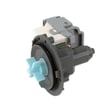
- If you have drain symptoms (won’t drain, slow drain), inspect the pump area; a failing pump can require replacement such as the washer drain pump DC97-16778A
Why it matters
Samsung washers stop or limit operation when the control senses a fill, drain, or balance condition that can affect cleaning performance or cause leaks. Reading the exact code ensures you fix the right problem the first time.
Last updated: February 2026