Owner’s manual
 Error Codes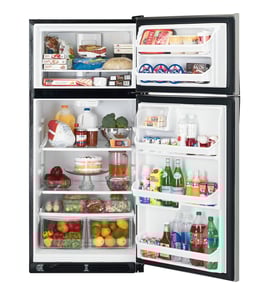




Can I buy extra fridge shelves?
Yes. For Kenmore top-mount refrigerator model 10674264402, you can buy replacement shelves and, in some cases, add an extra shelf if your cabinet has open shelf slots. The key is matching the shelf style (glass or wire) and the mounting design used in your refrigerator; see the owner's manual for shelf types and removal steps.
Use these checks before ordering so the shelf fits and sits level:
- Confirm whether your refrigerator uses glass shelves in a metal frame or wire shelves
- Compare the width and depth of your current shelf to the replacement listing
- Check the mounting style (slide-out shelf in a frame vs. lift-out style)
- Verify you have unused shelf support slots if you want to add an extra shelf
- If your current shelf is cracked or chipped, replace it promptly; tempered glass can shatter into small pieces if impacted
Many versions of this Kenmore design use slide-out shelves in a metal frame:
- Pull the shelf forward to the stop
- Tilt the front up slightly
- Lift and slide the shelf out of the frame
- Reinstall by guiding it into the frame slots and pushing past the stop
If you are expanding storage, you may also want to replace damaged bins and drawers:
| Storage area | Common upgrade/replace reason | Example part on this model page |
|---|---|---|
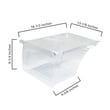
| Fresh food section | Cracked drawer or missing bin | Refrigerator crisper pan W10854037 |
| Main compartment | Broken or missing shelf | Browse the refrigerator shelves section in the parts list |
A correctly fitting shelf keeps food stable, prevents rattles, and helps airflow stay consistent so temperatures recover faster after the door opens.
Last updated: February 2026
What are the disadvantages of a top mount fridge?
Top-mount refrigerators like Kenmore 10674264402 put the freezer at eye level and the fresh-food section below; the main disadvantages are more bending to reach everyday refrigerated items, fewer convenience features on many models, and less flexible organization compared with many bottom-freezer designs.
- Fresh-food access is lower: you typically bend more for produce drawers, deli items, and drinks.
- Organization can feel tighter: many top-mount layouts have fewer adjustable bins and specialty zones.
- Fewer built-in convenience options on many models: through-the-door ice and water features are less common on top-mount designs.
- Airflow can be easier to block: overpacked shelves can block vents and cause temperature swings.
- Door swing clearance matters: you may need extra side clearance near walls so doors open fully.
Use these setup habits to reduce the most common top-mount frustrations:
- Keep the most-used items on the upper refrigerator shelves to reduce bending.
- Leave space around vents; don’t pack food tightly against vent openings.
- Set controls to the mid-settings first, then adjust in small steps after temperatures stabilize.
- Allow installation clearance: about 1/2 inch on each side and top, and about 2 inches by a fixed wall for door swing (some models need more).
- If your model has an ice maker, plan extra space behind the unit for the water line.
| Feature | Top-mount refrigerator | Bottom-freezer refrigerator |
|---|---|---|
| Freezer access | Easier (higher) | More bending |
| Fresh-food access | More bending | Easier (higher) |
| Typical organization | Simpler | Often more flexible |
| Common dispenser options | Less common | More common |
A top-mount design can be efficient and straightforward, but how you load it and maintain airflow directly affects temperature consistency, odor transfer between compartments, and overall convenience.
For model-specific use and setup details (controls, airflow guidance, and clearance), follow the owner's manual.
Last updated: February 2026
What are the most common problems with Kenmore refrigerators?
The most common issues we see on Kenmore refrigerators like model 10674264402 are cooling problems, ice maker or water dispenser failures, water leaks, door seal (gasket) air leaks, unusual noise, and frost buildup. Many of these trace back to airflow, water supply, or a worn part listed in the 10674264402 owner's manual.
- Not cooling or warm temperatures: confirm vents are not blocked; allow proper clearance around the cabinet (typically 1/2 inch at the sides and top, and extra space behind if you have a water line).
- Ice maker not working: verify the freezer is cold enough, the shutoff arm is down, and the water supply is on.
- Water dispenser slow or not dispensing: replace the water filter and purge air from the line.
- Water leaking or puddles: check the water line connections and look for a cracked tube.
- Door not sealing or moisture/frost: inspect the gasket for gaps, dirt, or warping.
- Noisy operation: check for items vibrating, a fan hitting ice, or the refrigerator not being level.
If troubleshooting points to a failed component, these parts are commonly involved on this model:
| Symptom | Likely area | Example part on this model page |
|---|---|---|
| Slow water flow, bad taste/odor | Filtration | Refrigerator filter EDR6D1 |
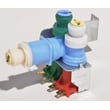
| No ice, no water fill | Water supply to ice maker | Refrigerator water inlet valve WP2188808 |
| Leaks at the back or under unit | Water tubing | Refrigerator water tube 8201597 |
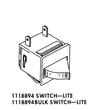
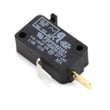
| Interior light stays off or on | Door sensing | Refrigerator light switch W11384469 |
| Door not sealing, frost, sweating | Door gasket | Gasket panel (white) 2159061 |
These problems affect food safety, energy use, and component life. For example, a poor door seal can cause longer run times and frost buildup, and a restricted filter can reduce water flow to the dispenser and ice maker.
- For filter-related dispenser or ice issues, follow how to replace the water filter in a Kenmore refrigerator.
- If your model displays a diagnostic code, use Kenmore 106 model refrigerator error codes to narrow the failure to a specific system.
Last updated: February 2026
What is the top part of a refrigerator called?
On a Kenmore 10674264402 top-mount refrigerator, the “top part” is typically the freezer compartment (the freezer section above the fresh food section). In service and parts terms, you may also hear it called the freezer door or top hinge area, depending on what you’re pointing to.
Different parts of the refrigerator sit at the top, so the name depends on the exact spot:
- Freezer compartment: the upper cabinet area where frozen food is stored
- Freezer door: the upper door that seals the freezer opening
- Top hinge: the hinge hardware at the top that supports the upper door
- Top vent (airflow vent): the vent where cold air can enter the refrigerator section from above
- Top grille or trim (if equipped): cosmetic pieces at the top front edge on some models
For diagrams and the exact naming used for your model, we recommend checking the owner's manual.
Use this to match the name to what you’re describing:
| If you mean this… | Common name | What it does |
|---|---|---|
| Upper storage area inside | Freezer compartment (freezer section) | Holds frozen food and produces most of the cold air |
| Upper exterior door | Freezer door | Seals the freezer to keep temperatures stable |
| Hardware at the very top | Top hinge | Supports the door and allows it to swing |
| Opening that blows cold air into fridge section | Air vent (top vent) | Helps airflow between freezer and refrigerator sections |
Using the right term helps you get the correct instructions and parts. For example, airflow issues are often caused by blocked vents, while sealing issues point to a door gasket or door alignment, and door sagging points to hinges.
If the “top part” is giving you trouble, these checks solve many common complaints:
- Keep packages from blocking freezer and refrigerator vents; blocked vents cause temperature and moisture problems.
- Make sure the freezer door closes fully and seals evenly all the way around.
- If doors look uneven, align them so the bottom of the freezer door lines up with the top of the refrigerator door.
- Leave clearance around the refrigerator for ventilation (including space at the top).
- If you’re working on doors, support them; do not rely on door magnets to hold doors in place.
Last updated: February 2026