Owner’s manual
 Error Codes



What is the average lifespan of a KitchenAid refrigerator?
Most KitchenAid refrigerators, including the KitchenAid KBLA20EMSS00 bottom-mount refrigerator, typically last 14 to 17 years. With consistent maintenance (cleaning coils, keeping door seals tight, and fixing cooling or water issues early), it’s common to reach 15 to 20 years of service.
Typical lifespan ranges (what to expect)
Refrigerator life varies most by usage, kitchen conditions, and how quickly small problems are corrected.
- Average: 14 to 17 years
- Common overall range: 10 to 20 years
- Often shorter when: condenser coils stay dirty, doors do not seal, or airflow is blocked
- Often longer when: temperatures are stable and routine cleaning is done
| Lifespan range | What it usually means | What to do |
|---|---|---|
| 10 to 12 years | Wear items start showing up | Plan for small repairs and deeper cleaning |
| 14 to 17 years | Typical service life | Keep up maintenance and address symptoms early |
| 18 to 20 years | Well-maintained unit | Stay proactive on airflow, seals, and defrost performance |
Maintenance that extends life the most
These are the highest-impact steps for a KitchenAid bottom-mount refrigerator like model KBLA20EMSS00.
- Vacuum and brush condenser coils regularly (more often with pets)
- Keep door gaskets clean and sealing evenly; fix gaps and warping promptly
- Maintain airflow: do not pack food tightly against vents; keep the freezer fan area clear
- Keep temperatures steady (avoid frequent warm-ups from long door openings)
- Replace failed small parts quickly (switches, fan components, water valve issues) before they stress other systems
Why it matters
A refrigerator that runs warmer than normal or runs constantly can shorten compressor life and increase energy use. Catching early symptoms (warm fridge, frost buildup, noisy fan, water leaks) helps protect major components and keeps food safer.
Model-specific help
For KBLA20EMSS00, we recommend using the maintenance and troubleshooting steps in the KBLA20EMSS00 owner’s manual. If you’re tracking down a cooling issue, common wear items include the evaporator fan system such as the evaporator motor WPW10128551.
Last updated: January 2026
How to remove bottom grill from KitchenAid refrigerator?
On the KitchenAid KBLA20EMSS00 bottom-mount refrigerator, the bottom grill (toe kick) typically snaps onto the lower frame. We remove it by gripping the grill at the ends and pulling straight forward to release the retaining clips; then we lift it away from the base.
Quick steps
- Unplug the refrigerator or turn off power at the breaker (recommended).
- Open both refrigerator doors for better access.
- Grip the toe kick at the left and right ends.
- Pull straight forward with steady pressure to pop the clips loose.
- If it resists, work one side loose first, then the other.
- To reinstall, align the grill with the lower frame and press until it snaps in.
If the grill will not come off
A stuck toe kick is usually caused by tight clips, slight cabinet pressure, or debris.
- Check for screws (some toe kicks use screws; remove them if present).
- Look for a water line or wiring routed near the base; avoid pulling on tubing.
- Use a plastic putty knife to gently pry near a clip point (avoid metal tools that can scratch).
- Pull outward, not upward; upward force can bind the tabs.
What you can safely do while it is off
Removing the bottom grill is a good time to do basic maintenance that helps cooling performance.
| Task | What to do | How often |
|---|---|---|
| Clean condenser area | Vacuum dust and pet hair near the base | Every 6 to 12 months |
| Check airflow | Make sure the grill openings are not blocked | Ongoing |
| Inspect for leaks | Look for water drips or mineral buildup | As needed |
Why it matters
The toe kick protects components at the bottom of the refrigerator and helps direct airflow. If it is not fully snapped in, you can get extra noise, reduced airflow, or vibration at the base.
For model-specific diagrams and clip locations, use the KBLA20EMSS00 manual.
Last updated: January 2026
What is the bottom compartment of a fridge called?
On a KitchenAid KBLA20EMSS00 bottom-mount refrigerator, the “bottom compartment” usually refers to one of two areas: the freezer compartment (the lower food-storage section) or the machine compartment (the lower rear area that houses cooling-system parts like the compressor and condenser). For your exact layout, use the KBLA20EMSS00 owner's manual.
Common names for the “bottom” area
- Freezer compartment: the bottom drawer where frozen food is stored (common on bottom-mount models).
- Machine compartment: the service area near the floor at the back where major cooling components sit.
- Toe grille / base grille area: the front lower grille area that can provide airflow and access for cleaning.
- Drain pan area: the pan underneath that collects defrost water so it can evaporate.
Quick guide: which “bottom” do you mean?
| If you mean... | What it’s commonly called | What you’ll find there |
|---|---|---|
| Bottom drawer you pull out | Freezer compartment | Baskets, rails, freezer door gasket |
| Bottom back of the fridge | Machine compartment | Compressor, condenser coil, condenser fan (if equipped) |
| Bottom front grille area | Toe grille / base grille | Airflow path, access for cleaning |
Why it matters
Using the right term helps you get the right instructions and parts. For example, cooling issues often point to the machine compartment (airflow, condenser coil), while frost buildup or drawer sealing issues point to the freezer compartment.
Parts that are commonly associated with the lower “machine compartment”
If you are troubleshooting cooling or airflow, these model-compatible parts are often involved:
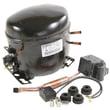
- Refrigerator compressor W10309989 (drives refrigerant through the sealed system)
- Refrigerator condenser WP67006131 (releases heat from the refrigerant)
- Evaporator motor WPW10128551 (moves cold air across the evaporator and into compartments)
Last updated: January 2026
What is the most common problem with a KitchenAid refrigerator?
For KitchenAid refrigerators like model KBLA20EMSS00, the most common issues we see are cooling problems (warm fridge or freezer, frost buildup) and ice maker or water system problems (slow ice, no ice, leaks). These symptoms are often tied to airflow, defrost drainage, or water supply components; see the KBLA20EMSS00 owner's manual for model-specific checks.
Most common symptoms customers report
- Refrigerator section not cold enough, freezer seems OK (or the reverse)
- Ice maker stops making ice or makes small/hollow cubes
- Water leaking inside the fresh food section or pooling under the unit
- Loud humming, rattling, or a fan noise that comes and goes
- Frost or ice buildup on the freezer back wall
What usually causes those problems
Many “common” KitchenAid refrigerator complaints trace back to a few systems:
| Symptom | Most likely system | What to check first |
|---|---|---|
| Warm temps | Airflow/evaporator fan | Listen for fan operation, check for heavy frost |
| Frost buildup | Defrost system/drain | Look for blocked drain and ice on rear panel |
| No ice/slow ice | Water supply/ice maker | Confirm water supply, filter/bypass, ice maker status |
| Leaks | Drain or water tubing/valve | Inspect tubing connections and drain area |
Parts that commonly relate to these symptoms (KBLA20EMSS00)
If troubleshooting points to a failed component, these are frequently involved:
- Evaporator motor WPW10128551 (airflow through the evaporator)
- Refrigerator fan blade WP2169142 (fan noise, poor airflow)
- Refrigerator inlet valve WP67005154 (no water to ice maker, slow fill)
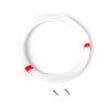
- Refrigerator water tube W10823511 (leaks, weak water delivery)
- Refrigerator heater WP67002493 (defrost-related frost buildup)
Why it matters
Cooling and ice maker problems usually get worse over time. A warm refrigerator can lead to food spoilage, and a small leak can turn into floor damage or recurring ice buildup. Catching the root cause early often prevents multiple parts from being replaced unnecessarily.
A quick, practical first-pass checklist
- Set temps to typical targets: 37°F fresh food and 0°F freezer
- Make sure vents are not blocked by food packages
- Clean condenser area and confirm the unit has airflow around it
- If there is heavy frost, focus on defrost and evaporator fan checks
- For ice maker issues, confirm water supply is on and tubing is not kinked
Last updated: January 2026