Installation guide
 Owner’s manual
 Error Codes


How to read GE model numbers?
GE model numbers are a structured code that identifies the appliance type, series, and key configuration details. For your GE electric dryer model DCVH680EJ1MS, the most important step is to copy the model number exactly from the ID label so you can match the correct parts list and documentation.
On GE dryer models in this series, the model and serial label is located on the front of the dryer behind the door. Use the location diagram and wording in the owner's manual.
- Open the dryer door and look along the front frame area
- Write down the Model # and Serial # exactly as shown
- Take a quick photo of the label for future parts ordering
- Use the full model number (including any suffix letters) when searching parts
GE model numbers use letters and numbers to indicate the product family and design. The exact meaning can vary by product line and year, but these tips work well for dryers like DCVH680EJ1MS:
- Prefix letters typically indicate the product line/series
- Middle characters often identify the feature set and design platform
- Suffix letters/numbers commonly indicate a revision, color, or configuration
| What it is | What it’s used for | Example on your label |
|---|---|---|
| Model number | Identifies the exact design for parts and manuals | DCVH680EJ1MS |
| Serial number | Identifies the individual unit and build info | Listed as “Serial #” |
Using the exact GE model number prevents ordering the wrong dryer parts (for example, a control board, heating component, or drum support part that looks similar but does not fit). It also ensures you follow the correct wiring, venting, and installation requirements in the installation guide.
Last updated: February 2026
What is the most common problem with a GE dryer?
The most common problem we see with GE dryers like model DCVH680EJ1MS is poor drying or no heat caused by restricted airflow, usually from lint buildup or obstructed venting. This often shows up as long dry times, overheating, or the dryer stopping mid-cycle. See the owner's manual for cleaning and venting guidance.
- Clothes take too long to dry: vent duct kinked, crushed, or clogged; outside damper stuck
- No heat or weak heat: airflow restriction first, then check heating circuit parts
- Dryer stops during the cycle: overheating from blocked airflow; safety thermostat may open
- Burning smell or very hot cabinet: lint accumulation in ducting or inside the dryer
- Lint on clothes: lint filter not cleaned before each load
- Clean the lint filter before every load.
- Inspect the exhaust ducting and clean it at least yearly.
- Confirm the vent run is as short and straight as possible; remove kinks and crushed sections.
- Check the outside wall damper; it should open freely when the dryer runs.
If airflow is good and the dryer still overheats or will not heat, these model-relevant parts are common suspects:
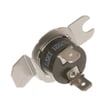
- Dryer high-limit thermostat WE4M137 (opens if the dryer overheats)
- Inlet control WE4M398 (thermistor control used for temperature sensing)
- Mica unit WE11M10001 (heating element assembly)
- Dryer blower wheel WE16X20393 (moves air through the drum and vent)
| Symptom | Most likely cause | Best first action |
|---|---|---|
| Long dry times | Obstructed ducting | Clean/inspect venting and damper |
| No heat | Heating circuit issue or airflow restriction | Verify airflow, then test heater/thermostats |
| Stops mid-cycle | Overheating | Clear lint and vent restrictions |
| Lint on clothes | Lint filter full | Clean lint filter every load |
Restricted airflow is the root cause behind many GE dryer complaints because it increases drying time, wastes energy, and can overheat the heater housing and thermostats. Keeping the lint filter and exhaust duct clean is the most effective prevention step.
Last updated: February 2026
What's the life expectancy of a GE dryer?
Most GE dryers, including the GE DCVH680EJ1MS electric dryer, typically last about 10 years with normal household use. Consistent airflow (clean lint filter and venting) and avoiding overloads are the biggest factors that help you reach or exceed that lifespan.
- Vent and duct condition: A partially clogged exhaust can lengthen drying time and increase wear.
- Lint filter habits: Clean the lint filter before each load.
- Load size: Overloading wastes energy and increases strain on the drum support and drive system.
- Installation quality: Proper grounding and correct electrical supply help prevent avoidable failures.
- Annual deep cleaning: The dryer interior and exhaust duct connection should be cleaned at least once a year by a qualified technician.
Use these steps to reduce heat stress and mechanical wear:
- Clean the lint screen before every cycle.
- Inspect and clean the exhaust ducting at least yearly.
- Keep the area around the dryer clean and dust-free.
- Avoid drying prohibited items (foam, rubber-coated items, plastics with trim).
- Follow cycle and fabric care labels to prevent overheating and over-drying.
These parts often determine whether an older dryer is worth repairing.
| What you notice | Common cause | Example part for this model |
|---|---|---|
| Squealing, scraping, thumping | Drum support wear | Dryer drum glide bearing (green) WE03X37317, dryer drum front glide pad WE03X37318 |
| Long dry times, weak airflow | Venting restriction or blower issue | Dryer blower wheel WE16X20393 |
| No heat or overheating symptoms | Heating circuit or temperature sensing issue | Dryer high-limit thermostat WE4M137, inlet control WE4M398 |
A dryer that takes longer to dry runs hotter and longer, which accelerates wear on the heating system, drum supports, and airflow components. Keeping airflow strong is the simplest way to extend the service life of your GE DCVH680EJ1MS.
For model-specific care, cleaning intervals, and operating guidance, follow the owner's manual and the installation guide.
Last updated: February 2026