Owner’s manual
 Error Codes



Do all refrigerators have wheels on the bottom?
Not all refrigerators have wheels or rollers, but many do. For Jenn-Air model JFC2290VEP8, the design uses front rollers for moving and front leveling screws to stabilize the cabinet once it’s in place (details are covered in the JFC2290VEP8 user manual).
What you’ll typically find on refrigerators
Most bottom-mount and French-door refrigerators use a mix of rollers and leveling legs so you can move the unit, then lock it in position.
- Front rollers help you pull the refrigerator out for cleaning or service.
- Front leveling screws (or legs) are adjusted down to keep the refrigerator from rolling.
- Rear wheels or rollers may be present on some models, but not all.
- A base grille often needs to be removed to access leveling screws.
- If the refrigerator feels “tippy” or doors do not close well, leveling is usually the fix.
How JFC2290VEP8 is intended to be stabilized
This model is designed to be moved with the front rollers touching the floor, then stabilized by adjusting the front leveling screws.
| Feature | Purpose | What you may notice |
|---|---|---|
| Front rollers | Easier moving in and out | Refrigerator rolls when pushed |
| Front leveling screws | Prevent rolling, improve door closing | Unit feels steady, doors self-close better |
| Base grille access | Lets you reach adjustments | Grille must be removed for leveling |
Quick checks if your refrigerator rolls or slides
If your JFC2290VEP8 moves too easily, we recommend these checks before assuming anything is broken:
- Verify the front leveling screws are turned down enough to take weight off the rollers.
- Confirm the refrigerator is slightly tilted back so doors close more easily.
- Make sure the floor is not unusually slick or uneven.
- Check that the base grille is installed correctly after adjustments.
- If a door does not close fully, re-check leveling and door alignment steps in the manual.
Why it matters
Proper leveling helps prevent the refrigerator from creeping forward, improves door sealing, and can reduce temperature swings caused by doors not closing completely.
Last updated: January 2026
Are all refrigerators 70 inches high?
No. Refrigerator height is not standardized at 70 inches; even within bottom-mount designs like the Jenn-Air JFC2290VEP8, overall height varies by model and configuration. For the exact dimensions for your unit, we recommend confirming them in the JFC2290VEP8 user manual.
Typical refrigerator height ranges (what we see most often)
Heights vary by style, hinge design, and whether the unit is counter-depth.
- Top-freezer models often run shorter than many French door units
- Bottom-mount and French door models commonly land in the mid-to-upper 60-inch range
- Some built-in or specialty units can be taller than standard freestanding models
- Leveling legs and flooring can change the installed height slightly
- Door swing clearance can matter as much as cabinet height
How to measure height correctly
Measure with the refrigerator in its installed position and doors closed.
- Measure from the floor to the highest point of the cabinet (not the hinge cover unless it is the highest point).
- If the unit is tilted back for door closing, re-check the height at the front.
- If you are fitting under cabinets, also measure the available opening height.
Quick reference: what “standard” usually means
| Measurement | Common range (freestanding) | Notes |
|---|---|---|
| Height | 61 to 72 in. | Many models fall here, but not all |
| Width | 24 to 40 in. | Depends heavily on capacity and style |
| Depth | 28 to 37 in. | Often deeper with doors/handles |
Why it matters
A difference of even 1 inch can prevent a proper fit under upper cabinets, affect ventilation clearance, or cause doors to bind. Verifying the JFC2290VEP8 dimensions before moving or replacing a refrigerator helps avoid installation surprises.
Last updated: January 2026
What are common problems with Jenn Air refrigerators?
Common issues we see on the Jenn-Air JFC2290VEP8 bottom-mount refrigerator include warm temperatures (not cooling), ice maker or water dispenser problems, unusual noises, doors not sealing, and moisture buildup. Many symptoms trace back to airflow restrictions, water supply issues, or a failing sensor or control.
Most common symptoms (and what they usually point to)
- Not cooling or too warm: blocked air vents, dirty condenser area, door not sealing, or a temperature-sensing/control issue
- Ice maker not making ice: shutoff arm off, low water pressure, kinked water line, clogged filter, or inlet valve problem
- Water dispenser slow or not working: low water pressure, air in the line after filter change, clogged filter, or inlet valve issue
- Noisy operation: normal defrost and water-valve sounds, or a fan/blade issue if the noise is constant or scraping
- Moisture/frost or leaks: door gasket not sealing, frequent door openings, or a drain issue
Quick checks we recommend first (model-friendly)
Use these steps before replacing parts; they match the troubleshooting approach in the JFC2290VEP8 refrigerator manual.
- Confirm the doors close fully and nothing is holding them open
- Check that interior air vents are not blocked by food packages
- Allow 24 hours after installation or major temperature changes for temps to stabilize
- If ice or water is weak, verify the household water supply valve is fully open and the line is not kinked
- If the filter was just replaced, flush the system (this model calls for a large flush after filter changes)
Parts that commonly relate to these problems
If basic checks do not resolve the symptom, these model-compatible parts are often involved:
| Symptom | Part that may be involved | Example part from this model |
|---|---|---|
| Warm temps, erratic temps | Temperature sensor (thermistor) | Refrigerator thermistor W10316760 |
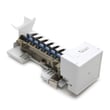
| Ice maker or dispenser issues (low flow) | Water inlet valve | Refrigerator water inlet valve assembly WPW10420083 |
| Loud fan noise or vibration | Fan blade | Refrigerator evaporator fan blade WP2169142 |
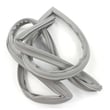
| Doors not sealing, moisture | Door gasket | Whirlpool refrigerator door gasket (gray) W10443320 |
Why it matters
Catching a cooling, airflow, or water-supply problem early helps protect food, reduces compressor run time, and can prevent secondary issues like frost buildup, leaks, or premature wear on the sealed system.
Last updated: January 2026
What is the life expectancy of a Jenn Air refrigerator?
Jenn-Air does not publish a specific “life expectancy” for model JFC2290VEP8, so we can’t confirm an exact number of years for your refrigerator. In practice, service life varies widely based on installation conditions, maintenance, and how hard the sealed system and fans have to work.
What we can confirm for JFC2290VEP8
The model’s documentation focuses on safe use, care, troubleshooting, and warranty coverage rather than a guaranteed lifespan. For model-specific care steps and operating guidance, use the JFC2290VEP8 refrigerator user manual.
Factors that most affect real-world lifespan
These are the biggest drivers we see for bottom-mount refrigerators like JFC2290VEP8:
- Ventilation and room temperature: tight clearances and hot rooms increase compressor run time
- Door sealing and alignment: air leaks cause longer run cycles and moisture issues
- Condenser area conditions: greasy, dusty environments or heavy pet traffic reduce efficiency
- Water system upkeep (if equipped): restricted flow can affect ice and water performance
- Usage patterns: frequent door openings and warm food loads increase workload
Maintenance guidance that matches this model’s manual
The manual notes there’s no need for routine condenser cleaning in normal home environments; however, if the home is greasy/dusty or has significant pet traffic, clean the condenser every 2 to 3 months.
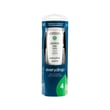
It also states the disposable water filter should be replaced at least every 6 months, or sooner if flow decreases or the filter status indicates replacement.
| Item | What to do | When |
|---|---|---|
| Condenser area | Clean only when conditions warrant | Every 2 to 3 months in dusty/greasy or high-pet homes |
| Water filter | Replace and reset filter status | At least every 6 months, or earlier if flow drops |
When a part may be the real issue (not “age”)
If you’re seeing symptoms that shorten service life, inspect common wear points:
- Doors not sealing, moisture, warm temps: whirlpool refrigerator door gasket (gray) W10443320
- Erratic temperatures: refrigerator thermistor W10316760
- No ice or slow fill: refrigerator water inlet valve assembly WPW10420083
Why it matters
A refrigerator that runs longer than necessary uses more electricity and puts extra wear on the compressor, fans, and controls. Keeping airflow clear, doors sealing, and the water system maintained helps maximize service life.
Last updated: January 2026