 Installation guide
 Owner’s manual


Is it worth repairing a Kenmore washing machine?
Yes, it’s usually worth repairing a Kenmore washer like model 11026442502 when the fix restores reliable washing and spinning for significantly less than replacing the machine. Many common failures on this style of washer are straightforward part replacements, and a solid repair can extend service life for years.
Quick way to decide (repair vs. replace)
Use these checkpoints before spending money:
- Repair it when the washer still fills, agitates, and drains but has a specific symptom (no spin, won’t drain, noisy spin, won’t start).
- Repair it when the cabinet and tub are in good shape and there’s no ongoing leak or severe corrosion.
- Repair it when the issue points to a common wear part (lid switch, drain pump, motor coupling, clutch).
- Replace it when multiple major systems are failing at once (drain, spin, and fill problems together).
- Replace it when the washer has repeated breakdowns that keep returning after repairs.
For model-specific operating and care guidance, use the 11026442502 owner’s manual.
Common repairs that are often “worth it” on this model
These parts are frequently involved in the most common complaints:
| Symptom | Likely area | Example part on this model |
|---|---|---|
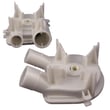
| Won’t drain or drains slowly | Drain system | Washer drain pump WP3363394 |
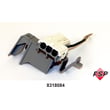
| Won’t start or won’t spin with lid closed | Safety interlock | Washer lid switch assembly WP8318084 |
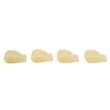
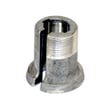
| Agitates poorly or makes ratcheting noise | Agitator drive | Agitator dog 80040 |
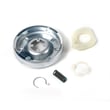
| Spins weakly or slips under load | Drive system | Clutch 285785 |
Why it matters
A targeted repair prevents secondary damage. For example, running a washer that won’t drain can strain the pump and drive system; running overloaded or unbalanced loads can increase wear and lead to premature failures.
Tips to make the repair last
We recommend these habits to reduce repeat problems:
- Keep loads balanced and avoid overloading so items move freely.
- Follow fabric care labels and use bleach correctly (never pour undiluted bleach on clothes).
- Check pockets and remove strings or straps that can tangle.
- If the washer is vibrating, re-level it and confirm the floor is solid.
Last updated: February 2026
What is the average lifespan of a Kenmore washer?
A Kenmore washer typically lasts 10 to 15 years. For Kenmore model 11026442502, lifespan depends most on load size, leveling, and routine care; avoiding overloading and keeping loads balanced helps reduce wear on the drive system and tub components (see the 11026442502 owner's manual).
Typical lifespan and what affects it most
Most washers reach their full service life when they are used normally and maintained consistently.
- Usage frequency: multiple loads per day shortens life compared to a few loads per week
- Overloading: strains the motor, clutch, and gearcase
- Out-of-balance loads: increases vibration and suspension wear
- Water quality and detergent habits: excess suds and residue add stress to moving parts
- Installation and leveling: an unlevel washer wears faster and is noisier
Quick care checklist to help your washer reach 10 to 15 years
These are the same practical habits we see make the biggest difference over time.
- Keep loads balanced so items move freely during washing
- Do not overload the basket
- Tie strings and secure loose straps to prevent tangling and fabric strain
- Follow garment care labels and use the right cycle and water temperature
- Wipe up spills and add bleach correctly (never directly onto clothing)
Common wear items as the washer ages
If performance drops, these parts are frequent fixes on many Kenmore top-load washers.
| Symptom | Commonly involved system | Example part for this model |
|---|---|---|
| Agitator moves poorly or “slips” | Agitation drive | Agitator dog 80040 |
| Won’t drain or drains slowly | Drain system | Washer drain pump WP3363394 |
| Won’t spin when lid is closed | Lid safety circuit | Washer lid switch assembly WP8318084 |
Why it matters
A washer near the end of its lifespan often shows up as longer cycle times, poor spin-out, leaks, or loud operation. Catching overload and balance issues early helps protect high-wear components like the clutch, motor coupling, and suspension.
Last updated: February 2026
How to identify a Kenmore washer model?
Your Kenmore washer model number is printed on the model and serial number label; on Kenmore model 11026442502, that label is located under the washer lid. Use the full model number exactly as shown to match the correct parts list and diagrams in the owner's manual.
Where to look on model 11026442502
For this Kenmore top-load washer, lift the lid and check:
- The underside of the lid near the hinge area
- The rim of the washer opening (top edge of the cabinet)
- The cabinet frame just under the lid opening
- The label for both the model number and serial number
What the model number looks like
Kenmore washer model numbers commonly start with 110 and include additional digits.
| What you see on the label | What it means | Why it matters |
|---|---|---|
| Model number (example: 11026442502) | Identifies the exact washer design | Ensures parts like a lid switch or drain pump fit |
| Serial number | Identifies the production unit | Helps when comparing revisions or service info |
Tips to avoid ordering the wrong part
When you write down the model number, we recommend:
- Copying every digit in order (no spaces)
- Using the complete model number, not just the first 3 digits
- Matching the model number before choosing common repair parts like the washer lid switch assembly WP8318084 or washer drain pump WP3363394
- Keeping a photo of the label for future reference
Why it matters
Kenmore washers can look similar across multiple model series, but parts such as the timer, inlet valve, lid switch, and drive components vary by model. Using the exact model number keeps your repair accurate and prevents returns.
Last updated: February 2026





