Owner’s manual
 Error Codes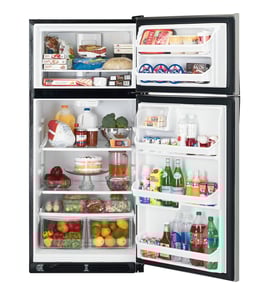




Are top mount or bottom mount fridges better?
Top-mount and bottom-mount refrigerators can both be “better”; it depends on how you use your kitchen. For Kenmore top-mount model 10662862100, a top-mount design typically costs less to buy and run, while a bottom-mount design usually puts fresh food at eye level for easier daily access (less bending).
Quick comparison
| Feature | Top-mount refrigerator | Bottom-mount refrigerator |
|---|---|---|
| Fresh food access | Lower; more bending | Higher; easier on back and knees |
| Freezer access | Eye level | Lower drawer; easier to organize |
| Typical energy use | Often lower | Often slightly higher |
| Price | Often lower | Often higher |
| Best for | Budget, simple layout | Frequent fresh-food use |
How to choose for your home
- Choose top-mount if you want a simpler layout, lower upfront cost, and you use the freezer often.
- Choose bottom-mount if you cook frequently and want the refrigerator section at a more comfortable height.
- If you have limited space, check door swing clearance and ventilation needs before deciding; the 10662862100 owner's manual covers spacing and airflow basics.
What matters for performance (either style)
Even the “best” layout will struggle if airflow and sealing are poor. These basics apply to both styles:
- Keep interior vents clear so cold air can circulate between sections.
- Set temperatures and give the unit time to stabilize after changes.
- Keep doors closing squarely; misalignment can cause warm spots and frost.
- Maintain door gaskets so you do not leak cold air.
- Clean spills and odors regularly to prevent smell transfer between compartments.
Why it matters
The right mount style affects daily comfort (bending vs. eye-level access), food organization, and long-term operating cost. Picking the layout that matches your habits usually matters more than small differences in features.
Last updated: January 2026
How to tell cubic feet of Kenmore refrigerator by model number?
For Kenmore model 10662862100, the most reliable way to confirm cubic feet is to look up the capacity in the specifications section of the 10662862100 owner's manual. If you need a quick estimate, you can calculate interior volume by measuring the usable compartment space and converting cubic inches to cubic feet.
Fast ways to find the cubic feet
- Check the specifications or product data section in the 10662862100 owner's manual.
- Look for the model and serial number label inside the fresh food compartment (commonly on an inside wall); that label confirms the exact model so you match the right specs.
- If you have the refrigerator’s original sales paperwork, capacity is often listed there.
- Use measurement to estimate capacity when you cannot access specs.
How to estimate cubic feet by measuring
- Empty the section you are measuring (refrigerator and freezer are usually listed separately in some literature).
- Measure the usable interior:
- Width (inches)
- Depth (inches)
- Height (inches)
- Multiply:
W x D x H = cubic inches. - Convert:
cubic inches ÷ 1728 = cubic feet.
Quick conversion table
| What you have | What to do | Result |
|---|---|---|
| Interior measurements in inches | Multiply W x D x H | Cubic inches |
| Cubic inches | Divide by 1728 | Cubic feet |
Why the model number alone is not enough
Kenmore model numbers (including the 106 prefix family) identify the design series and configuration, but they do not consistently encode the exact interior capacity in a way that is accurate across all revisions. Using the manual specs or a measurement-based estimate prevents ordering the wrong shelves, bins, or storage accessories.
Last updated: January 2026
What is the upper part of a fridge called?
On the Kenmore 10662862100 top-mount refrigerator, the upper compartment is the freezer compartment. It’s the section designed to keep foods frozen and it also supplies cold air that circulates down into the fresh food (refrigerator) section.
What the freezer does (and why it matters)
The freezer is more than “the cold box on top”; it’s a key part of the cooling system. The manual explains that cool air enters through the bottom of the freezer, moves up, then recirculates, with some air flowing into the refrigerator section through a top vent.
Why it matters: If freezer airflow is blocked, temperatures can rise, moisture problems can increase, and odors can transfer between compartments.
Common names you’ll see for the upper section
Depending on the manual, parts diagram, or repair guide, the upper part may be described as:
- Freezer compartment
- Freezer section
- Freezer cabinet
- Upper compartment (on top-mount models)
- Freezer interior (when referring to shelves, bins, or the ice maker area)
Airflow tips for better cooling
To keep your Kenmore 10662862100 cooling correctly, we recommend:
- Keep packages away from freezer vents so air can circulate
- Avoid overpacking the freezer; leave space around the back wall
- Wrap foods tightly to reduce odor transfer between sections
- After loading groceries, give temperatures time to stabilize
- If doors look uneven, follow the alignment steps in the 10662862100 owner's manual
Quick reference: freezer vs. refrigerator section
| Section | Typical temperature | Main purpose |
|---|---|---|
| Freezer compartment (upper) | 0°F | Long-term frozen storage, ice production |
| Refrigerator section (lower) | 37°F | Fresh food storage |
When parts are involved
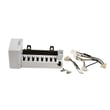
If the “upper part” question is coming from an ice issue, the freezer is where the ice maker mounts. For this model, a common replacement is the ice maker assembly - refrigerator ice maker by whirlpool 4317943.
Last updated: January 2026
What are the disadvantages of a top mount fridge?
Top-mount refrigerators like the Kenmore 10662862100 are reliable and efficient, but the main disadvantages are convenience and organization: you bend more to reach fresh foods, the freezer is easiest to access, and you typically get fewer built-in storage features than many bottom-freezer designs.
Common disadvantages (what most owners notice)
- Fresh-food access is lower: you often bend to reach everyday items in the refrigerator section.
- Less flexible organization: many top-mount designs have fewer specialty bins and door storage options.
- More temperature sensitivity if vents are blocked: airflow between freezer and refrigerator is critical; blocking vents can cause warm spots or moisture issues.
- Ice maker and water features are often simpler: many top-mount models do not include an exterior dispenser.
- Door swing and clearance needs: you may need extra side clearance near a wall so doors open fully.
What matters specifically for the Kenmore 10662862100
This model depends on clear airflow between compartments. Cool air enters the freezer, circulates, and then feeds the refrigerator through vents; when packages block vents, temperatures and moisture control can suffer. For vent locations, control settings, and loading guidance, use the Kenmore 10662862100 owner's manual.
Quick comparison: top-mount vs bottom-freezer
| Feature | Top-mount refrigerator | Bottom-freezer refrigerator |
|---|---|---|
| Fresh-food access | Lower, more bending | Higher, easier daily access |
| Freezer access | Eye-level | Lower drawer/basket |
| Organization | Often simpler | Often more specialized |
| Dispenser options | Less common | More common |
Tips to reduce the downsides
- Keep air vents clear in both sections to prevent uneven cooling.
- Set controls to the mid-setting after installation, then adjust gradually.
- Leave proper installation clearance (including extra space behind if you have an ice maker water line).
- If doors look uneven, use the hinge adjustment steps in the manual.
- If you are adding or repairing ice production, match parts to your model; the ice maker assembly 4317943 is a common replacement for this platform.
Why it matters
Most “top-mount disadvantages” show up as daily-use frustrations (bending, storage layout) or performance complaints caused by airflow restrictions. Keeping vents open and doors aligned helps the Kenmore 10662862100 cool evenly and avoid moisture and odor transfer between compartments.
Last updated: January 2026