Installation guide
 Owner’s manual


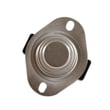
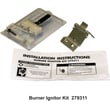
How do I know what model my Kenmore dryer is?
Your Kenmore dryer’s model number is printed on the model and serial number label; on model 11072832101, that label is located at the top inside the dryer door well. Once you have the full model number, we can match the correct parts, diagrams, and specifications.
Where to look on the dryer
Check these common label locations (start with the door opening):
- Top inside the dryer door well (most common on Kenmore 110-series dryers)
- Inside the door opening on the cabinet frame
- Rear panel of the dryer cabinet
- Behind the lower access panel (on some designs)
If the label is worn, use a flashlight and look for faint stamped or printed characters.
What the model number looks like (and why it matters)
Kenmore model numbers are usually a long string of numbers (sometimes with a prefix). For this dryer, the full model is 11072832101. Recording the complete model number (not just “110”) prevents ordering the wrong belt, thermostat, or gas burner parts.
| What you find | Example | What we use it for |
|---|---|---|
| Model number | 11072832101 | Correct parts list and diagrams |
| Serial number | (varies) | Production details for service |
| Purchase date | (your record) | Warranty and maintenance history |
Quick tips before you order parts
- Write the model number exactly as shown on the label
- Take a clear photo of the label for reference
- Use the model number to confirm fit before buying wear items like a belt or idler pulley
- Keep the information with your appliance records
Why it matters
Kenmore dryers share many similar-looking components across different series. Using the exact model number ensures we match the right gas dryer parts and avoid repeat repairs caused by incorrect fit.
For more details on recording and using the model and serial number, see the 11072832101 owner’s manual.
Last updated: February 2026
What are the most common issues with 11072832101?
The most common problems we see on Kenmore gas dryer model 11072832101 are no heat, long dry times, won't start, and noisy tumbling. These issues usually trace to airflow restrictions, ignition components, or drum support wear.
Most common symptoms and likely causes
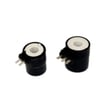
- No heat: failed gas valve coils, igniter, or radiant sensor
- Long dry times: clogged venting, lint buildup in lint chute or blower wheel, weak airflow
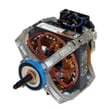
- Won't start: door switch, push-to-start switch, timer, or motor problem
- Noisy (squeal, thump, rumble): belt, idler pulley, drum bearing or support wear
- Stops mid-cycle: overheating from restricted venting, thermostat cycling issues
Quick checks we recommend first
Follow the safety and access steps in the 11072832101 installation guide before servicing.
- Confirm strong airflow at the outside vent hood
- Clean the lint screen and inspect the lint chute opening
- Verify the door closes firmly and the latch engages
- Try a timed dry cycle to compare behavior vs. auto cycles
- Listen for motor hum (start issue) vs. normal motor run (heat issue)
Parts that commonly fix these problems (for this model)
| Problem | Common fix | Model-matched part |
|---|---|---|
| Dryer runs but no heat | Replace gas valve coils | Dryer valve coil kit 279834 |
| Won't start when door is shut | Replace door switch | Dryer door switch WP3406107 |
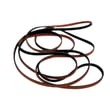
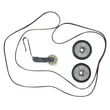
| Drum not turning or squealing | Replace belt | Dryer drum belt 341241 |
Why it matters
On a gas dryer, restricted airflow can overheat the burner area and cause repeated shutdowns, while worn drum parts can overload the motor and lead to bigger repairs.
Last updated: March 2026
What is the average lifespan of 11072832101?
A Kenmore gas dryer like model 11072832101 typically lasts 13 years with normal household use and basic maintenance (good airflow, clean lint path, and correct venting). Keeping wear parts in good shape helps it reach that full service life.
What affects lifespan most
- Vent restriction (long runs, crushed flex vent, clogged hood)
- Overheating from lint buildup in the blower housing or lint chute
- Worn drum support parts (belt, idler pulley, rollers) causing strain on the motor
- Ignition wear on gas models (igniter, coils, radiant sensor)
- Heavy loads and frequent high-heat cycles
Maintenance that adds years
Use the schedule in your 11072832101 owner's manual as your baseline.
- Clean the lint screen every load
- Check airflow at the outside vent hood regularly
- Vacuum lint from the lint chute and blower area periodically
- Avoid overloading; keep loads loose so air can move
- Address squealing or thumping early (often a belt or idler issue)
Common wear items and what they do
| Part type | What you notice | Example part on this model |
|---|---|---|
| Drum drive | Drum stops turning, burning rubber smell | Dryer drum belt 341241 |
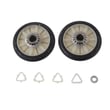
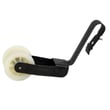
| Belt tension | Squeal, drum slips, intermittent tumbling | Idler pulley |
| Heat control | Overheats or cycles heat oddly | Operating thermostat |
Why it matters
A dryer that runs hot or struggles to tumble dries slower, uses more gas, and wears out the motor and drum support system faster.
Last updated: March 2026