 Installation guide
 Owner’s manual


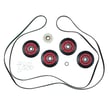
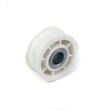
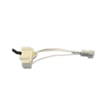
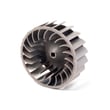
What are common problems with Kenmore dryers?
Common problems we see on Kenmore dryer model 11067841600 include a dryer that will not start, no heat, long dry times, unusual noises, and a drum that will not turn. Many of these issues trace back to power supply, door switch, airflow restrictions, or normal wear parts like the idler pulley and drum rollers; use the 11067841600 owner's manual for model-specific checks.
- Won’t start: door not fully closed, Start not pressed firmly, cycle not selected, or a power supply issue (electric dryers need 240V).
- Runs but no heat: one of the two house fuses/breakers is tripped, or a heating circuit component has failed.
- Takes too long to dry: restricted venting, crushed duct, lint buildup, or a weak airflow path.
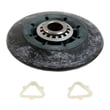
- Squealing, thumping, grinding: worn drum support rollers, idler pulley, or blower wheel.
- Drum not turning: belt or drive system issue (often paired with idler pulley or motor problems).
- Confirm the door closes firmly; a failed switch can prevent starting (see dryer door switch WP3406107).
- Verify the dryer has the correct electrical supply; many electric dryers use two fuses/breakers.
- Make sure a cycle is selected and the Start button is pressed firmly.
- Inspect the vent path for crushing or blockage; poor airflow can cause long dry times and overheating.
- Listen for where noise comes from (front, rear, or blower housing area).
| Symptom | Likely part to inspect | Example part for 11067841600 |
|---|---|---|
| Won’t start | Door switch | WP3406107 |
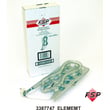
| No heat | Heating element | WP3387747 |
| Squeals, drum drag | Drum support roller | WPW10314173 |
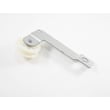
| Squeals, belt slack | Idler pulley | 279640 |
| Rattling, vibration | Blower wheel | WP697772 |
Dryer problems often overlap; for example, a vent restriction can cause long dry times, overheating, and repeated thermal cutoffs. Starting with power, door closure, and airflow helps prevent unnecessary part replacement.
Last updated: February 2026
Is it worth replacing a dryer heating element?
Yes, it’s usually worth replacing the heating element on a Kenmore 11067841600 when the dryer runs but has no heat, especially if the rest of the dryer is in good shape. A failed element is a common, fixable cause of no-heat, and replacement typically costs far less than a new dryer.
Replacing the heating element is a good value when:
- The drum tumbles normally but clothes stay cold or damp
- The dryer has proper power but still won’t heat (electric dryers need full 240V)
- The cabinet and drum are solid (no severe rust, major damage)
- You can restore strong airflow (a crushed or blocked vent can cause overheating and repeat failures)
For this model, the correct heating element is the dryer heating element WP3387747.
We recommend these steps first because they can mimic a “bad element”:
- Confirm both household fuses or breakers are on; the drum can run with only one side of the 240V supply
- Clean the lint screen and verify the vent is not crushed or blocked (restricted airflow is a major heat problem)
- Make sure the cycle and settings are appropriate for heat (some cycles are low-heat or air-only)
- If the dryer is new to you or newly repaired, a brief odor on first heat-up can be normal
For model-specific troubleshooting and safety notes, follow the 11067841600 owner’s manual.
| Option | Typical outcome | Best for |
|---|---|---|
| Replace heating element | Restores heat if element is open/burned | Dryer tumbles, no heat |
| Address airflow/venting | Prevents overheating, improves dry times | Long dry times, hot cabinet |
| Replace multiple wear parts | Reduces noise, improves reliability | Squealing, thumping, poor tumbling |
A dryer that tumbles with no heat is often an electrical heating issue, but airflow problems can trigger overheating and repeated failures. Fixing the element and the venting together helps the repair last and keeps drying performance consistent.
Last updated: February 2026
What size is a Kenmore model 11067841600?
For the Kenmore dryer model 11067841600, the cabinet is about 29 inches wide and 27 3/4 inches deep; height varies by door style and leveling feet, but it is typically about 43 3/8 inches. Confirm your exact configuration in the 11067841600 installation guide.
These are the key measurements most customers need for fit, venting, and door swing:
- Width: about 29 in (737 mm)
- Depth: about 27 3/4 in (705 mm)
- Height: about 43 3/8 in (1102 mm)
- Recommended rear clearance: plan for at least 5 in behind the dryer for the exhaust vent elbow
- Floor requirement: level within 1 in slope under the entire dryer
| Measurement | Approx. inches | Approx. mm |
|---|---|---|
| Height | 43 3/8 | 1102 |
| Width | 29 | 737 |
| Depth | 27 3/4 | 705 |
The installation guide shows multiple door opening styles (small, large, wide, hamper). Door style does not usually change the cabinet footprint, but it can change how much space you need in front.
- Make sure the location is large enough for the door to open fully
- Leave extra room if you need easier service access
- If the dryer is not level, clothes may not tumble correctly and sensor cycles can act up
Correct sizing helps prevent crushed venting, poor airflow, longer dry times, and installation headaches. Planning for the rear vent elbow clearance is just as important as the cabinet width and depth.
Last updated: February 2026
What is the average life of a Kenmore dryer?
A Kenmore dryer typically lasts 13 years with normal household use. For your Kenmore 11067841600 dryer, regular lint removal and proper venting are the biggest factors that keep the heater, motor, and drum support parts from wearing out early; see the maintenance schedule in the 11067841600 owner's manual.
Most dryers reach their expected life when airflow stays strong and the drum turns smoothly.
- Clean the lint screen before every load.
- Remove lint from inside the cabinet about every 2 years (more often with heavy use).
- Remove lint from the exhaust vent about every 2 years (more often with long vent runs).
- Avoid overloading; it strains the drive motor and drum supports.
- Use the correct cycle and heat setting to reduce overheating and fabric residue.
When these wear, you may notice noise, long dry times, or no heat.
| Symptom | Common wear area | Example part for model 11067841600 |
|---|---|---|
| Squealing, thumping, rumbling | Drum support and belt path | Support WPW10314173 |
| Dryer runs but takes too long | Airflow restriction or blower issues | Dryer blower wheel WP697772 |
| No heat or weak heat | Heating circuit components | Dryer heating element WP3387747 |
| Won’t start when door closes | Door safety circuit | Dryer door switch WP3406107 |
A dryer can still run when airflow is restricted, but higher internal temperatures and longer run times accelerate wear on the heating element, thermistor, and motor. Keeping the venting and lint areas clean is the simplest way to reach the full expected service life.
Last updated: February 2026
How to find Kenmore dryer model number?
For Kenmore dryer model 11067841600, we find the model number on the model and serial number label located at the top inside the dryer door well. This same label also lists the serial number, which helps when ordering parts or scheduling service.
Check these common label locations first (most Kenmore dryers use one of these):
- Top inside the dryer door well (most common for model 11067841600)
- Inside the door opening on the cabinet frame
- On the back of the dryer near the top
- On the side panel near the rear edge
Record the information exactly as printed so we can match the correct parts list and diagrams.
- Model number (example: 11067841600)
- Serial number
- Purchase date (helpful for your records)
Kenmore model numbers can look similar, but small differences change the correct heating, drum, and control parts. Using the exact model number helps avoid ordering the wrong item, such as a heating component like the dryer heating element WP3387747.
Use this to confirm you have the right identifier before ordering:
- The label says Model and Serial
- The model number matches all digits (no missing or swapped numbers)
- You are reading the label on the dryer itself (not a manual cover or sales receipt)
| Item | What it tells us | Used for |
|---|---|---|
| Model number | The exact dryer design and parts breakdown | Correct parts lookup and diagrams |
| Serial number | The unit’s production identifier | Service history and manufacturing details |
For more label-location details and model-specific documentation, use the 11067841600 owner’s manual.
Last updated: February 2026
How do I know if my Kenmore dryer thermal fuse is blown?
If your Kenmore dryer model 11067841600 runs but has no heat, or it will not start, a blown thermal fuse is a common cause. The sure way to know is to unplug the dryer and test the fuse for continuity with a multimeter; an open reading means it has blown. See the 11067841600 owner’s manual for model-specific troubleshooting checks.
A thermal fuse problem can look like other issues, so we narrow it down first:
- Drum turns but no heat: also check your home’s two fuses/breakers (electric dryers can run on 120V but lose heat if one leg trips)
- Dryer will not run: also check door fully closed and Start pressed firmly
- Intermittent heat or long dry times: often points to restricted venting rather than the fuse itself
- Burning smell or very hot cabinet: stop using the dryer and inspect airflow immediately
- Unplug the dryer (or shut off the breaker).
- Access the thermal fuse area (commonly on the blower housing or exhaust path).
- Pull off at least one wire from the fuse terminal.
- Set a multimeter to continuity or ohms.
- Test across the fuse terminals.
- Good fuse: continuity tone or near 0 ohms
- Blown fuse: no tone or OL/infinite resistance
A thermal fuse usually blows because the dryer overheated from poor airflow. Do these steps before running the dryer again:
- Clean the lint screen and the lint screen housing
- Inspect and clear the vent duct from dryer to outside hood
- Replace crushed, kinked, or overly long vent runs
- Check the blower area for lint buildup; a damaged blower can reduce airflow
| What you observe | Most likely next step |
|---|---|
| No heat, drum still turns | Check both breakers/fuses; then test thermal fuse |
| Won’t start at all | Check door switch and power; then test thermal fuse |
| Fuse blew again quickly | Vent restriction or airflow problem needs correction |
Running a dryer with restricted airflow can repeatedly trip safety devices, increase dry times, and overheat components like the heating circuit. Restoring proper venting protects parts and helps the dryer heat normally.
Last updated: February 2026
Can you get parts for a Kenmore dryer?
Yes. We carry replacement parts for Kenmore dryers, including the Kenmore model 11067841600, so you can match parts to your exact dryer configuration and complete a safe, reliable repair using the correct components and hardware listed in the 11067841600 owner's manual.
For the 11067841600 dryer, these are some of the most frequently replaced items:
- Heating components such as the dryer heating element WP3387747
- Drum support and wear items such as the support WPW10314173
- Belt drive parts such as the dryer idler pulley 279640
- Door and start safety parts such as the dryer door switch WP3406107
- Airflow parts such as the dryer blower wheel WP697772
- Temperature sensing parts such as the dryer thermistor WP8577274
Use your model number (11067841600) first, then confirm the part by location and symptom.
| What you’re fixing | What to check first | Example part for this model |
|---|---|---|
| No heat or weak heat | Heating circuit and airflow | WP3387747 (dryer heating element) |
| Squealing or thumping | Rollers, idler, belt wear | WPW10314173 (support) or 279640 (dryer idler pulley) |
| Won’t start | Door switch and power supply | WP3406107 (dryer door switch) |
| Long dry times | Lint screen, ducting, vent run | WP697772 (dryer blower wheel) |
Using the correct Kenmore 11067841600 parts helps the dryer heat properly, tumble smoothly, and vent safely. The manual also calls out routine care like cleaning the lint screen before or after each load and keeping the exhaust area clear, which prevents poor drying performance and overheating.
Before replacing parts, we follow the safety guidance in the 11067841600 installation guide and the use and care instructions:
- Disconnect power before servicing.
- Do not reach into the dryer if the drum is moving.
- Do not tamper with controls.
- Keep the exhaust opening and surrounding area free of lint and dust.
Last updated: February 2026









