Owner’s manual
 Error Codes


Can I replace fridge parts myself?
Yes. On the Samsung RF4289HARS refrigerator, we recommend DIY replacement for many non-sealed-system parts (bins, handles, some ice maker components, and some sensors) as long as you unplug power first and follow the steps in the RF4289HARS owner's manual. For sealed-system or high-voltage diagnostics, use a qualified service technician.
What you can usually replace yourself
These repairs are typically straightforward with basic hand tools and careful handling:
- Ice maker and ice storage parts (if accessible and not frozen in place)
- Door alignment and door hardware (handles, end caps, supports)
- Drawer and basket assemblies
- Some airflow and temperature components (when you can safely access them)
- Interior trim pieces and covers
If your issue is “no ice” or poor ice production, our guide why your Samsung fridge stopped making ice and how to fix it helps you narrow down common causes before buying parts.
Repairs we recommend leaving to a pro
These involve refrigerant, specialized tools, or higher risk of misdiagnosis:
- Sealed cooling system work (compressor, refrigerant lines, evaporator leaks)
- Electrical troubleshooting beyond simple part swaps
- Control board diagnosis when symptoms are intermittent
Quick DIY vs pro check
| Repair area | Typical DIY? | Why |
|---|---|---|
| Ice maker / bin | Yes | Mostly mechanical and accessible |
| Sensors / dampers | Often | Requires careful access and correct reassembly |
| Control board | Sometimes | Correct diagnosis matters; wrong part is costly |
| Compressor / sealed system | No | Refrigerant handling and specialized tools |
Parts that commonly come up on this model
If symptoms match, these are examples of parts we often see customers replace on RF4289HARS:
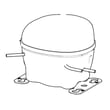
- Samsung refrigerator compressor MKV190CL2BASH for cooling failures tied to compressor issues
- Refrigerator defrost heater DA47-00244W for frost buildup and airflow restriction symptoms
- Refrigerator temperature sensor DA32-00033C for temperature swings or inaccurate readings
Why it matters
Choosing the right repair level protects your food, prevents repeat failures (like frost returning after a partial defrost fix), and avoids damage to the sealed system. A careful DIY repair can restore normal cooling and ice production quickly when the problem is a wearable or accessible part.
Last updated: February 2026
What is the capacity of the RF4289HARS?
The Samsung RF4289HARS bottom-mount refrigerator has a total capacity of about 28 cu. ft., with the freezer around 7.7 cu. ft. For the exact compartment breakdown and storage configuration, we recommend confirming in the RF4289HARS owner's manual.
Capacity breakdown (what the numbers mean)
Capacity is measured in cubic feet and is split between the fresh food section and the freezer.
- Total capacity: about 28 cu. ft.
- Freezer capacity: about 7.7 cu. ft.
- Fresh food capacity: the remaining space (total minus freezer)
- Usable space varies with ice bin, shelves, and drawer configuration
Quick reference table
| Measurement | Approximate capacity |
|---|---|
| Total refrigerator capacity | 28 cu. ft. |
| Freezer capacity | 7.7 cu. ft. |
| Fresh food capacity | About 20.3 cu. ft. |
Why it matters
Knowing capacity helps you compare refrigerators accurately and plan food storage. It also helps when troubleshooting space-related issues, such as an ice maker or ice bin taking up more room than expected.
Related tip for this model
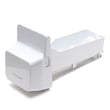
If ice storage is reducing usable freezer space, check fit and seating of the refrigerator ice bin DA97-11117A and confirm the correct setup steps in the RF4289HARS owner's manual.
Last updated: February 2026
What is the most common problem with Samsung refrigerators?
The most common Samsung refrigerator problem we see is a cooling issue caused by frost or ice buildup around the evaporator system; the freezer may still seem OK while the fresh food section warms up. On the Samsung RF4289HARS, this often ties back to defrost components, airflow parts, or ice maker-related icing.
Most common symptoms customers report
- Fresh food section warm but freezer cold
- Frost on the back wall inside the refrigerator
- Fan noise, buzzing, or a “whooshing” sound that comes and goes
- Temperature swings (food freezing in the fridge or soft ice cream in the freezer)
- Ice maker stops producing ice or clumps ice together
What usually causes it (and what to check first)
Start with the simplest checks, then move toward parts testing.
- Airflow blocked: Overpacked shelves or blocked vents restrict cold air movement.
- Dirty condenser area: Dust reduces heat removal and can cause poor cooling.
- Defrost system trouble: A failed heater, sensor, or control can allow heavy frost that chokes airflow.
- Fan or damper issues: If the evaporator fan or damper is not moving air, the fridge warms.
- Ice maker icing: Ice buildup around the ice room can affect temperatures and ice production.
| Symptom | Most likely area | Example part for this model |
|---|---|---|
| Fridge warm, freezer OK | Evaporator frost or airflow restriction | Refrigerator defrost heater DA47-00244W |
| Temps fluctuate | Sensor or control logic | Refrigerator temperature sensor DA32-00033C |
| Ice maker not making ice | Ice maker or ice path icing | Samsung refrigerator ice maker DA97-07365G |
Why it matters
Cooling problems rarely stay “small”; frost buildup and restricted airflow can force longer run times, stress the compressor, and lead to food spoilage. Catching the cause early usually keeps the repair simpler.
Best next steps for RF4289HARS
- Confirm the set temperatures and allow 24 hours after any adjustment.
- Check for frost on the rear interior panel and listen for the evaporator fan.
- Clean the condenser area and verify the condenser fan runs.
- If frost returns quickly after a manual defrost, focus on the defrost heater and temperature sensor.
- Use the RF4289HARS manual for control settings, diagnostics, and component locations.
Helpful DIY guidance
For ice maker-specific troubleshooting, follow why your Samsung fridge stopped making ice and how to fix it.
Last updated: February 2026
What's the average lifespan of a Samsung fridge?
Most Samsung refrigerators, including the Samsung RF4289HARS bottom-mount style, typically last 10 to 15 years with normal household use and basic maintenance. Consistent temperatures, clean airflow, and prompt repair of cooling or ice issues are what most often determine whether you land closer to 10 years or closer to 15.
Typical lifespan ranges (what to expect)
Here are practical benchmarks we see for modern refrigerators:
| Condition | Typical lifespan outcome | What usually drives it |
|---|---|---|
| Normal use, basic upkeep | 10 to 15 years | Clean coils, good door sealing, stable temps |
| Heavy use or poor airflow | 8 to 12 years | Dirty condenser area, overheating, long run times |
| Well maintained, quick repairs | 12 to 15 years | Fixing fan/defrost/ice issues before they cascade |
What shortens (or extends) fridge life
To get the longest service life from a Samsung refrigerator, we focus on these high-impact items:
- Keep the condenser area clean so the system can shed heat efficiently.
- Make sure doors close and seal fully; warm air leaks force longer compressor run time.
- Avoid overpacking vents; blocked airflow causes warm spots and frost issues.
- Address ice maker problems early (leaks, jams, no-ice) to prevent secondary damage.
- Maintain stable settings (about 37°F fresh food, 0°F freezer) to reduce cycling stress.
Parts that commonly affect “end of life” decisions
When a refrigerator becomes unreliable, these components are often involved:
- Sealed system components (compressor and related protection devices)
- Defrost system parts (heater, sensors)
- Airflow components (fans, dampers)
- Ice maker system (ice maker, auger, ice bin)
If you’re troubleshooting ice production specifically, we recommend starting with why your Samsung fridge stopped making ice and how to fix it.
Why it matters
A refrigerator that is running hot, frosting up, or struggling to make ice usually runs longer and harder. That extra run time increases wear on the compressor and cooling system, which is the biggest factor in whether the unit reaches the higher end of the 10 to 15 year range.
For model-specific care and operating guidance, use the RF4289HARS owner’s manual.
Last updated: February 2026