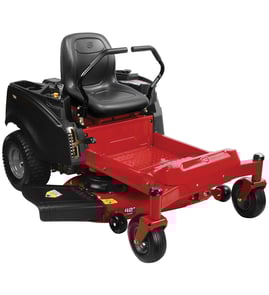



How do I know what model my mower is?
For a Snapper riding mower, the model is identified on the mower’s ID label (not the engine label). For your Snapper model 5900709, match the full model number exactly as printed on the mower tag so you get the correct parts and diagrams.
Look for a product identification tag or sticker on the mower frame. Common locations include:
- Under the seat pan or seat mounting area
- On the rear frame near the engine compartment
- On the left or right side of the chassis, near the footrest
- Near the transmission or rear axle area
- Under the hood or rear cover (if equipped)
If you only find an engine label (often Briggs & Stratton), that number identifies the engine, not the mower.
Copy the information exactly as shown on the mower tag:
- Full model number (example: 5900709)
- Any revision, type, or product number listed on the same tag
- All letters and numbers in the same order
- Any dashes or suffixes (if shown)
| Item you found | What it identifies | When it helps |
|---|---|---|
| Mower model tag (Snapper) | The mower and its parts | Belts, wheels, deck, chassis parts |
| Engine label (Briggs & Stratton) | The engine only | Engine tune-up parts like filters |
Snapper riding mowers can use different decks, belts, pulleys, and hardware even when they look similar. Using the exact mower model number prevents ordering the wrong belt length, wheel size, or mounting hardware.
Once you confirm the mower model, you can confidently choose matching maintenance parts such as the briggs & stratton lawn and garden equipment engine air filter 792105 (engine-related) and then move on to mower-specific items like belts and wheels.
Last updated: January 2026
How much does a 42 inch riding lawn mower weigh?
A 42-inch riding lawn mower typically weighs about 400 to 650 lb depending on whether it’s a lawn tractor or a zero-turn, plus any attachments. Your Snapper 5900709 is a zero-turn riding lawn mower (S50X series); use the 42-inch numbers only when you’re comparing to an actual 42-inch deck machine.
These ranges fit most 42-inch mowers from brands like Snapper, Craftsman, Husqvarna, and Troy-Bilt.
- Lawn tractor (42-inch deck): 400 to 550 lb
- Zero-turn (42-inch deck): 450 to 650 lb
- Bagger or front weights: add 30 to 150 lb
- Full fuel tank: add 10 to 20 lb
- Wet grass buildup on deck: add 5 to 20 lb
If you’re sizing ramps, a trailer, or a lift, an actual scale weight is the safest way to plan.
- Look for the mower’s spec label (often under the seat or on the frame) for dry weight
- Weigh at a public scale (co-op, landfill, truck stop)
- Weigh trailer empty, then trailer with mower; subtract to get mower weight
- Remove attachments if you want a true “base” number
| Item you’re sizing | Safe minimum target | Why it helps |
|---|---|---|
| Trailer capacity | 1,000 lb or higher | Leaves margin for attachments and gear |
| Ramp rating (pair) | 1,000 lb pair rating or higher | Adds safety margin on steep angles |
| Tie-downs (WLL) | Two straps, 500 lb WLL each or higher | Better control with 4-point tie-down |
Weight affects ramp safety, trailer selection, and towing stability. It also impacts wear on rolling parts; keeping tires and wheels in good shape helps handling and reduces vibration (see wheel 1714760SM).
Last updated: January 2026
What is the average lifespan of 5900709?
A Snapper 5900709 rear-engine riding mower (S50X series) typically lasts 10 to 15 years with normal residential use and consistent maintenance. Lifespan is driven most by engine care, belt and deck upkeep, and keeping the hydro drive system clean and properly serviced.
- Oil and filter service on schedule; a clogged filter accelerates engine wear.
- Air filtration; dusty mowing conditions shorten engine life quickly.
- Deck and drive belts; worn belts slip, overheat, and stress pulleys and spindles.
- Hydraulic system care; correct fluid and clean components prevent premature pump wear.
- Storage and corrosion control; keeping the mower dry prevents electrical and frame issues.
These are common wear items we see tied directly to longevity on riding mowers like the 5900709:
- Briggs & stratton lawn and garden equipment engine oil filter 696854
- Briggs & stratton lawn & garden equipment engine air filter 792105
- Snapper belt 5105189YP
| Use pattern | Typical lifespan | What usually ends it first |
|---|---|---|
| Light residential (flat yard, seasonal) | 12 to 15 years | Belts, battery, deck wear |
| Average residential (weekly mowing) | 10 to 12 years | Engine wear from missed service |
| Heavy use (dusty, hilly, long run time) | 7 to 10 years | Hydro wear, spindles, engine stress |
Knowing the typical lifespan helps you decide whether to invest in maintenance items (filters, belts, wheels) versus planning for a replacement. On the 5900709, routine engine filtration and belt upkeep usually deliver the biggest return.
Last updated: March 2026