Owner’s manual


How to identify a Kenmore washer model?
Your Kenmore washer model number is printed on the model and serial number plate; for model 11028872890, use that exact number when ordering parts or looking up troubleshooting steps in the 11028872890 owner's manual.
Where to look on the washer
On Kenmore washers like 11028872890, the model and serial number plate is typically placed where it stays readable and protected. Common locations include:
- Under the lid on top-load washers (around the tub opening)
- Inside the door opening on front-load washers
- On the back panel near the power cord entry
- Along the cabinet edge near the control console
What the model number looks like (and why it matters)
Kenmore model numbers often start with 110 and include additional digits (for example, 11028872890). Using the full model number helps us match the correct diagrams and parts, such as a lid switch, drain pump, or inlet valve.
Quick check: model vs. serial
| Item | What it tells you | Used for |
|---|---|---|
| Model number | The exact washer design and parts list | Ordering the right replacement parts |
| Serial number | The specific unit and production run | Service history and manufacturing details |
Tips to avoid ordering the wrong part
Before you buy a replacement part, we recommend:
- Copy the model number exactly as shown (include every digit)
- Record the serial number too (helpful for service questions)
- Compare your washer type (top-load vs. front-load) to the manual illustrations
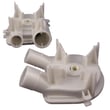
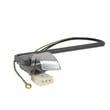
- Use the model number to confirm part fit for items like the washer lid switch WP3949238 or washer drain pump WP3363394
Why it matters
Kenmore washers can look similar across many series, but small design changes affect fit and wiring. The model number is the fastest way to ensure the correct Kenmore washer parts and repair instructions match your machine.
Last updated: February 2026
When was the Kenmore 11028872890 washer made?
Kenmore model 11028872890 is a classic direct-drive, top-load washer design that was commonly sold in the early-to-mid 2000s era. The exact build date for your specific washer is determined by the serial number on the model and serial plate; we use that serial to decode the manufacturing date.
How to find the manufacturing date (fast)
Use the steps in the 11028872890 owner's manual to locate the model and serial number plate, then record the serial number exactly as shown.
- Unplug the washer before reaching under the lid or around the cabinet edge.
- Open the lid and look for the model and serial number plate on the cabinet opening or under the lid area.
- Write down the full serial number (letters and numbers).
- Keep it with your purchase receipt; the manual recommends recording it for future reference.
- If the plate is damaged, check for a secondary sticker on the rear panel.
What “made date” can mean
Depending on what you are trying to confirm, you may be looking for one of these dates:
| Date type | Where it comes from | What it’s used for |
|---|---|---|
| Manufacturing date | Serial number code | Parts compatibility, age |
| Purchase date | Receipt or your records | Warranty timing, ownership history |
| Model introduction era | Product line history | General age estimate |
Why it matters
Kenmore washers often have multiple revisions within the same model family. Using the serial-number build date helps us match the correct replacement parts (for example, a lid switch like washer lid switch WP3949238 or a drain pump like washer drain pump WP3363394) and avoid fit issues.
Last updated: February 2026
How many cubic feet is a Kenmore Model 11028872890 washer?
The exact tub capacity (cubic feet) for Kenmore washer model 11028872890 is listed in the product specifications section of the 11028872890 owner's manual. For most Kenmore 110-series, direct-drive, top-load washers of this style, capacity commonly falls in the about 3.2 to 3.5 cu. ft. range.
How to find the exact capacity for model 11028872890
We recommend using the manual because it ties the spec directly to your exact model and configuration.
- Open the 11028872890 owner's manual
- Look for “Specifications” or “Product dimensions/capacity”
- If the manual lists basket volume (in gallons or liters), convert it to cubic feet
- If you only see dimensions, use them to confirm you have the correct washer family
- Record the model and serial from the model/serial plate for accurate matching
Typical capacity range (what you can expect)
If you are planning loads, pedestals, or replacement decisions, this is the practical range we see for this Kenmore/Whirlpool-built platform.
| Washer type (common for 110-series) | Typical capacity | Best use case |
|---|---|---|
| Standard top-load, agitator | 3.2 to 3.5 cu. ft. | Everyday mixed loads |
| Larger top-load, agitator (some variants) | 3.6 to 4.0+ cu. ft. | Bulkier loads, fewer cycles |
Why it matters
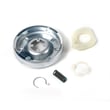
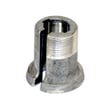
Capacity affects how full you can load the basket without sacrificing cleaning and rinsing. Overloading can also increase wear on drive components like the coupling 285753A and can contribute to out-of-balance spinning.
Quick loading tips for best results
- Load clothes loosely around the agitator, not packed down
- Keep the top of the load below the tub ring
- Wash bulky items in smaller, balanced loads
- Use the correct water level (or let the washer sense it, if equipped)
- If the washer struggles to spin, reduce load size and redistribute
Last updated: February 2026
What is the average lifespan of a Kenmore washer?
A Kenmore washer typically lasts 10 to 15 years with normal household use. For Kenmore model 11028872890, following the care, loading, and operating guidance in the 11028872890 owner's manual helps you reach the upper end of that range by reducing wear on the drive system, tub, and controls.
Typical lifespan and what affects it
Most washers land in the 10 to 15 year window; the difference usually comes down to load size, installation, and maintenance habits.
Common factors that shorten washer life:
- Frequent overloading or consistently unbalanced loads
- Using too much detergent (extra suds can stress the drain system)
- Hard water buildup on valves and internal components
- Running heavy cycles back-to-back without letting the motor cool
- Ignoring early symptoms (leaks, burning smell, slow drain, no spin)
Parts that most often drive “end of life” decisions
When a washer stops agitating, spinning, or draining, the repair often centers on a few high-wear components.
| Symptom | Common culprit | Example part for this model |
|---|---|---|
| Won’t spin or stops mid-cycle | Lid safety circuit issue | Washer lid switch WP3949238 |
| Won’t drain or drains slowly | Pump obstruction or worn pump | Washer drain pump WP3363394 |
| Agitator moves poorly or “ratchets” | Worn agitator dogs/cam | Agitator dog 80040 |
| Motor runs but basket does not move | Drive coupling wear | Coupling 285753A |
Maintenance habits that extend lifespan
We recommend these practical steps for a top-load Kenmore washer like model 11028872890:
- Keep loads balanced; mix items and avoid washing single heavy pieces alone
- Use the correct amount of detergent for load size and water hardness
- Check fill hoses periodically and replace if bulging, cracking, or leaking
- Leave the lid open between loads to reduce moisture and odor
- Address new noises early (grinding, squealing, loud banging)
Why it matters
A washer that is maintained and repaired early usually avoids secondary damage (for example, a drain problem that strains the motor, or a spin issue that leads to repeated out-of-balance impacts). That is the difference between a simple part replacement and a major repair.
Last updated: February 2026
Is it worth repairing a Kenmore washing machine?
Yes; repairing a Kenmore washer is worth it when the fix restores reliable washing and spinning for less than replacing the machine, especially on a proven direct-drive design like model 11028872890. We recommend pricing the repair using the most likely failure parts and confirming symptoms in the 11028872890 owner's manual.
Quick way to decide (cost vs. benefit)
Use this checklist to make a clear repair decision:
- Repair it if the washer fills, agitates, drains, and spins after a common part replacement.
- Repair it if the cabinet and tub are solid and there is no persistent leak.
- Repair it if the issue is a typical wear item (lid switch, drain pump, coupling, clutch).
- Replace it if multiple major systems are failing (drive system plus leaks plus electrical issues).
- Replace it if the repair requires repeated teardown and you still have poor performance.
Common repairs that are usually “worth it” on this model
These are frequent, straightforward fixes on Kenmore 110-series top-load washers:
| Symptom | Likely cause | Example part for this model |
|---|---|---|
| Won’t spin or won’t start | Lid safety circuit not closing | Washer lid switch WP3949238 |
| Won’t drain or drains slowly | Pump jammed or worn | Washer drain pump WP3363394 |
| Agitates poorly or “ratcheting” noise | Worn agitator dogs/cam | Agitator dog 80040 |
| No agitation or spin, motor runs | Worn motor coupling | Coupling 285753A |
| Spins weak, burning smell, clothes too wet | Worn clutch | Clutch 285785 |
Why it matters
A targeted repair keeps a dependable washer in service and avoids paying for features you may not need. This model also relies on correct installation and leveling; the manual notes that loose front-leg nuts and an unlevel washer can cause vibration and poor results, which can look like a “bad machine” when it is really a setup issue.
What we recommend before you buy parts
- Confirm the symptom happens on more than one cycle and load size.
- Check the washer is level and the front-leg nuts are tight.
- Verify water supply is on and fill is normal.
- Listen for the sequence: fill, agitate, drain, then spin.
- Match the symptom to the table above, then replace one likely part at a time.
Last updated: February 2026