Installation guide
 Owner’s manual


How to tell if a whirlpool heating element is bad?
A bad heating element in your Whirlpool dryer (model LER8648PW0) usually shows up as no heat or very long dry times even though the drum tumbles. We confirm it by doing a quick heat check and then testing the element for continuity with a multimeter (power disconnected).
Quick checks first (no tools)
Use the startup heat check described in the LER8648PW0 installation guide. After the dryer runs about 5 minutes, open the door and feel for heat.
- Make sure the dryer is plugged into a grounded outlet.
- Confirm the dryer door fully closes.
- Check the home electrical supply.
- For electric dryers, check both fuses or breakers (many setups use two).
- If there is still no heat after these checks, stop and move to electrical testing.
Multimeter test: how we confirm a bad element
- Unplug the dryer (or switch off both breakers).
- Access the heater circuit (rear panel area on many Whirlpool electric dryers).
- Remove at least one wire from the heating element terminal.
- Test continuity across the element terminals.
What the readings mean
| Test result | What it usually means | Next step |
|---|---|---|
| Continuity present (low ohms) | Element coil is not open | Check thermostats, thermal cut-off, wiring, and airflow |
| No continuity (OL/infinite) | Element is burned out (open) | Replace the heating element |
| Continuity from terminal to metal housing | Element is shorted to ground | Replace the heating element |
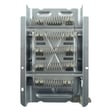
For this model, the correct replacement is the dryer element 279838.
Why it matters
A failed element stops heat, but airflow problems (lint buildup, crushed vent, blocked exhaust) can also cause no-heat symptoms and can overheat and damage safety devices like the thermal cut-off.
Related parts that commonly affect “no heat”
- Thermal cut-off and high-heat safety devices (often fail after overheating)
- Operating thermostat
- High-limit thermostat
- Loose or burned wire connections at the heater
- Restricted venting or clogged lint screen housing
Last updated: February 2026
How to find part number on whirlpool dryer?
On Whirlpool dryer model LER8648PW0, we find the correct part number by first locating the model and serial number label; it’s typically at the top inside the dryer door well. Once you have the full model number, you can match the exact replacement part for your dryer.
Where to look on LER8648PW0
Check these common label locations first:
- Top inside the dryer door well (most common on this Whirlpool style)
- Along the door opening near the door switch area
- On the inside of the front panel near the lint screen housing
- On the rear panel (less common, but worth a quick check)
For diagrams and location details, use the LER8648PW0 owner’s manual.
What numbers matter (and what they mean)
You may see several identifiers; here’s what we use for parts matching.
| What you see | Example format | What we use it for |
|---|---|---|
| Model number | LER8648PW0 | Primary key to find the correct parts list |
| Serial number | Letters and numbers | Helps date the unit; sometimes affects revisions |
| Part number (on a part) | Printed on belt, thermostat, etc. | Useful for confirmation, but not always complete |
Fast, accurate way to get the right part
We recommend this workflow because it prevents ordering the wrong version.
- Write down the full model number: LER8648PW0
- Copy the serial number too (helps if there are production changes)
- Use the model number to identify the exact part category (belt, heater, motor, switch)
- Match by part name and ID when available
- Confirm symptoms before buying (for example, no heat vs. no start)
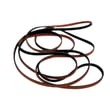
If you already know the failed component, common LER8648PW0 replacements include the dryer drum belt 341241 and the dryer door switch WP3406107.
Why it matters
Dryer parts can look identical but differ by revision, wiring, or mounting. Using the model and serial label ensures the replacement part fits and performs correctly on your Whirlpool dryer.
Last updated: February 2026
What's the average lifespan of a whirlpool dryer?
A Whirlpool dryer like model LER8648PW0 typically lasts 10 to 13 years. With consistent maintenance (especially lint and vent cleaning) and avoiding overloads, many dryers reach the upper end of that range and run reliably longer.
What affects dryer lifespan the most
- Airflow and venting: Restricted venting makes the dryer run hotter and longer.
- Lint buildup: Lint inside the cabinet and exhaust path increases heat stress.
- Load size: Overloading strains the drum support system, belt, and motor.
- Heat system cycling: Frequent overheating can shorten the life of thermostats and fuses.
- Wear parts: Belts, rollers, and idlers are normal wear items.
Maintenance schedule we recommend
The LER8648PW0 manual calls out periodic lint removal from internal areas; use these intervals as a baseline.
| Task | Best practice interval | Why it matters |
|---|---|---|
| Clean lint screen | Every load | Maintains airflow and drying performance |
| Clean exhaust vent run to outdoors | About every 2 years (more with heavy use) | Reduces overheating and long dry times |
| Clean lint from inside dryer cabinet | About every 2 years (qualified service) | Helps prevent heat buildup and component wear |
For model-specific care and cleaning guidance, follow the LER8648PW0 owner’s manual.
When a “simple repair” can extend life
If the dryer runs but makes noise, tumbles poorly, or stops tumbling, common wear parts are often the fix.
| Symptom | Common cause | Example part for LER8648PW0 |
|---|---|---|
| Drum not turning | Worn/broken belt | Dryer drum belt 341241 |
| Squealing or thumping | Worn rollers/idler (kit) | Dryer repair kit (model-specific) |
| Long dry times | Vent restriction or blower issue | Vent cleaning first; then inspect blower |
Why it matters
Most “early failures” are really heat and airflow problems. Keeping the venting correct (heavy metal venting and exhausting outdoors per the installation guidance) reduces overheating, shortens dry times, and helps major components like the motor and heater last longer; see the LER8648PW0 installation guide.
Last updated: February 2026