Owner’s manual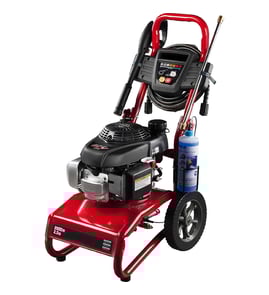



What is a good GPM for a 3000 psi pressure washer?
A good flow rate for a 3000 PSI pressure washer is about 3.0 to 4.0 GPM for most homeowner cleaning. For Troybilt model 01902, the manual calls for a water supply greater than 3.0 GPM (and at least 20 PSI at the washer end of the garden hose), so 3.5 GPM is a strong target.
Recommended GPM targets (what to aim for)
- 3.0 GPM minimum: Meets the 01902 water supply requirement; helps prevent pump overheating and cavitation.
- 3.5 GPM sweet spot: Faster rinsing and better cleaning speed for driveways, siding, decks.
- 4.0+ GPM: Noticeably quicker cleaning; typically more machine and more water use.
Why GPM matters as much as PSI
PSI is the “force,” but GPM is the “work rate.” Higher GPM moves more water, lifts dirt faster, and rinses better. If your supply cannot keep up, you can get surging, weak spray, and extra pump heat.
Quick comparison
| Spec | What it affects most | What you notice | Typical homeowner range |
|---|---|---|---|
| PSI | Impact force | How hard it hits the surface | 2500 to 3200 PSI |
| GPM | Cleaning speed and rinsing | How fast you finish | 3.0 to 4.0 GPM |
Tips to get the best performance from a 3000 PSI washer
- Use a water source that can deliver more than 3.0 GPM; confirm with a simple bucket-and-timer test.
- Keep the high-pressure hose straight; check for kinks, cuts, or bulges before each use.
- Clean the water inlet screen and rinse the garden hose to reduce debris restrictions.
- Choose the right spray tip for the job; a wider fan tip reduces surface damage risk.
- Do not let the engine run 3 to 5 minutes with the trigger released; the thermal relief system may dump hot water to protect the pump.
Where to confirm the exact requirements for your setup
We list the operating and maintenance checks for Troybilt 01902 in the 01902 owner’s manual, including the minimum water supply guidance and pre-use inspection steps.
Last updated: February 2026
Can I use SAE 30 instead of 10W30 in my pressure washer?
Yes. For the Troybilt 01902 gas pressure washer, SAE 30 is a common warm-weather engine oil choice and can be used in place of 10W-30 when temperatures stay consistently above about 40°F; 10W-30 is the better all-season option because it flows easier during cold starts. Confirm the exact oil recommendation in the 01902 owner’s manual.
When SAE 30 is a good swap (and when it is not)
- Use SAE 30 for steady warm conditions and typical summer cleaning.
- Use 10W-30 for spring and fall use, cooler mornings, or wide temperature swings.
- Avoid SAE 30 for cold-weather starts; it can crank harder and lubricate slower at startup.
- Do not mix oil types in the crankcase; drain and refill if you are switching.
- Check oil level on a level surface before each use; low oil can quickly damage the engine.
Quick comparison
| Oil type | Cold-start flow | Hot running protection | Best use case |
|---|---|---|---|
| SAE 30 | Fair to poor in cold | Good | Consistently warm weather |
| 10W-30 | Good | Good | Most climates, variable temps |
How to switch oils cleanly
- Warm the engine for 1 to 2 minutes (oil drains more completely).
- Shut off the engine and let it cool briefly.
- Drain oil fully, then refill with the correct amount.
- Recheck the level, then run the engine and recheck for accuracy.
Why it matters
Oil viscosity affects how fast the engine lubricates at startup and how well it protects under load. Using SAE 30 in cold conditions can increase wear; using 10W-30 year-round helps cover both cold starts and normal operating temperatures.
Last updated: February 2026
Who builds Troy-Bilt pressure washers?
For the Troy-Bilt pressure washer model 01902, the owner’s manual identifies Briggs & Stratton Power Products Group, LLC as the company behind the unit, and it explains that Troy-Bilt is an MTD trademark used under license. See the 01902 owner's manual for the exact wording and identification details.
What the manual tells us (and why it matters)
The model 01902 documentation ties the brand name and the builder together in a practical way: it tells you who to contact for service and what information to have ready.
- Troy-Bilt is a registered trademark of MTD
- The trademark is used under license to Briggs & Stratton Power Products
- The manual lists Briggs & Stratton Power Products Group, LLC (Jefferson, Wisconsin, U.S.A.)
- The manual provides a helpline number and service guidance
- The data plate location is called out for model, revision, and serial number
Where to find the identification info on your 01902
Use the data plate details when ordering parts, requesting service, or matching manuals.
| Item to record | Where to find it | Why you need it |
|---|---|---|
| Model number | Data plate on the base | Confirms you have model 01902 |
| Revision number | Data plate | Helps match the correct parts list |
| Serial number | Data plate | Useful for service and warranty |
Parts ordering tip for this model
Because Troy-Bilt branding can span multiple builders and revisions, we recommend matching parts by model and revision, then confirming the part by name and ID.
- Start with the model and revision from the data plate
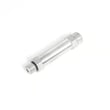
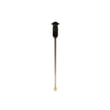
- Match the part by function (hose, wand, nozzle, O-ring)
- Replace worn seals early to prevent leaks and pressure loss
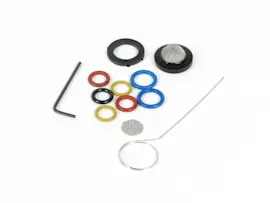
- If you’re chasing a leak at a connection, an O-ring is a common fix (example: o-ring 190584GS)
Why it matters
Knowing who built the unit helps you use the right manual, identify the correct service channel, and avoid ordering the wrong pressure washer parts when multiple Troy-Bilt models look similar.
Last updated: February 2026
Is it worth repairing a pressure washer?
Yes, repairing a Troybilt pressure washer model 01902 is worth it when the problem is a wear item (hose leak, worn O-rings, clogged inlet screen) and the engine and pump are basically sound. If the pump or engine has major internal damage, replacement usually costs less than a full repair.
Quick decision checklist
- Repair if the unit starts, runs, and builds pressure but has leaks, pulsing, or weak spray.
- Repair if the issue is external and visible (cracked hose, leaking connection, worn nozzle).
- Replace if the pump oil is contaminated repeatedly, the pump will not build pressure after basic checks, or the engine has severe power loss.
- Repair if you can do the work yourself and only need a few parts.
- Replace if you would pay for labor plus a major pump or engine repair.
Common “worth it” repairs on model 01902
These are typical fixes that restore performance without major teardown:
| Symptom | Likely fix | Typical effort |
|---|---|---|
| Water leaking at connections | Replace worn O-rings; reseat fittings | Low |
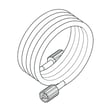
| Hose cover bulging, cuts, or coupling movement | Replace the hose 84006753 | Low |
| Detergent stops working or clogs | Flush chemical pickup; clean filter | Low |
| Pressure fades after sitting with trigger off | Avoid overheating; check unloader system | Medium |
Manual-backed maintenance items matter here: the manual calls out inspecting the high-pressure hose for cuts, leaks, abrasions, bulging, and coupling damage before use, and replacing it immediately if found. It also notes pump oil service intervals (about every 50 hours or yearly) and that worn O-rings can cause leaks at hose and spray gun connections. See the 01902 owner's manual for the full maintenance schedule and procedures.
Why it matters
A pressure washer that is maintained (hose checks, inlet screen cleaning, chemical system flushing, and pump oil service) avoids the most expensive failures. Small leaks and restrictions also reduce pressure and can make the pump run hotter, shortening pump life.
If you suspect a bigger issue
Use these resources to decide whether you are looking at a simple fix or a major repair:
- Solving pressure washer problems
- Pressure washer engine losing power
- How to replace a pressure washer unloader valve
Last updated: February 2026
What are the common problems with Troy-Bilt pressure washers?
Common problems on the Troy-Bilt 01902 gas pressure washer include hard starting or no-start, engine bogging under load, weak or pulsing spray pressure, and leaks at hose or wand connections. Most issues trace back to fuel delivery, restricted water flow, or a clogged nozzle orifice; our 01902 owner's manual covers the correct setup and nozzle cleaning steps.
Most common symptoms and what they usually mean
- Engine won’t start or starts then dies: stale fuel, dirty carburetor, fouled spark plug, or incorrect choke/throttle position
- Engine bogs and pressure drops: fuel restriction, partially clogged nozzle, or inadequate water supply/flow
- Pulsing spray at the gun: nozzle orifice restricted with debris (a frequent cause per the manual)
- Weak pressure: low inlet water flow, kinked/damaged high-pressure hose, worn nozzle, or internal pump/unloader issues
- Water leaks at connections: worn or pinched seals; inspect O-rings and quick-connect fittings
Quick checks we recommend first (fast, no parts guessing)
- Confirm water supply is adequate: the manual calls for more than 3.0 GPM and at least 20 PSI at the pressure washer end of the garden hose.
- Inspect the high-pressure hose for kinks/cuts and tighten connections; if the hose is damaged, replace it with the correct hose 84006753.
- Clean the nozzle orifice and in-line filter: shut off engine and water, remove the orifice with a 2 mm (5/64) Allen wrench, clear debris, then back-flush 30 to 60 seconds.
- Verify steady water flow before installing the nozzle extension: squeeze the trigger until flow is constant, then reattach.
- Check pump oil (if your pump uses oil): low/dirty oil can shorten pump life; use the specified pressure washer pump oil 190586GS when service is due.
Symptom-to-fix guide
| Symptom | Most likely cause | Best first action |
|---|---|---|
| Pulsing at trigger | Clogged nozzle orifice/filter | Clean orifice and back-flush nozzle extension |
| Weak pressure | Low inlet flow or hose issue | Verify 3.0+ GPM, 20+ PSI; inspect hose |
| Bogging under load | Fuel delivery or restriction | Refresh fuel; check choke/throttle; clean nozzle |
| Leaks at fittings | Worn seals/O-rings | Inspect and replace seals; avoid overtightening |
Why it matters
A gas pressure washer depends on steady inlet water flow to prevent pump cavitation and overheating. A partially clogged nozzle can also spike pump pressure and cause pulsing, poor cleaning performance, and premature wear.
Last updated: February 2026