Owner’s manual
 Error Codes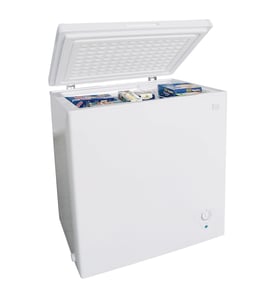


How many cubic feet is a Kenmore model 25316542106 freezer?
The exact cubic-foot capacity for Kenmore chest freezer model 25316542106 is listed on the unit’s rating/feature information for that specific model; the quickest way to confirm it is to check the capacity/specs section in the 25316542106 owner's manual.
- Check the model/serial tag location described in the manual (chest models commonly have the plate on the left exterior wall).
- Look for a capacity statement in cubic feet (cu. ft.) on the rating label or product label.
- Review the specifications/features pages in the 25316542106 owner's manual.
- If you still need confirmation, use the model number 25316542106 when referencing the freezer’s documentation.
The referenced “20/21 cu. ft.” information is for a different Kenmore model family (an upright freezer model number format like 253.280428), not your 25316542106 chest freezer. Chest and upright freezers often share brand prefixes but differ in cabinet size and usable storage.
Most Kenmore chest freezers in this style commonly fall into a mid-to-large range. Use this only as a sizing benchmark until you confirm the exact spec for 25316542106.
| Freezer type | Typical capacity range | Best place to confirm |
|---|---|---|
| Chest freezer | ~5 to 25 cu. ft. | Manual/spec label |
| Upright freezer | ~12 to 21 cu. ft. | Manual/spec label |
Capacity affects how much food you can store, how you organize baskets, and how long the freezer may take to pull down to temperature after loading. It also helps when comparing energy use and planning floor space.
Last updated: January 2026
What are the most common issues with 25316542106?
The most common issues we see with the Kenmore 25316542106 chest freezer are warm temperatures (not freezing), excessive frost or moisture around the lid, and intermittent operation caused by control or electrical problems. Many fixes start with basic airflow, sealing, and temperature-control checks in the owner's manual.
- Not cold enough or thawing food: temperature control issue, dirty condenser area, or a sealed-system problem (compressor or refrigerant circuit).
- Runs constantly: lid not sealing, warm room conditions, frequent openings, or thermostat/control not cycling correctly.
- Heavy frost or ice buildup: lid gasket leak, lid not closing squarely, or humid air entering.
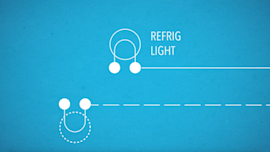
- No interior light or light stays on (if equipped): door switch or light socket issue.
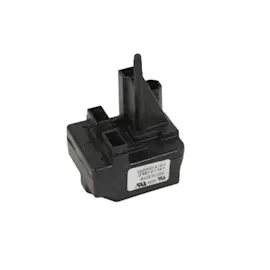
- Clicks but won’t start: compressor start components or compressor problem.
- Set the control colder and wait 24 hours for temperature to stabilize.
- Confirm the lid closes fully and the gasket makes full contact all the way around.
- Clean dust from the condenser area and keep clearance around the cabinet.
- Check the outlet and breaker; avoid extension cords.
- If you have a display or diagnostic indicator, look up the code in Kenmore electronic control module freezer error codes.
| Symptom | Likely part area | Example part for this model |
|---|---|---|
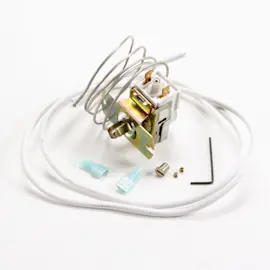
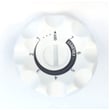
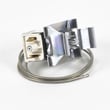
| Warm temps, poor cycling | Temperature control | Freezer temperature control thermostat 216714601 |
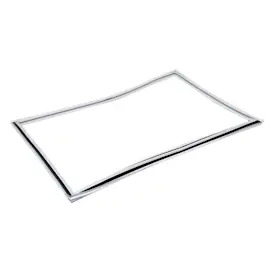
| Frost or moisture at lid | Lid seal | Frigidaire freezer lid gasket, white 216481211 |
| Light issues | Switch or socket | Freezer door switch 216822900 |
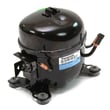
| No cooling, loud hum/click | Compressor system | Compressor 5304507765 |
A chest freezer that runs warm or leaks air wastes energy, causes freezer burn, and can shorten compressor life. Fixing sealing and control issues early often prevents bigger refrigeration repairs.
Last updated: March 2026
What is the life expectancy of a chest freezer?
A Kenmore chest freezer like model 25316542106 typically lasts 10 to 20 years. With normal home use, most owners see about 12 to 16 years when the freezer is kept clean, placed in a cooler location, and the lid seal stays tight; those factors reduce compressor run time and wear.
Chest freezers often outlast uprights because cold air stays in better when the lid is opened. The biggest life drivers are heat, airflow, and how hard the sealed system has to work.
- Keep the freezer in the coolest practical area, away from heat sources and direct sunlight
- Avoid frequent, long lid openings (warm air and moisture increase run time)
- Do not overload with unfrozen food; freeze in smaller batches
- Keep the lid gasket sealing evenly all the way around
- Use steady temperature settings; allow time for temperature to stabilize between adjustments
| What you see | What it usually means | What to check first |
|---|---|---|
| Runs almost constantly | Heat load or poor airflow, sometimes control issue | Room temperature, lid seal, temperature setting |
| Warmer than normal | Cooling system struggling or control problem | Temperature control setting, lid seal |
| Clicking, won’t start | Start components or compressor issue | Power supply, then sealed-system diagnosis |
Use the operating and care guidance in the 25316542106 owner’s manual to keep conditions stable and reduce strain on the compressor.
- Keep the freezer closed during power failures when possible (food can stay frozen about a day if kept closed)
- Let hot foods cool to room temperature before loading
- Load unfrozen food only after the freezer has been running several hours
- If the temperature knob is bumped, adjust and then wait several hours for stabilization
A chest freezer’s compressor and sealed system last longest when they cycle normally. Heat, air leaks at the lid, and heavy warm-food loading force longer run times, which shortens overall life.
Last updated: January 2026