Owner’s manual
 Error Codes


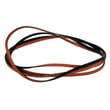
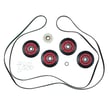
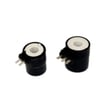
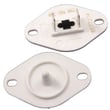
Does Sears sell dryer parts?
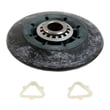
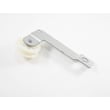
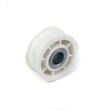
Yes. We sell replacement parts for the Kenmore Elite dryer model 11097738701, including common wear items and repair components like drum support rollers, idler pulleys, blower wheels, thermistors, and door latch parts. Use the model-specific diagrams and part lists to match the exact part to your dryer.
How to find the right part for Kenmore 11097738701
The fastest way to get the correct match is to confirm the symptom, then cross-check the part location and description in the 11097738701 owner's manual.
- Match your full model number: 11097738701
- Identify the symptom (no heat, noisy, won’t start, poor drying)
- Use the part description and location to avoid ordering the wrong item
- Replace related wear parts together when you have the dryer opened up
- Keep your venting clean to prevent repeat failures and long dry times
Popular parts customers replace on this model
Here are examples of parts we commonly see replaced on Kenmore Elite dryers like 11097738701:
| Symptom | Common part to check | Example part available |
|---|---|---|
| Squealing, thumping, rumbling | Drum support rollers, idler pulley | Support WPW10314173, dryer idler pulley 279640 |
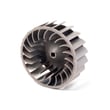
| Long dry times, weak airflow | Blower wheel, lint duct restrictions | Blower wheel (WP697772) |
| Heat issues on gas models | Igniter, radiant sensor, valve coils | Igniter (279311), valve coil kit (279834) |
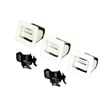
| Door won’t stay closed | Door latch/strike | Strike (279570) |
Why it matters
Using the correct model-specific part helps your dryer run safely and efficiently. For gas dryers, the manual also highlights key installation and safety requirements (electrical supply, venting, and gas type), which directly affect performance and reliability.
Last updated: February 2026
Is Kenmore Elite high end?
Yes. Kenmore Elite is Kenmore’s higher-end line, and the Kenmore Elite dryer model 11097738701 is built around premium features and performance compared with standard Kenmore models (for example, Sensor Smart controls and higher feature sets). For day-to-day ownership, “high end” mainly shows up in cycles, controls, and fit-and-finish.
What “high end” means for this Kenmore Elite dryer
On model 11097738701, the Elite positioning typically translates into more advanced drying control and convenience features than entry-level dryers.
- More cycle and option choices than basic models
- More automatic drying control (sensor-based drying on many Elite versions)
- Better overall user experience (controls, lighting, door feel)
- More serviceable design with widely available replacement parts
- Strong long-term value when maintained (lint system, venting, rollers, belt)
For feature and care details specific to your unit, use the 11097738701 owner’s manual.
How to judge “high end” in real use (quick checklist)
Use these practical checks to decide if your Elite dryer is performing like a premium model.
| What you notice | What it usually indicates | What to do next |
|---|---|---|
| Clothes dry evenly with fewer overdried items | Sensor drying is working well | Keep lint screen and exhaust path clean |
| Longer dry times than normal | Airflow restriction or lint buildup | Inspect venting and internal lint accumulation |
| Squealing, thumping, or rumbling | Wear in drum support or belt path | Consider a maintenance rebuild |
| Heat is inconsistent on gas models | Burner/ignition components may be weakening | Check ignition and flame sensing components |
Parts that commonly affect “premium” performance
If the dryer is noisy or drying poorly, these are common wear items that restore smooth, quiet operation.
- Dryer repair kit 4392067 (often covers multiple wear components in the drum/belt system)
- Support WPW10314173 (drum support roller style component)
- Dryer idler pulley 279640 (keeps belt tension correct)
- Dryer blower wheel WP697772 (moves air through the drum and vent)
Why it matters
A “high-end” dryer only feels high end when airflow, heat, and drum support are all in good shape. Keeping lint under control and replacing worn rollers, idlers, or blower parts helps the 11097738701 dry faster, run quieter, and reduce clothing wear.
Last updated: February 2026
What is the capacity of the Kenmore 11097738701 dryer?
The Kenmore Elite 11097738701 gas dryer is a full-size dryer; most Kenmore 110-series (Whirlpool-built) full-size dryers are typically about 6.5 to 7.5 cu. ft. capacity. For the exact capacity for your specific unit, we recommend checking the specifications section in the 11097738701 owner's manual.
How to confirm the exact capacity
Capacity is usually listed in the specs section of the manual or on the model and serial tag.
- Check the specifications pages in the 11097738701 owner's manual
- Look for a model and serial number plate on the dryer (commonly inside the door opening)
- If your dryer has multiple similar model variants, match the full model number exactly
- Use capacity to choose the right drying cycle, load size, and venting setup
Typical capacity ranges (what you can expect)
Here is a practical guide for common dryer sizes:
| Dryer type | Typical capacity | Best for |
|---|---|---|
| Compact (24-inch) | 3.4 to 4.4 cu. ft. | Apartments, small loads |
| Standard/full-size (27-inch) | 6.5 to 7.5 cu. ft. | Most households |
| Extra-large | 7.6+ cu. ft. | Bulky items, large families |
Why it matters
Knowing capacity helps prevent overloading (long dry times, more wrinkles) and underloading (wasted energy). It also helps when comparing replacement parts and performance issues such as airflow restrictions or moisture-sensing behavior.
If you are troubleshooting long dry times or poor drying performance, the Kenmore elite dryer error codes resource can help you narrow down control and sensor-related problems.
Last updated: February 2026
What year is my Kenmore dryer model?
For Kenmore Elite dryer model 11097738701, the model number identifies the product series, but the year your specific dryer was built is determined by the serial number date code on the rating label, not the model number alone. Use the serial number to pinpoint the exact manufacture year.
Where to find the date information
Check the rating label (usually on the door opening or door frame area). Then use the serial number format shown in your 11097738701 owner's manual to match the date code.
- Open the dryer door and look around the door frame for the model and serial tag
- Write down the full serial number exactly as shown
- Note any letters at the start of the serial number (they often indicate plant or series)
- Compare the serial format to the identification section in the manual
- If the label is worn, take a clear photo and zoom in to read characters accurately
How to estimate the era from the model number (helpful, not exact)
Kenmore model numbers like 110.9772# (the “#” is the color code) indicate a Kenmore model built on a Whirlpool-manufactured platform, but they do not reliably give a single “introduced in” year for every unit.
Quick guide
| What you have | What it tells you | What it does not tell you |
|---|---|---|
| Model number (11097738701) | Series/platform and parts compatibility | Exact build year |
| Serial number | Manufacture date code | Nothing about cycle settings |
| Purchase date/receipt | When it was bought | Exact factory build date |
Why it matters
The manufacture year helps us match the correct parts and revisions for repairs like drum support noise, belt/idler issues, or heating problems. For example, common wear items on this platform include the dryer idler pulley 279640 and drum support components.
Last updated: February 2026
Where is the model number on a Kenmore Elite dryer?
On the Kenmore Elite dryer model 11097738701, the model number is printed on the model and serial number label attached to the dryer cabinet. Open the door and check the door opening area (cabinet frame); the label is typically on the top or side of that opening.
Where to look first (fast checklist)
- Open the dryer door and inspect the cabinet frame around the opening
- Check the top lip of the door opening
- Check the left and right sides of the door opening
- Look for a label that lists both Model and Serial
- Wipe dust off the label so the full number is readable
What the label looks like and what to write down
The label usually includes the model number, serial number, and sometimes gas/electrical rating information. We recommend recording these items exactly as shown.
| Item on label | Example of what you’ll see | Why you need it |
|---|---|---|
| Model number | 11097738701 | Ensures you get the correct Kenmore parts |
| Serial number | Letters and numbers | Helps match production version |
| Ratings (may appear) | BTU or electrical info | Useful for service and setup |
Why it matters
Kenmore Elite dryers often have multiple versions that look similar. Using the exact model number from the label helps us match the right parts (for example, a drum support roller, idler pulley, or thermistor) and the correct troubleshooting steps in the 11097738701 owner's manual.
Tips if the label is hard to read
- Use a flashlight and take a close-up photo
- Clean gently with a damp cloth; avoid scraping
- Copy the full number including any punctuation or leading zeros
Last updated: February 2026
Why is the drum not turning on my Kenmore Elite dryer?
If the drum on your Kenmore Elite 11097738701 isn’t turning, the usual causes are a broken or slipped belt, a seized drum support roller, or a failed idler pulley that can’t keep belt tension. Start with quick external checks, then inspect the drum support and belt path.
Safety first
- Unplug the dryer or switch off the breaker.
- If it’s a gas dryer, shut off the gas supply valve.
- Do not reach into the dryer if the drum is moving.
- Do not run the dryer with panels removed.
For model-specific access and troubleshooting steps, use the 11097738701 owner's manual.
Quick checks that often solve it
- Confirm the door is fully closed and latched.
- Press and hold Start for 2 to 5 seconds (some loads need a longer press).
- Reduce the load size; overload can prevent tumbling.
- Listen for motor sound with no drum movement (often belt or roller drag).
- Check for a coin or button wedged at the front or rear drum edge.
Parts that commonly stop the drum
- Drum support roller: replace a flat-spotted or seized roller with support WPW10314173.
- Idler pulley: replace a pulley that squeals, wobbles, or binds with dryer idler pulley 279640.
- Drive motor: if the motor hums, overheats, or won’t start under load after drag is corrected, replace the drive motor.
Symptom-to-cause guide
| What you notice | Most likely cause | What to do next |
|---|---|---|
| Motor runs but drum doesn’t move | Belt off or broken, idler pulley issue | Inspect belt routing and pulley spin |
| Loud squeal or grinding | Roller or idler pulley worn | Replace roller(s) and/or idler pulley |
| Drum hard to turn by hand | Seized roller or object jam | Find bind point; replace failed support part |
Why it matters
A non-turning drum is usually a belt-tension or mechanical drag problem. Fixing worn rollers or an idler pulley early prevents belt damage and motor overheating.
Last updated: February 2026