Owner’s manual
 Error Codes



What model GE refrigerator do I have?
Your GE refrigerator’s model number is printed on the model and serial label inside the fresh food (refrigerator) compartment. On GE side-by-side models like GSS25GGHBCBB, that label is typically at the top right inside the refrigerator section.
Where to find the model and serial label
Look in these common spots first:
- Inside the refrigerator compartment at the top right (most common for this GE style)
- On the side wall near the top shelf area
- Behind the crisper drawers on the side wall (less common)
- On the ceiling area inside the fresh food compartment
For the exact location and what the label looks like, use the GSS25GGHBCBB owner's manual.
What to write down (and why)
Record both numbers exactly as shown:
- Model number (example format: GSS25GGHBCBB)
- Serial number (letters and numbers)
- Any suffix letters after the model number (if shown)
Why it matters
The model number tells us the correct GE parts and diagrams for your exact refrigerator. The serial number helps identify the production run, which can affect which compatible parts (like a water filter, ice maker, or control board) fit.
Quick checklist to confirm you found the right label
| What you see on the label | What it means |
|---|---|
| “Model” followed by letters and numbers | This is the model number you need for parts lookup |
| “Serial” followed by letters and numbers | This is the serial number for manufacturing info |
| Electrical ratings (V/Hz/A) | Helpful for service, not the model identifier |
If you are still unsure
Use these tips to avoid common mix-ups:
- Use the inside label, not a sticker on the outside door
- Do not use the number from the water filter (for example, MWF) as the refrigerator model
- Match every character; one missing letter can point to a different parts list
Last updated: January 2026
How wide is a 25.6 cubic foot refrigerator?
Most 25.6 cu. ft. side-by-side refrigerators are about 36 inches wide. For the GE GSS25GGHBCBB, the installation dimensions shown in the GSS25GGHBCBB owner's manual list a 36-inch cabinet opening width, which is the practical width you should plan around.
Typical width you should expect
Even when capacity is similar (like 25.6 cu. ft.), exact exterior width can vary slightly by brand and handle style. In most kitchens, planning for a 36-inch-wide side-by-side is the right starting point.
Common width ranges:
- About 35 3/4 to 36 inches for most full-size side-by-side models
- 36 inches is the standard “fits this opening” target
- Add clearance space so doors open freely and air can circulate
Clearances that affect the real space needed
Width is not just the cabinet opening; you also need room for airflow and for the refrigerator to slide in without rubbing.
From the installation guidance for this GE platform, typical clearances include:
- Sides: about 1/8 inch each side
- Top: about 1 inch
- Back: about 1/2 inch to 1 inch (varies by configuration)
Quick sizing table (what to plan for)
| What you are measuring | Typical planning number | Notes |
|---|---|---|
| Cabinet opening width | 36 in. | Matches the common side-by-side opening size |
| Refrigerator body width | ~36 in. | Can be slightly under 36 in. depending on trim |
| “Real-world” install space | 36 in. plus clearances | Helps prevent rubbing and improves airflow |
Why it matters
If the opening is tight, a refrigerator can be difficult to install, doors may not swing fully, and restricted airflow can hurt cooling performance. Planning around the 36-inch opening plus side clearances helps the GE GSS25GGHBCBB fit and run correctly.
Last updated: January 2026
What is the most common problem with a GE refrigerator?
Cooling problems are the most common issue we see with GE refrigerators like model GSS25GGHBCBB. The root cause is often restricted airflow or a defrost-related failure that lets frost build up and blocks cold air movement, which makes temperatures rise and food spoil faster.
Most common causes to check first
- Dirty condenser coils reducing heat removal
- Evaporator fan not moving air through the freezer and fresh food sections
- Frost buildup from a defrost system problem (heater, thermostat, sensor)
- Door gasket not sealing, causing warm air leaks and excess moisture
- Control settings set too warm (or vents blocked by food)
Quick checks you can do at home
- Confirm temperature settings: aim for 0°F freezer and 37°F fresh food.
- Listen for the evaporator fan: a steady fan sound usually means airflow is present.
- Look for frost on the freezer back wall: heavy frost points to a defrost issue.
- Clean condenser coils and make sure the unit has airflow around it.
- Check door seals: close a dollar bill in the door; it should resist being pulled out.
Parts that commonly relate to cooling symptoms on GSS25GGHBCBB
If your checks point to airflow or defrost trouble, these model-matched parts are common suspects:
| Symptom | What it often points to | Example part for this model |
|---|---|---|
| Warm fridge, freezer OK-ish | Airflow problem | Refrigerator evaporator fan motor WR60X10307 |
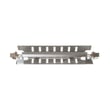
| Heavy frost, weak airflow | Defrost system issue | Refrigerator defrost heater WR51X10055 |
| Temps swing or seem inaccurate | Sensor/control input issue | GE profile refrigerator temperature sensor WR55X10025 |
For model-specific troubleshooting steps and control features, follow the GSS25GGHBCBB owner’s manual.
Why it matters
Cooling issues usually start small (longer run times, soft ice, warmer milk) and then escalate. Catching airflow restrictions or defrost frost buildup early helps prevent widespread temperature rise and reduces strain on the compressor.
Last updated: January 2026
Are GE side by side refrigerators good?
GE side-by-side refrigerators like model GSS25GGHBCBB are a solid choice for everyday use because they typically deliver consistent cooling, easy access to both fresh food and freezer sections, and convenient ice and water dispensing. Long-term satisfaction usually comes down to proper setup, airflow, and routine maintenance.
What “good” usually means for this GE side-by-side
We see customers judge side-by-side refrigerators on organization, temperature stability, and dispenser performance.
- Spacious, easy-to-sort layout with adjustable shelving and door bins
- Strong visibility (many models use bright interior lighting)
- Convenient in-door ice and water access
- Predictable “normal operating sounds” from fans and ice maker cycles
- Best results when the water line and filter system are installed and maintained correctly
Quick checklist to keep performance high
Use these habits to get the best reliability and day-to-day results from a GE side-by-side.
- Set controls to recommended temperatures and give the unit 24 hours to stabilize
- Keep vents clear inside both compartments so air can circulate
- Replace the water filter on schedule; a clogged filter can slow water flow and affect ice production
- If you are temporarily out of a filter, use the bypass plug so the dispenser and ice maker can still operate (as described in the GSS25GGHBCBB owner's manual)
- Expect some noise during normal operation (fan running, ice dropping, water valve energizing)
Common “pros vs cons” at a glance
| Area | What’s good | What can be annoying |
|---|---|---|
| Storage | Narrow doors fit many kitchens; easy access to freezer items | Freezer section can feel narrower for wide boxes |
| Dispenser | Convenient ice and water | Ice maker can sound loud during harvest cycles |
| Maintenance | Straightforward filter changes | Skipping filter changes can cause slow dispensing |
Why it matters
A side-by-side can be “good” for years when airflow stays unobstructed and the water system is maintained. Many performance complaints trace back to simple issues like a restricted filter, poor door sealing, or blocked vents.
Helpful related guidance
- For filter replacement best practices, use how to replace the water filter in a GE refrigerator.
Last updated: January 2026