Owner’s manual
 Error Codes


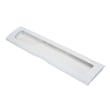
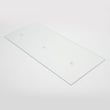

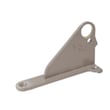
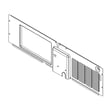
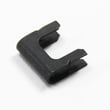
How to remove bottom grill from KitchenAid refrigerator?
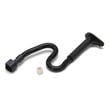
On the KitchenAid KBFS20EVBL10 bottom-mount refrigerator, the bottom grill (toe grille/toe kick) typically snaps onto the lower frame. We remove it by pulling it straight forward from the bottom edge to release the retaining clips, then lifting it away.
Quick removal steps
- Unplug the refrigerator or switch off power at the breaker (safer around wiring and fans).
- Open both fresh food doors for better access.
- Grip the grill at the left and right ends near the bottom edge.
- Pull straight outward with steady pressure to pop the clips free.
- If it feels stuck, work side-to-side a little while pulling forward (do not twist hard).
- Set the grill aside where it will not get stepped on.
If it will not come off
Most “won’t budge” cases are caused by hidden fasteners, tight clips, or the grill catching on the floor.
- Check for screws at the far left and right ends (some versions use screws instead of only clips).
- Make sure the refrigerator is not sitting too low; raise the front leveling legs slightly if the grill is rubbing the floor.
- Look for cracked tabs or warped plastic; a damaged grill can bind.
Common symptoms and what they point to
| What you notice | Most likely cause | What we do next |
|---|---|---|
| Grill pops loose on one side only | Clip not releasing | Pull from the stuck side while supporting the other |
| Grill hits the floor | Unit leveled too low | Raise front leveling legs slightly |
| Tabs break during removal | Brittle plastic | Replace the grill (toe grille) |
Why it matters
We remove the bottom grill to access the condenser area for cleaning and to inspect for airflow issues. Keeping that area clear helps cooling performance and can reduce warm temperatures and long run times.
For model-specific diagrams and access points, use the KBFS20EVBL10 owner's manual.
Last updated: February 2026
What's the average lifespan of a KitchenAid refrigerator?
Most KitchenAid refrigerators, including the KitchenAid KBFS20EVBL10 bottom-mount style, typically last 12 to 15 years. With consistent cleaning, correct temperature settings, and timely replacement of wear items (like filters and door gaskets), it’s common to reach the broader 10 to 17 year range.
Typical lifespan and what affects it
A refrigerator’s life is mainly driven by compressor run time, airflow, and how well the doors seal.
- Maintenance habits: cleaning condenser area, keeping vents clear
- Door seal condition: warm air leaks force longer run times
- Room temperature and ventilation: tight cabinets and hot garages shorten life
- Water and ice system upkeep: clogged filters can reduce flow and strain components
- Usage patterns: frequent door openings and overpacking reduce efficiency
What “end of life” usually looks like
These symptoms often show up as a unit approaches major repair territory:
- Temperatures swing or food spoils faster
- Freezer frost buildup returns quickly after defrosting
- Fans get noisy or stop moving air
- Water dispenser or ice maker flow becomes weak
- The refrigerator runs almost constantly
Quick maintenance checklist (extends lifespan)
Use these as your baseline routine for KBFS20EVBL10:
- Replace the water filter on schedule; use the correct refrigerator filter EDR4RXD1
- Keep door gaskets clean and sealing; replace if torn or warped (example: refrigerator door gasket W10830189)
- Don’t block interior air vents; leave space around the back wall
- Set typical temps: 37°F fresh food, 0°F freezer
- Review cleaning and care steps in the owner's manual
Common parts tied to cooling performance
| Symptom | Common area to check | Example part on this model page |
|---|---|---|
| Warm fridge, freezer OK | Airflow/damper | Refrigerator damper control assembly (WPW10594329) |
| Warm freezer, noisy airflow | Evaporator fan | Refrigerator evaporator fan motor WPW10128551 |
| Temps inaccurate | Sensor/thermistor | Refrigerator thermistor W10316760 |
Why it matters
A refrigerator that’s running longer than normal uses more electricity and puts extra wear on the sealed system (compressor and refrigerant loop). Small fixes like restoring airflow or replacing a failing sensor can prevent bigger cooling failures.
Last updated: February 2026
What is the most common problem with KitchenAid refrigerators?
The most common KitchenAid refrigerator problems are cooling and ice maker issues. On your KitchenAid KBFS20EVBL10, the most frequent root causes are restricted airflow from a failing evaporator fan, temperature sensing problems, and water supply or filtration issues that affect ice and water performance. See the KBFS20EVBL10 owner's manual for model-specific checks and settings.
Most common symptoms we see
- Refrigerator section too warm or temperature swings
- Freezer cold but fresh food warm (airflow problem)
- Ice maker slow, hollow cubes, or no ice
- Water dispenser flow is weak or stops
- Unusual fan noise (rattling, buzzing, or intermittent)
Quick checks that solve many “common problems”
- Confirm settings: Set the refrigerator to about 37°F and the freezer to about 0°F.
- Check airflow: Make sure vents are not blocked by food packages.
- Listen for the evaporator fan: If the freezer is cold but the fridge is warm, the fan or airflow path is often the issue.
- Replace the water filter on schedule: A clogged filter can reduce water flow and contribute to ice maker complaints; use the refrigerator filter EDR4RXD1.
- Inspect door sealing: Poor sealing causes frost, moisture, and temperature instability.
Common causes and the parts that often fix them
| Problem area | What you notice | Parts commonly involved for KBFS20EVBL10 |
|---|---|---|
| Airflow in freezer | Warm fridge, fan noise, uneven temps | Refrigerator evaporator fan motor WPW10128551, refrigerator evaporator fan blade WP2169142 |
| Temperature sensing | Temps drift, food freezing in fridge, erratic cycling | Refrigerator thermistor W10316760 |
| Ice and water supply | No ice, slow ice, weak dispenser | Refrigerator water inlet valve assembly WPW10420083, refrigerator water filter head W11346623 |
| Door sealing | Frost, sweating, warm spots near door | Refrigerator door gasket W10830189 |
Why it matters
Cooling and ice maker complaints usually trace back to airflow, sensing, or water flow. Fixing the underlying cause protects food quality, reduces frost and leaks, and helps the compressor run less often.
Helpful DIY guidance
- Follow our step-by-step article: how to replace the water filter in a KitchenAid refrigerator
Last updated: February 2026
How wide is a 20.6 cubic foot refrigerator?
Most 20.6 cubic foot refrigerators are about 30 to 36 inches wide with the doors closed; the exact “overall width” depends on the door style, hinges, and handles. For your KitchenAid KBFS20EVBL10 bottom-mount refrigerator, use the dimension diagram in the KBFS20EVBL10 owner's manual to confirm the exact width and required clearances.
Typical width you should plan for
These ranges cover the most common 20 to 21 cu. ft. configurations.
- Bottom-mount: typically 30 to 33 inches wide (doors closed)
- French door: typically 32 to 36 inches wide (doors closed)
- Top-freezer: typically 28 to 33 inches wide (doors closed)
- Counter-depth vs. standard-depth: width is often similar; depth changes more than width
Measure the right “width” for your space
When customers run into fit issues, it is usually because the measurement taken did not match the real clearance need.
- Measure the opening width at the front and back (walls can be out of square).
- Measure the refrigerator at the widest point (often hinges or door edges).
- Account for handles if they project past the door face.
- Confirm door swing clearance so doors and bins can open fully.
- Leave airflow clearance around the cabinet as shown in the manual.
Quick reference: what “width” can mean
| Spec you’re checking | What it includes | What it helps you avoid |
|---|---|---|
| Cabinet width | Main box only | Cabinetry cutout surprises |
| Overall width (doors closed) | Doors plus hinges, sometimes trim | Unit not fitting the opening |
| Width with doors open | Door swing arc | Doors hitting walls or counters |
Why it matters
A refrigerator that barely fits can lose needed ventilation space, rub cabinets, or limit door swing. Confirming the KBFS20EVBL10 dimensions in the manual prevents installation problems before delivery.
Last updated: February 2026