Owner’s manual
 Error Codes


How do I tell what model Kenmore fridge I have?
Your Kenmore refrigerator’s model number is printed on the appliance identification label. For Kenmore model 79573053410, the Use and Care Guide specifies that the ID label is located on the right-hand side of the refrigerator compartment; that label lists both the model and serial number. See the 79573053410 owner's manual.
Where to look first (fastest)
Check these common label locations on Kenmore refrigerators:
- Right-hand side wall inside the fresh food (refrigerator) compartment
- Side wall inside the freezer compartment (on some designs)
- Inside the door area near the top hinge side
- Behind the lower crisper drawers (on some models)
- Behind the base grille or kick plate (less common)
What the model number looks like
Kenmore model numbers are typically a long number with a prefix family. For this refrigerator family, the manual shows models formatted like 795.7305* (the asterisk indicates variations). When ordering parts, use the full model number from the label (for example, 79573053410).
| What you see | What it means | What to do with it |
|---|---|---|
| Model number | Identifies the exact refrigerator design | Use it to match parts and diagrams |
| Serial number | Identifies your specific unit | Helpful for service history and support |
| “795.7305*” style | Model family format shown in the manual | Still confirm the full model on the ID label |
Why it matters
The model number controls parts fit and compatibility. Even small differences can change which water filter, door gasket, ice maker, or control parts your refrigerator uses.
Tip for parts and maintenance
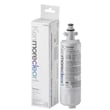
Once you confirm your model, match routine items to the correct part listing. For example, this model page lists a compatible water filter as genuine Kenmore refrigerator water filter 9690 AGF80300801.
Last updated: February 2026
How many cubic feet is my Kenmore refrigerator model 79573053410?
We treat Kenmore model 79573053410 as a Kenmore 795-series bottom-freezer platform (commonly LG-built), and units in this family are typically about 20 to 22 cubic feet. For the exact capacity for your specific configuration, confirm it in the 79573053410 owner's manual.
How to find the exact cubic feet for model 79573053410
Capacity is usually listed in the specifications section of the Use and Care Guide. We recommend checking these common spots:
- The specifications or features section in the manual
- The model/serial tag inside the fresh food compartment (often on a side wall)
- Any EnergyGuide label that came with the refrigerator
- The product description on your original sales receipt or invoice
Typical capacity range for this Kenmore 795 bottom-mount style
If you are comparing refrigerators or planning kitchen space, this quick range is the most useful starting point.
| Refrigerator style | Typical capacity range | Best use case |
|---|---|---|
| Bottom-mount (bottom freezer) | 20 to 22 cu. ft. | Balanced fresh food and freezer storage |
| Larger bottom-mount variants | 22 to 25 cu. ft. | Bigger households, more fresh food storage |
Why the exact cubic feet can vary (even within the same model family)
Small design differences change the published capacity, including:
- Ice maker and in-door ice bin size
- Water filter housing and air ducting
- Shelf and drawer layout
- Insulation thickness and liner design
Why it matters
Knowing the correct cubic feet helps us match the right accessories and maintenance parts (like a refrigerator water filter or air filter) and helps you plan food storage, shelving, and freezer organization more accurately.
Last updated: February 2026
How to read Kenmore model numbers?
Kenmore model numbers tell us the product family and, in many cases, who built the appliance. For Kenmore refrigerator model 79573053410, the 795 prefix identifies the manufacturer family (commonly LG-built Kenmore refrigeration), and the remaining digits narrow down the exact design so we can match the correct parts and manual.
Where to find the model number on a refrigerator
Check the model and serial tag in the most common locations:
- Inside the fresh food compartment on a side wall
- Along the door frame near the hinges
- Behind the crisper drawers
- On the back exterior panel (less common)
- Sometimes near the top interior ceiling liner
For model-specific labeling and feature layout, use the 79573053410 owner's manual.
How Kenmore model numbers are typically structured
Most Kenmore model numbers follow a pattern like:
| Section | Example | What it usually means |
|---|---|---|
| Prefix (first 3 digits) | 795 | Manufacturer family code |
| Core model digits | 730534 | Series and configuration details |
| Suffix (last digits) | 10 | Revision, color, or feature variation |
Why the prefix matters when ordering parts
The prefix helps us avoid mismatched parts across similar-looking refrigerators.
- Water filters and air filters can vary by housing style
- Ice makers and dispenser parts can differ by door design
- Door gaskets are model-specific for sealing and fit
- Control panels and sensors can change across revisions
Example: if you are shopping for filtration parts for this model, match by model number first, then confirm the part ID, such as the genuine Kenmore refrigerator water filter 9690 AGF80300801.
Why it matters
Using the full model number (not just “Kenmore bottom-mount”) prevents returns and delays. It ensures the parts diagrams, troubleshooting steps, and consumables like filters match your exact refrigerator configuration.
Last updated: February 2026
How to tell if a Kenmore refrigerator compressor is bad?
A bad compressor on your Kenmore refrigerator model 79573053410 usually shows up as poor cooling with the unit running a lot, repeated clicking as it tries to start, or the compressor staying unusually hot while temperatures keep rising. Use the checks below, then confirm with electrical testing.
Quick symptoms checklist
- Refrigerator and freezer are both warm even though the unit runs often
- You hear a repeated click-hum-click pattern (start attempt then shutdown)
- The compressor is very hot to the touch after running attempts
- The condenser fan runs but cooling does not improve
- You notice the refrigerator runs much more than normal (especially after doors are closed)
What to check before blaming the compressor
Many “bad compressor” complaints are actually airflow, control, or start-device problems.
- Power and basics: Make sure the cord is firmly plugged in and the outlet has proper voltage (the manual notes power issues can cause “no operation” symptoms). See the 79573053410 owner's manual.
- Condenser coils: Dirty coils can cause long run times and poor cooling; clean them and recheck temperatures.
- Door sealing: Warm air leaks force long run times; inspect gaskets for gaps or tears.
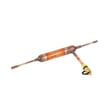
- Start components: A failed start relay can prevent the compressor from starting even when the compressor is good; consider the refrigerator compressor start relay EBG60663230 if you have clicking and no sustained run.
Compressor vs. start relay: what it looks like
| What you observe | More likely cause | What to do next |
|---|---|---|
| Clicks every few minutes, little or no compressor run | Start relay/overload | Test/replace start device, then retest cooling |
| Compressor runs steadily but both sections stay warm | Sealed system or compressor inefficiency | Have a technician check pressures and performance |
| Compressor will not run and trips quickly, gets very hot | Compressor locked or start device | Test start device first; then compressor diagnosis |
Why it matters
The compressor is part of the sealed cooling system and is expensive; ruling out airflow issues (coils, fans, door gaskets) and the start relay first prevents unnecessary parts replacement and gets cooling restored faster.
Last updated: February 2026
What are the common problems with Kenmore Elite refrigerators?
Common problems on Kenmore Elite refrigerators like model 79573053410 include warm temperatures (cooling failure), ice maker or dispenser trouble, water leaks, and door sealing issues. Most fixes start with cleaning condenser coils, confirming airflow, and checking filters and gaskets; see the 79573053410 owner's manual for model-specific checks.
Most common symptoms and what usually causes them
- Not cooling or weak cooling: dirty condenser coils, blocked vents, evaporator fan issues, or defrost problems
- Ice maker not making ice: water supply issue, clogged filter, frozen fill tube, or ice maker failure
- Water leaking or puddles: clogged defrost drain, loose water line, or valve seepage
- Water dispenser slow: restricted filter, low house water pressure, or inlet valve problem
- Doors not sealing: worn gasket, misalignment, or a mullion (flipper) not closing correctly
Quick checks we recommend first (10 to 20 minutes)
- Check temperatures: set refrigerator to about 37°F and freezer to about 0°F (typical targets).
- Clean condenser coils: the manual calls out condenser coil care and cleaning; dusty coils cause poor cooling.
- Confirm airflow: do not block interior vents with food packages.
- Inspect door seals: look for gaps, tears, or areas that do not grip a dollar bill.
- Check filters: replace the water filter and air filter on schedule.
Parts that commonly solve these problems on 79573053410
| Problem area | What to check/replace | Example part for this model |
|---|---|---|
| Water taste/flow, ice quality | Water filter | Genuine Kenmore refrigerator water filter 9690 AGF80300801 |
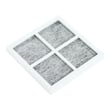
| Odors, stale air | Air filter | Lg refrigerator air filter ADQ73214408 |
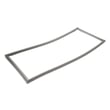
| Door not sealing | Door gasket | Lg refrigerator door gasket, left ADX73550621 or lg refrigerator door gasket, right ADX73550624 |
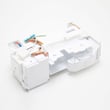
| No ice | Ice maker | Lg refrigerator ice maker AEQ73110210 |
| No water to dispenser/ice maker | Water inlet valve | Lg refrigerator water inlet valve AJU72992601 |
Why it matters
Cooling, ice, and leak complaints often share the same root causes: restricted airflow, dirty coils, or restricted water flow. Fixing those basics first prevents food spoilage, reduces compressor run time, and helps avoid repeat failures.
Last updated: February 2026
What is the bottom part of a refrigerator called?
On a Kenmore bottom-mount refrigerator like model 79573053410, the “bottom part” most people mean is the base area that houses key cooling components such as the compressor and airflow parts; you may also see it referenced as the base cover area in the 79573053410 owner's manual.
What you might be referring to (common “bottom parts”)
Depending on what you’re looking at or hearing, the bottom of the refrigerator can mean different components:
- Compressor: the pump that circulates refrigerant and drives cooling
- Condenser coils: tubing that releases heat (often near the bottom/back)
- Condenser fan: moves air across the condenser coils
- Drain pan: catches defrost water that evaporates
- Base cover (toe grille): the lower front cover you remove for access/cleaning
Quick guide: name it by symptom
| What you notice at the bottom | What it’s usually called | What to check first |
|---|---|---|
| Warm air blowing, humming | Compressor/condenser fan area | Dust buildup, airflow clearance |
| Water on floor near front | Drain pan/defrost drain system | Clogged drain, level refrigerator |
| Door not closing right, light issues | Door switch/hinge alignment | Door seal, switch operation |
| Clicking then no cooling | Compressor start device | Start relay, power supply |
Parts that commonly relate to “the bottom” on this model
If you’re troubleshooting cooling or noises, these model-matched parts are often involved:
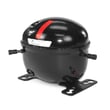
- Refrigerator compressor TCA38091801 (cooling system pump)
- Refrigerator condenser coil ACG73784701 (heat release coil)
- Refrigerator compressor start relay EBG60663230 (helps compressor start)
Why it matters
Using the right name helps you get the right instructions and parts. For example, cleaning condenser coils can improve cooling performance, while a failing start relay can cause clicking and no-cool symptoms.
Last updated: February 2026
What's the average lifespan of a Kenmore refrigerator?
Most Kenmore refrigerators last 10 to 15 years. For the Kenmore 79573053410 bottom-mount refrigerator, regular care like cleaning condenser coils and keeping door gaskets sealing tightly is what most often determines whether it reaches the high end of that range.
Typical lifespan and what affects it
A refrigerator’s life is mainly driven by compressor workload, airflow, and how well it seals.
- Condenser coil cleanliness (dirty coils make the compressor run hotter and longer)
- Door gasket condition (air leaks cause constant cooling and frost issues)
- Room temperature and ventilation around the cabinet
- Ice maker and water system health (leaks and restrictions create secondary problems)
- Power interruptions and surge exposure
For model-specific care and cleaning steps, follow the 79573053410 owner's manual.
Quick maintenance schedule (simple and effective)
| Task | How often | Why it helps |
|---|---|---|
| Clean condenser coils | Every 6 to 12 months | Reduces compressor run time and heat |
| Check/clean door gaskets | Every 3 months | Prevents warm air leaks and frost |
| Replace water filter (if equipped) | About every 6 months | Protects water flow and ice quality |
| Replace air filter (if equipped) | About every 6 months | Helps control odors |
Parts that commonly impact longevity on this model
If you are maintaining or restoring performance on the 79573053410, these parts are commonly involved:
- Water filtration: genuine Kenmore refrigerator water filter 9690 AGF80300801
- Odor control: lg refrigerator air filter ADQ73214408
- Door sealing: lg refrigerator door gasket, left ADX73550621 and lg refrigerator door gasket, right ADX73550624
- Cooling system start issues: refrigerator compressor start relay EBG60663230
Why it matters
A refrigerator that is running with dirty coils or leaking gaskets can still “work,” but it typically runs longer cycles, struggles to hold temperature, and puts extra wear on the compressor. That is the most common path to early failure.
Last updated: February 2026
Why is my Kenmore refrigerator leaking underneath?
Water leaking underneath a Kenmore bottom-mount refrigerator like model 79573053410 is usually caused by a clogged or frozen defrost drain, a cracked or overflowing drain pan, or a water supply connection issue for the ice maker or dispenser. Use the steps below to pinpoint the source safely.
Quick checks that solve most leaks
- Look for a sheet of ice or standing water on the freezer floor; this points to a defrost drain problem.
- Check the drain pan underneath for cracks, misalignment, or overflow.
- Inspect the water line connection and shutoff valve for slow drips.
- If the leak happens only when making ice or dispensing water, focus on the water inlet valve and tubing.
- Make sure doors close fully; warm air intrusion increases frost and can worsen drain clogs.
Step-by-step troubleshooting
- Unplug the refrigerator and pull it out enough to inspect the floor and rear area.
- Rule out a defrost drain clog: clear the drain opening with warm water (a turkey baster works well) and remove any debris.
- Inspect the drain pan: confirm it is seated correctly and not cracked.
- Check the water system (if connected): look for wet fittings at the back, and inspect tubing for kinks or splits.
- If you suspect a valve leak, the water inlet valve is a common culprit; on this model, a matching option is the lg refrigerator water inlet valve AJU72992601.
Common causes and what you typically see
| Symptom | Most likely cause | Where to look |
|---|---|---|
| Water after defrost cycle, ice on freezer floor | Clogged/frozen defrost drain | Freezer drain opening and drain tube |
| Water only during ice/water use | Leaking valve or fitting | Rear lower area, valve, tubing |
| Slow puddle even with water off | Cracked drain pan or condensation | Under cabinet, drain pan |
| Moisture near doors, sweating | Door not sealing | Door gaskets and alignment |
Why it matters
Leaks can damage flooring and also lead to ice buildup that restricts airflow, which hurts cooling performance and can increase compressor run time.
For model-specific locations of the drain pan, water line routing, and cleaning guidance, follow the 79573053410 owner's manual.
Last updated: February 2026