Installation guide
 Owner’s manual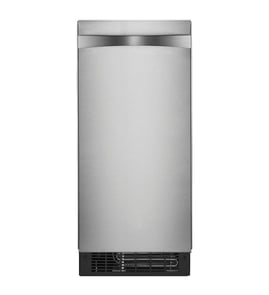



How do you reset the icemaker on a KitchenAid refrigerator?
For KitchenAid model KUIC15NHZS0 (a freestanding ice maker, not a refrigerator), the practical “reset” is a control reset: press ON/OFF to stop the unit, wait about 10 seconds, then press ON/OFF again and allow the built-in rinse cycle (about 5 minutes) to run. For model-specific control steps, use the KUIC15NHZS0 use & care manual.
Quick reset steps for KUIC15NHZS0
- Press ON/OFF to turn the ice maker OFF.
- Wait 5 to 10 minutes so any ice can drop into the storage bin.
- Press ON/OFF to turn the ice maker ON.
- Let the unit complete its rinsing cycle (about 5 minutes).
- Allow up to 24 hours for the first full ice production; discard the first 2 batches.
If it still will not make ice after a reset
These checks are specific to how KUIC15NHZS0 is designed to run:
- Confirm the control is ON (pressing ON/OFF does not remove power).
- Verify the water supply is connected and turned on.
- Make sure the room temperature is above 55°F (13°C).
- If you have a drain setup, check the drain hose for kinks or twists.
- If ice production is low, clean lint and dust from the condenser area.
Parts that commonly relate to “no ice” symptoms
If the reset works but ice production is still inconsistent, these model-compatible parts are often involved in diagnosis or repair:
| Symptom | What to inspect | Example compatible part |
|---|---|---|
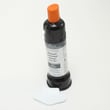
| No ice or very low ice | Water filtration and flow | Cartridge hood F2WC9I1 |
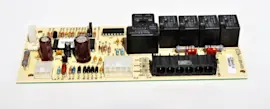
| No ice, odd behavior, intermittent operation | Controls and power management | Ice maker electronic control board W11034363 |
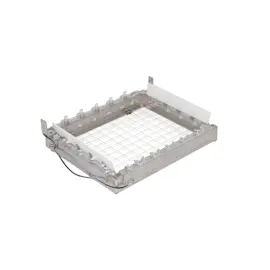
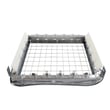
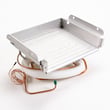
| Thin sheets, clumping, or poor harvest/cutting | Cutting and release stage | Cutter grid W10919199 |
Why it matters
A proper reset on KUIC15NHZS0 restarts the normal rinse and ice-making sequence. If water flow, drainage, or airflow is restricted, the unit can run but produce little or no ice, which looks like a “failed reset” even when the controls are working.
Last updated: January 2026
What is the lifespan of a KitchenAid ice maker?
KitchenAid doesn’t publish a single “expected lifespan” for the KUIC15NHZS0 freestanding ice maker; real-world service life varies widely with water quality, cleaning, and ventilation. Following the maintenance schedule in the KUIC15NHZS0 use & care manual is the best way to maximize how long it runs reliably.
What most affects service life on KUIC15NHZS0
- Mineral scale from hard water: buildup in the water system can reduce production and strain components.
- Dirty condenser: restricted airflow raises operating temperatures and can shorten component life.
- Water filtration and filter changes: helps reduce taste/odor issues and can slow scale buildup.
- Installation conditions: the unit performs best in moderate room temperatures and with the front unobstructed.
- Drain setup and hose routing: kinks or poor drainage can cause operational problems.
Signs it may be wearing out (or needs repair)
- Produces little or no ice after confirming water supply and running a cleaning cycle
- Ice is thin, soft, clumping, or has persistent taste/odor issues
- Unusual noises beyond normal fill, fan, and harvest sounds
- Repeated leaks, drainage issues, or electrical shutoffs
Maintenance intervals mentioned for this model
| Item | KUIC15NHZS0 guidance | Why it matters |
|---|---|---|
| Water filter | Replace when indicated or at least every 9 months | Helps maintain ice quality and flow |
| Cleaning cycle | More often with hard water; scale can require repeat cleaning | Prevents mineral buildup |
| Condenser cleaning | Clean when dusty or linty | Protects cooling performance |
Parts that commonly relate to performance issues
If cube formation is inconsistent or cubes are not separating cleanly, the cutter grid is one component we often check: cutter grid W10919199.
Why it matters
Knowing that lifespan is condition-dependent helps you decide whether to focus on maintenance (cleaning, filter changes, airflow) or to diagnose a specific failure when ice production or quality drops.
Last updated: January 2026
Why is my free standing ice maker not making ice?
If your KitchenAid KUIC15NHZS0 freestanding ice maker runs but makes no ice, the most common causes are a shutoff water supply, a loose drain cap letting the water pan empty, a clogged condenser restricting cooling, or a failed component such as the control board, recirculation pump, or cutter grid. See the KUIC15NHZS0 use & care manual for model-specific checks.
Quick checks first (no tools)
- Confirm the unit is turned ON and the door is fully closed.
- Verify the household shutoff valve is fully open and the supply line is not kinked.
- Make sure the room temperature is above 55°F; low ambient temps can stop operation.
- Remove the bin and confirm the drain cap on the water pan is tight (a loose cap can cause thin ice or no ice).
- If you just started it, allow time for the initial rinse cycle; first ice can take time.
What to inspect next (light DIY)
- Condenser airflow: A dirty condenser reduces cooling and ice production. Vacuum lint and dust from the condenser area.
- Water filter seating: If the filter is not locked in correctly, the unit may not produce ice.
- Drain system: Kinked or restricted drain lines can interfere with normal operation, especially on drain-pump setups.
Parts that commonly cause “runs but no ice” on KUIC15NHZS0
| Symptom you notice | Likely area | What it can mean |
|---|---|---|
| Runs, water not circulating over plate | Recirculation system | Pump not moving water |
| Runs, sheet forms but won’t cut into cubes | Cutting system | Cutter grid issue |
| Runs, inconsistent behavior or no proper cycling | Controls | Control board problem |
| Runs, poor cooling and low production | Condenser fan/cooling | Airflow or cooling component issue |
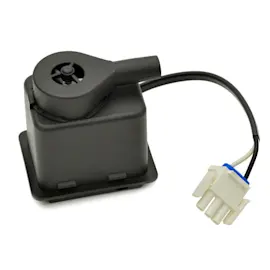
If troubleshooting points to a failed part, match by model before ordering. Common KUIC15NHZS0 parts tied to this symptom include the ice maker electronic control board W11034363, freestanding ice maker recirculation pump W11566406, and cutter grid W10919199.
Why it matters
This model relies on a full water pan, steady water circulation over the freezing plate, and strong condenser airflow. If any one of those is interrupted, the ice maker can sound normal but produce no ice.
Last updated: January 2026