 Installation guide
 Owner’s manual

What is the most common problem with GE washers?
The most common GE washer problems are no spin or no drain, usually caused by a lid safety issue, a draining restriction, or wear in the drive and tub system. On the GE WLSR3000G1WW, start with lid-closed operation checks and basic power and water-supply resets in the WLSR3000G1WW owner's manual.
Most common symptoms we see (and what they usually point to)
- Won’t spin or agitate: lid not fully closed, lid switch problem, or control/timer issue
- Won’t drain: drain pump problem, kinked/blocked drain hose, or an internal clog
- Loud roaring or grinding in spin: tub bearing wear
- Shakes or bangs: unbalanced load or worn suspension parts
- Leaks: tub seal wear or hose connection issues
Quick checks before replacing parts
- Close the lid firmly and restart the cycle; this model uses a lid-open safety feature that prevents agitation and spinning.
- Reset the washer electronics: unplug for 2 minutes, plug back in, then start a cycle.
- Confirm water supply: both hot and cold faucets fully open.
- Load correctly: don’t load above the top row of basket holes; avoid wrapping sheets/pants around the agitator.
- Watch for “normal pauses” during spin; some pausing can be part of normal operation.
Parts that commonly fix “no spin/no drain” complaints on this model
| Symptom | Common suspect | Example part for WLSR3000G1WW |
|---|---|---|
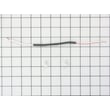
| Won’t spin/agitate with lid closed | Lid safety circuit | Washer lid switch assembly WH12X10334 |
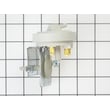
| Won’t drain or drains slowly | Drain pump or blockage | Washer drain pump assembly WH23X10030 |
| Loud noise in spin, wobble | Bearing or support wear | Tub bearing WH2X1198 |
Why it matters
A washer that won’t spin or drain often leaves clothes soaking wet and can strain the motor, belt/drive components, and tub system. Catching a lid-switch or drain issue early also helps prevent leaks and bigger repairs.
Helpful reference
If your washer displays or indicates a fault condition, use the GE top load washer error codes guide to narrow the problem to a specific circuit or component.
Last updated: January 2026
What can fit in a 4.8 cu ft washer?
A 4.8 cu. ft. washer typically handles bulky items like a king comforter, a full bedding set, or a large mixed load of towels and clothes in one cycle. For the GE WLSR3000G1WW, confirm your washer’s specific capacity and loading guidance in the WLSR3000G1WW owner’s manual.
What you can wash in one load (typical 4.8 cu. ft. examples)
- 1 king-size comforter (check the care tag for “machine washable”)
- 1 full bedding set (sheets plus pillowcases) plus a few small items
- 10 to 14 bath towels (depending on thickness)
- A week’s worth of everyday clothing for 1 to 2 people
- A mixed load of jeans, sweatshirts, and tees (avoid overpacking)
How to load for best cleaning and fewer out-of-balance spins
- Load items loosely; don’t pack them down.
- Keep the load balanced: mix large and small items.
- Wash one bulky item with a few smaller items to stabilize the spin.
- Choose the right water level and cycle for the fabric type.
- If the washer stops agitating or spinning when the lid is opened, close the lid and restart as needed (normal top-load behavior).
Quick guide: “fits” vs “should wash together”
| Item type | Usually fits in 4.8 cu. ft.? | Best practice |
|---|---|---|
| King comforter | Yes | Wash alone or with 2 to 4 small items |
| Pillows | Sometimes | Wash 2 at a time to balance |
| Towels | Yes | Mix sizes; don’t overload |
| Jeans | Yes | Mix with lighter items to reduce tangling |
Why it matters
Right-sizing the load helps the washer clean better, rinse out detergent, and spin smoothly. Overloading can cause poor cleaning, extra vibration, and more wear on suspension and drive components.
Last updated: January 2026
How to force GE washer to drain and spin?
To force a GE WLSR3000G1WW washer to drain and spin, set the cycle selector to DRAIN & SPIN (or SPIN ONLY, depending on your control panel) and press START. If a cycle is stuck with water in the tub, switching to DRAIN & SPIN is the correct way to empty the tub and extract water.
Quick steps (works for most “won’t drain” situations)
- Press POWER (if your model has it) or turn the cycle knob to reset your selection.
- Turn the cycle selector to DRAIN & SPIN (or SPIN ONLY).
- Close the lid fully (the washer will not spin with the lid open).
- Press START.
- If the washer was previously paused, press START again to resume.
If it still won’t drain or spin
Check these common causes first
- Lid not closed or lid switch issue: the washer will not spin if it thinks the lid is open.
- Control needs a reset: unplug the washer for 2 minutes, plug it back in, then select DRAIN & SPIN and press START.
- Pump is running but water is not leaving: a clog or restriction in the drain path is likely.
- Normal pause during spin: this model can pause briefly during spin to remove soapy water more efficiently.
What you should hear (helps confirm what’s happening)
| What you notice | What it usually means | What to do next |
|---|---|---|
| Humming, then gurgling | Drain pump is pumping and then drawing air | Let it finish; it should transition into spin |
| No pump sound at all | Not draining command, lid issue, or electrical/control issue | Recheck lid closure; do the 2-minute reset |
| Pump hums but tub stays full | Drain restriction or pump problem | Inspect drain hose and standpipe for blockage |
Parts that commonly affect drain and spin on this model
If the washer will not spin with the lid closed, the lid safety circuit is a top suspect.
Why it matters
Running DRAIN & SPIN is the safest way to clear standing water before troubleshooting. It also helps prevent oversudsing, wet loads, and strain on the drive system.
For cycle details and control operation specific to this washer, use the WLSR3000G1WW owner’s manual.
Last updated: January 2026


