 Installation guide
 Owner’s manual


What's the average lifespan of a Whirlpool dryer?
Most Whirlpool dryers average 10 to 13 years of service life; a Whirlpool WGD5500XW0 gas dryer typically lands in that range when it is installed correctly, vented for strong airflow, and maintained with routine lint and exhaust care (see the WGD5500XW0 owner’s manual).
Typical lifespan and what changes it
A dryer’s life is driven more by heat, airflow, and moving-part wear than by the brand name alone.
- 10 to 13 years: typical for most residential Whirlpool dryers
- Shorter life: restricted venting, overheating, heavy daily loads, frequent overdrying
- Longer life: good vent design, regular cleaning, moderate use, prompt repair of noises
Maintenance that most improves lifespan
These steps reduce overheating and strain on the motor, belt, and drum support system.
- Clean the lint screen every load; replace a damaged screen such as screen W10120998 if it will not seal or is torn
- Keep the exhaust vent short, smooth, and as straight as possible; avoid crushed or kinked ducting
- Use fewer 90° turns; extra elbows increase drying time and heat stress
- Do not overload; heavy loads accelerate belt, roller, and idler wear
- Use automatic cycles when possible to reduce overdrying and excess heat
Venting limits (why they matter)
Your installation guide includes a vent length chart; staying within those limits helps drying performance and helps prevent premature wear (see the WGD5500XW0 installation guide).
| Vent setup (rigid metal) | Typical max length impact |
|---|---|
| 0 to 1 elbows | Best airflow, least wear |
| 2 to 3 elbows | Longer dry times, more heat stress |
| 4 elbows | Highest restriction; avoid when possible |
Why it matters
A dryer that runs hot or takes too long to dry clothes cycles the burner and motor more often, which shortens the life of key parts like the drive system, drum supports, and temperature-sensing components.
Last updated: February 2026
Where is my dryer part number?
On your Whirlpool WGD5500XW0 gas dryer, the easiest place to find the information you need for parts is the model and serial rating plate in the door well. Once you have the model number and the part name, we can match the correct replacement part for your exact dryer.
What to look for on the label
Use the rating plate to capture the details that help us identify the right Whirlpool dryer parts:
- Model number (WGD5500XW0)
- Serial number (helps confirm production details)
- Gas type information (Natural gas vs. LP conversion guidance is tied to the rating plate)
- Electrical requirements notes (useful when ordering cords or diagnosing power issues)
- Any option codes or additional identifiers printed on the plate
For diagrams and label locations, use the WGD5500XW0 installation guide.
If you meant the part number on the part itself
Many dryer parts also have a number stamped or printed directly on them. That number can help, but we still recommend confirming by model number because manufacturers often substitute updated parts.
Common examples on this model include:
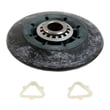
- Drum support roller: support WPW10314173
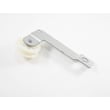
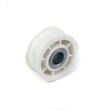
- Belt tension system: dryer idler pulley 279640
- No-start symptom checks: dryer door switch WP3406107
Quick comparison: model number vs. part number
| Item | Where you find it | What it’s used for |
|---|---|---|
| Model number (WGD5500XW0) | Rating plate in the door well | Ensures parts fit your exact dryer |
| Part number / part ID | Printed on the part or in diagrams | Identifies the replacement component |
| Serial number | Rating plate | Helps confirm version changes |
Why it matters
Using the rating plate information prevents ordering the wrong Whirlpool gas dryer part, especially for components tied to gas type, wiring, or fit (like rollers, switches, and burner parts). The model number is the fastest path to an exact match.
Last updated: February 2026
What are the common problems with Whirlpool dryers?
Common Whirlpool dryer problems (including the Whirlpool WGD5500XW0 27-inch gas dryer) are no-start, no-heat, long dry times, unusual noises, and the drum not tumbling. Most issues trace back to airflow restrictions, door or start-switch problems, or normal wear parts in the drum drive and gas ignition system; see the WGD5500XW0 owner’s manual for model-specific troubleshooting.
Most common symptoms and what they usually mean
- Dryer will not run: door not fully closed, START/PAUSE not held long enough, or a power issue
- No heat (gas dryer): gas supply valve closed, weak ignition components, or burner sensing issues
- Drying times too long: lint screen or venting restricted, wrong cycle selection, or overloaded drum
- Unusual thumping/squealing/grinding: worn drum support rollers, idler pulley, or blower wheel problems
- Cycle ends too soon: load not contacting moisture sensors, dryer not level, or very small loads
Parts that commonly fix these problems on WGD5500XW0
If your symptom matches, these are frequent wear items for this model:
| Symptom | Common suspect part | Example part for this model |
|---|---|---|
| Squealing, rumbling, thumping | Drum support rollers or idler pulley | Support WPW10314173, dryer idler pulley 279640 |
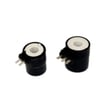
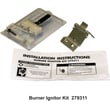
| No heat or heat cuts in and out | Gas valve coils or igniter/sensor | Dryer gas valve coil kit 279834, igniter 279311, dryer radiant sensor WP338906 |
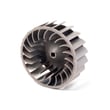
| Poor airflow, loud whoosh/rattle | Blower wheel or lint restriction | Dryer blower wheel WP697772 |
| Dryer will not start when door closes | Door switch or latch strike | Dryer door switch WP3406107, strike 279570 |
Quick checks we recommend before replacing parts
- Clean the lint screen before every load
- Run the dryer 5 to 10 minutes and check for strong airflow at the outside exhaust hood
- Confirm the dryer door closes firmly and the latch engages
- For gas models, confirm the gas supply shutoff valve is fully open
- Avoid overloading; loads need room to tumble freely
- If automatic cycles end early, try Timed Dry for very small loads and level the dryer
Why it matters
A clogged vent or restricted airflow can cause long dry times, overheating, and repeated shutdowns. Catching worn rollers, an idler pulley, or weak gas ignition parts early helps prevent bigger repairs and keeps drying performance consistent.
Last updated: February 2026








