Installation guide
 Error Codes



Is a 7.3 cubic foot dryer big?
Yes; 7.3 cubic feet is a large-capacity drum size. For the Whirlpool CSP2940HQ0 commercial dryer, the more important question is how that capacity matches your laundry volume and venting setup, because commercial installations and duty cycles drive real-world performance (see the CSP2940HQ0 installation guide).
How 7.3 cu. ft. compares
Most dryers fall into these capacity ranges:
| Drum capacity | Common label | Typical use |
|---|---|---|
| 3.4 to 4.4 cu. ft. | Compact | Small loads, tight spaces |
| 5.0 to 6.5 cu. ft. | Standard | Everyday household loads |
| 7.0+ cu. ft. | Large capacity | Bulky items, fewer loads |
What fits in a 7.3 cu. ft. drum
A 7.3 cu. ft. dryer drum typically handles:
- A bulky bedding item (comforter or blanket), depending on thickness
- Multiple bath towels in one load
- A larger mixed load of shirts, jeans, and everyday items
- Items that need extra tumbling room for better airflow
Why it matters (especially for a commercial dryer)
A larger drum helps clothes tumble more freely; that improves airflow through fabrics, which supports faster, more even drying. In commercial settings, airflow and venting design often matter more than raw drum size.
Tips to get the best drying results
- Load loosely; avoid packing the drum tight so items can tumble
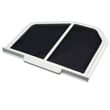
- Clean the lint screen every load to keep airflow strong
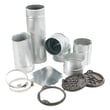
- Keep the vent run efficient; the installation instructions call out a 4-inch vent connection and warn against crushing or kinking the vent
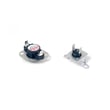
- If drying times increase, inspect airflow first, then check heat-safety components such as the dryer high-limit thermostat WP3391914
Last updated: January 2026
What brand of dryer has the least problems?
Whirlpool tends to be one of the most reliable dryer brands overall, with LG and GE also commonly rated well. For a Whirlpool commercial dryer like model CSP2940HQ0, long-term reliability still depends heavily on correct installation, proper venting, and routine lint maintenance.
What to look for when choosing a reliable dryer brand
Reliability is usually driven less by the logo and more by heat management, airflow, and how hard the dryer is worked (especially in commercial use).
- Choose a brand with widely available parts and service support (Whirlpool is strong here).
- Prioritize simple controls if you want fewer electronic failures.
- Make sure the dryer can be vented correctly for your location.
- Plan on regular lint removal from the cabinet and exhaust vent.
- In shared or commercial settings, pick a model designed for higher duty cycles.
Reliability basics for Whirlpool CSP2940HQ0 (commercial stacked dryer)
The installation instructions for this platform emphasize venting, electrical setup, and ongoing lint removal. Following those requirements prevents many of the most common “problem” symptoms: no heat, long dry times, overheating, and nuisance shutdowns.
Maintenance schedule that prevents common failures
- Clean the lint screen before and after each cycle.
- Remove lint from the exhaust vent about every 2 years (more often with heavy use).
- Have lint removed from inside the dryer cabinet about every 2 years (qualified service recommended).
- Keep the area around the dryer clear so combustion and ventilation air can flow.
For the exact clearances, venting rules, and electrical connection options (3-wire vs 4-wire), use the CSP2940HQ0 installation guide.
Quick comparison: what “least problems” usually means
| What you want | What to prioritize | What causes most issues |
|---|---|---|
| Fewer breakdowns | Proper venting and airflow | Restricted venting, lint buildup |
| Fewer no-heat calls | Correct electrical and heat circuit protection | Blown thermal cut-off, overheating |
| Less noise and wear | Drum support components in good shape | Worn rollers, shafts, seals |
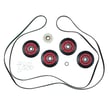
If you are rebuilding a noisy or high-mileage dryer, a kit like the Whirlpool dryer repair kit (4392067) 4392067 is commonly used to refresh wear items.
Why it matters
Most dryer “problems” trace back to overheating and airflow restriction. Good venting and consistent lint removal protect key parts like thermostats, thermal cut-offs, and the heating circuit, which directly improves reliability regardless of brand.
Last updated: January 2026
What is the average lifespan of a whirlpool dryer?
Most Whirlpool dryers average about 10 to 13 years of service life. A commercial dryer like Whirlpool CSP2940HQ0 often reaches that range when it is installed correctly, vented properly, and maintained on a regular schedule.
Typical lifespan by use
| Dryer type | Typical lifespan | What changes it most |
|---|---|---|
| Residential electric or gas dryer | 10 to 13 years | Venting, lint buildup, load size |
| Commercial dryer (like CSP2940HQ0) | 10 to 13 years | Duty cycle, airflow, preventive maintenance |
What helps a Whirlpool dryer last longer
- Clean the lint screen every load and keep the lint chute area clear.
- Keep the vent run short and unobstructed; restricted airflow is the fastest way to overheat parts.
- Avoid overloading; heavy loads strain the drive motor, drum rollers, and belt.
- Listen for squealing or thumping; worn rollers and shafts can damage the drum if ignored.
- Address no-heat or overheating symptoms quickly to protect thermostats and thermal cutoffs.
Parts that commonly wear as a dryer ages
These are normal wear items that often determine whether a dryer feels “worn out” before the cabinet does:
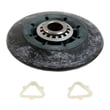
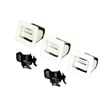
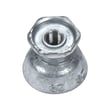
- Drum support system: dryer drum support roller WPW10314173 and dryer support roller tri-ring washer WPW10512946
- Door closure components: catch 279570 and door switch WPW10237959
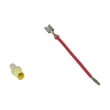
- Overheat protection: Whirlpool dryer thermal cut-off fuse kit 279973
Why it matters
A dryer that is nearing the end of its typical lifespan usually shows airflow or friction symptoms first (long dry times, hot cabinet, squeaks). Fixing venting and replacing common wear parts can restore normal drying performance and reduce downtime.
For model-specific installation and venting requirements that directly affect longevity, follow the CSP2940HQ0 installation guide.
Last updated: January 2026