

What are the most common issues with WGD5600SQ0?
The most common issues we see with the Whirlpool WGD5600SQ0 gas dryer are no heat or weak heat, not starting, long dry times, loud squealing or thumping, and the door not closing or staying shut. These problems usually trace to airflow restrictions, ignition components, or worn drum support parts.
Common symptoms and what usually causes them
- Dryer runs but won’t heat: failed igniter, radiant sensor, or gas valve coils
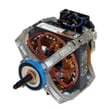
- Dryer won’t start: door switch not closing, failed drive motor, or a broken belt
- Takes too long to dry: clogged venting, lint buildup in the blower area, weak airflow
- Loud squeal, rumble, or thump: worn idler pulley, belt wear, drum support wear (often serviced as a kit)
- Door won’t latch: worn strike or door catch
Quick checks we recommend first
- Clean the lint screen and confirm strong airflow at the outside vent hood.
- Inspect the vent path for kinks, crushed flex duct, or heavy lint buildup.
- If the drum does not turn, check for a broken belt and listen for motor hum.
- If it tumbles but does not heat, watch for ignition: glow from the igniter, then burner flame.
Parts that commonly fix these issues (when symptoms match)
| Symptom | Common fix | Example part for WGD5600SQ0 |
|---|---|---|
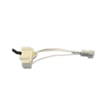
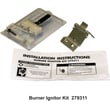
| No heat | Ignition system service | Igniter 279311, dryer radiant sensor WP338906 |
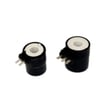
| Heats once then stops | Gas valve coils | Dryer gas valve coil kit 279834 |
| Won’t start (door) | Door interlock | Dryer door switch WP3406107 |
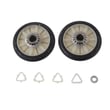
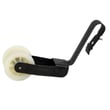
| Squealing or thumping | Drum support wear items | Dryer repair kit 4392065, dryer idler pulley WP691366 |
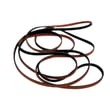
| Drum won’t turn | Belt failure | Dryer drum belt 341241 |
Why it matters
A gas dryer that tumbles but does not heat often points to ignition or gas valve components; a dryer that dries slowly is usually an airflow problem. Fixing the root cause protects the high-limit thermostat and helps prevent repeat failures.
For step-by-step symptom-based help, use our gas dryer wont heat troubleshooting video.
Last updated: March 2026
What is the average lifespan of a whirlpool dryer?
A Whirlpool dryer like model WGD5600SQ0 typically lasts 10 to 13 years. With consistent lint and vent maintenance and avoiding chronic overloading, many dryers reach around 10 to 15 years before major repairs (motor, drum support, or gas-heat components) become more common.
What affects dryer lifespan the most
- Airflow and venting: restricted vents overheat parts and shorten life
- Load size: frequent overloading strains the drive motor and drum belt
- Heat system health (gas models): weak ignition or cycling issues stress the burner system
- Routine cleaning: lint buildup increases heat and wear
- Wear parts: belts, rollers, and idlers wear gradually and are normal maintenance items
Maintenance that helps you get the full lifespan
- Clean the lint screen every load
- Check and clean the vent duct and outside hood regularly (short, smooth metal venting dries faster)
- Keep loads balanced; avoid packing the drum tight
- If you hear squealing or thumping, service drum support parts early (it prevents secondary damage)
- Replace common wear items as a set when symptoms start; for example, a dryer repair kit 4392065
Typical lifespan expectations (what to plan for)
| Dryer situation | What we typically see | What it means |
|---|---|---|
| Light use, good venting | 12 to 15 years | Fewer overheating and motor issues |
| Average family use | 10 to 13 years | Normal wear parts over time |
| Heavy use or poor venting | 7 to 10 years | More heat-related failures and noise |
Why it matters
A dryer’s biggest lifespan killer is heat and restricted airflow. Keeping venting clear helps protect key components such as the operating thermostat, gas ignition parts, and the motor, and it also reduces dry times and energy use.
For efficiency-focused upkeep tips, we recommend how to keep a dryer clean and economical.
Last updated: January 2026
What is the capacity of the WGD5600SQ0?
The Whirlpool dryer model WGD5600SQ0 is a full-size, 29-inch gas dryer; dryers in this class are typically about 6.0 to 7.0 cu. ft. of drum capacity. Use the drum fill level (not just “cu. ft.”) to size loads correctly and avoid long dry times.
Typical capacity range and what it means
Most full-size Whirlpool gas dryers like the WGD5600SQ0 fall into this common range:
| Dryer type | Typical drum capacity | Best use |
|---|---|---|
| Compact | 3.4 to 4.4 cu. ft. | Small spaces, small loads |
| Full-size (29-inch) | 6.0 to 7.0 cu. ft. | Family laundry, towels, bedding |
| Extra-large | 7.2+ cu. ft. | Very bulky loads, fewer cycles |
How full should I load the drum?
For best airflow and even drying, we recommend these fill levels:
- Small load: about 1/4 drum
- Medium load: about 1/2 drum
- Large load: about 3/4 drum
- Bulky items: 1 comforter or blanket at a time, loaded loosely
Why it matters
Capacity is the drum volume, but drying performance depends on tumbling and airflow. Overloading reduces airflow and increases dry time; underloading can overdry items and cause wrinkles.
If loads take longer than they used to
Capacity stays the same, but airflow or tumbling problems make the dryer act “smaller.” Check these common items:
- Clean the lint screen every load and clear the vent path
- Make sure the drum tumbles smoothly; a worn dryer drum belt 341241 can slip
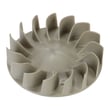
- Listen for rattling or weak airflow; a damaged dryer blower wheel WP694089 reduces air movement
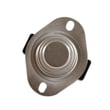
- If heat cycles oddly, the dryer operating thermostat WP3387134 can affect temperature control
For dry-time troubleshooting steps, use dryer takes a long time to dry.
Last updated: January 2026