Owner’s manual
 Error Codes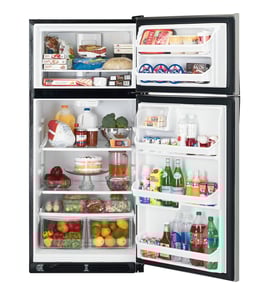



How do I tell what model Kenmore fridge I have?
Your Kenmore refrigerator model number is printed on the model and serial number label inside the fresh food (refrigerator) compartment. On Kenmore model 10676236401, that label is typically on an inside wall of the refrigerator compartment; write down the full model and serial number exactly as shown.
Where to look first (fastest checks)
- Inside the refrigerator compartment on an interior side wall (most common)
- Near the top front edge of the refrigerator liner (sometimes by the ceiling area)
- Behind or beside the crisper drawers on the interior wall
- On the cabinet frame just inside the door opening (hinge side)
- If you cannot find it in the refrigerator section, check the freezer compartment interior wall
What the label looks like and what to copy
The label usually includes a model number and serial number. Copy both so we can match the correct Kenmore parts list and diagrams.
| Label item | Example format | Why you need it |
|---|---|---|
| Model number | 106.XXXXXXXXX (often starts with 106) | Identifies the exact refrigerator design and parts |
| Serial number | Letters and numbers | Helps date the unit and confirm production details |
| Purchase date (your records) | Month/day/year | Useful for service history and warranty paperwork |
Why it matters
Kenmore refrigerators can look similar across multiple model families, but parts like an ice maker assembly, door gasket, light switch, or water tube can vary by model. Using the exact model number prevents ordering the wrong replacement part.
Tip for using the model number on parts lookups
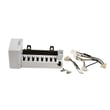
Once you have the model number, use it to pull the correct diagrams and part list, then match the part name and part ID exactly (for example, ice maker assembly - refrigerator ice maker by whirlpool 4317943 if your unit uses that style).
For more model-specific details and label location notes, check the owner's manual.
Last updated: February 2026
How many cubic feet is my Kenmore refrigerator by model number?
Your Kenmore top-mount refrigerator model 10676236401 has its exact cubic-foot capacity listed on the model and serial number label inside the fresh food compartment, and it may also be shown in the specifications section of the owner's manual. Using the rating label is the fastest, most accurate way to match capacity to your exact configuration.
Where to find the cubic-foot capacity (fastest methods)
- Check the model and serial number label on the inside wall of the refrigerator compartment.
- Look for a line that says capacity, cu. ft., or total volume.
- If the label is hard to read, use a flashlight and take a close-up photo, then zoom in.
- Confirm you are reading the refrigerator’s label, not a shelf/bin label.
- If you recently replaced doors or liners, still use the appliance label as the source of truth.
What the model number tells you (and what it does not)
Kenmore model numbers help identify the product family and parts, but they do not reliably encode the exact cubic-foot capacity for every version. Capacity can vary slightly by interior layout, ice maker setup, and liner design.
Quick reference: common capacity ranges for this style
Most Kenmore top-mount refrigerators of this general design fall into these typical ranges:
| Refrigerator type | Typical capacity range |
|---|---|
| Top-mount (top freezer) | 14 to 22 cu. ft. |
| Compact top freezer | 10 to 14 cu. ft. |
| Full-size top freezer | 18 to 22 cu. ft. |
Why it matters
Knowing cubic feet helps us match the right shelves, bins, and airflow expectations. It also helps when comparing replacement parts that affect usable space, such as a refrigerator crisper pan W10854037 or a refrigerator glass shelf WP2176225.
Last updated: February 2026
What are the most common problems with Kenmore refrigerators?
The most common problems we see on Kenmore refrigerators like model 10676236401 are cooling issues (often airflow or defrost related), water leaks, ice maker troubles, and unusual noises. Many fixes start with basic maintenance, checking door sealing, and confirming proper water supply and filter installation using the owner's manual.
Common symptoms and what usually causes them
- Not cooling or warm temperatures: dirty condenser coils, failed condenser/evaporator fan, or frost buildup from a defrost problem
- Water leaking or puddles: clogged defrost drain, loose water line, or a door not sealing well
- Ice maker not making ice: water supply shutoff closed, kinked water line, clogged filter, or ice maker component failure
- Noisy operation: fan blade hitting ice, worn fan motor, or vibration from an unlevel cabinet
- Doors not closing well: bins or shelves out of position, sticky gaskets, or the refrigerator not level
Quick checks we recommend first (safe, no parts needed)
- Confirm ventilation clearance: allow about 1/2 inch on each side and top; leave 2 inches minimum by a fixed wall so doors swing freely.
- Check door sealing: clean the gasket and the surface it touches; if it sticks, apply a thin coat of paraffin wax after cleaning.
- Level the refrigerator: wobble or instability can cause noise and poor door closing.
- If water flow is weak: remove the water filter cartridge temporarily and test the dispenser; if flow improves, replace the filter.
- Inspect the water line: look for kinks and verify the shutoff valve is fully open.
Parts that commonly solve these problems (when a component is bad)
| Problem area | What you might replace | Example part for this model |
|---|---|---|
| Ice maker not working | Ice maker assembly | Ice maker assembly - refrigerator ice maker by whirlpool 4317943 |
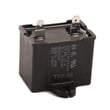
| Clicking or hard-start symptoms | Run capacitor | Run capacitor WPW10662129 |
| Door not sealing, moisture, warm spots | Door gasket panel | Gasket panel (white) 2159061 |
| Frost buildup, warm fridge | Defrost thermostat (bi-metal) | Defrost bi-metal WP4387503 |
| Warm temps, fan noise | Condenser fan | Refrigerator condenser fan W11578915 |
Why it matters
Most “big” refrigerator complaints trace back to airflow, sealing, or water supply. Fixing those early helps stabilize temperatures, prevents ice buildup, and reduces strain on the sealed refrigeration system.
Last updated: February 2026
What's the average lifespan of a Kenmore refrigerator?
Most Kenmore refrigerators average 10 to 15 years of service life; with consistent maintenance (airflow, clean seals, and timely repairs), many units can run longer. For your Kenmore 10676236401 top-mount refrigerator, following the care and operating guidance in the owner's manual helps you get the full expected lifespan.
Typical lifespan and what affects it most
A refrigerator’s life is usually determined by heat management, door sealing, and how hard the sealed system has to work.
- Keep condenser areas clean so the compressor runs cooler
- Make sure doors close and seal fully (no warm air leaks)
- Maintain proper air circulation inside the cabinet
- Address unusual noises or temperature swings early
- Keep the unit level so doors align and close correctly
Maintenance checklist that extends life
These are the highest-impact habits for a Kenmore top-mount refrigerator.
- Ensure proper air circulation inside the refrigerator (avoid blocking vents)
- Clean and condition door gaskets; if they stick, clean and apply a thin coat of paraffin wax
- Level the refrigerator and align doors if it wobbles or doors don’t close evenly
- Prepare and maintain the water system if your model has an ice maker or water dispenser
- Listen for “normal sounds” vs. new sounds that indicate a fan or compressor strain
Common wear items vs. major repairs
Some parts are normal wear items; others are bigger-ticket repairs that often determine whether a refrigerator is worth repairing.
| Category | Examples | What it usually means |
|---|---|---|
| Wear and convenience parts | Door gaskets, shelves, light switch | Fixing these often restores performance and efficiency |
| Cooling airflow parts | Evaporator fan blade, condenser fan | Fixing these prevents overheating and warm temps |
| Sealed system components | Compressor, connecting tubing | These repairs are more complex and can be costlier |
If you’re troubleshooting cooling or airflow issues, parts like the fan blade WP2163777 or refrigerator condenser fan W11578915 are common checks before assuming a sealed system problem.
Why it matters
A refrigerator that runs hot (dirty condenser area, poor airflow, or leaking door seal) cycles longer and stresses the compressor. Reducing run time and keeping temperatures stable is the most reliable way to reach the 10 to 15 year lifespan range.
Last updated: February 2026