Owner’s manual
 Error Codes



Is a 40 gallon electric water heater 110 or 220?
For Kenmore Power Miser 12+ electric water heaters like model 153320591HT, the electrical supply is 240 volts (commonly called 220/240), not 110/120. The product specifications in the 153320591HT owner's manual list element wattage ratings at 240 volts, which is the standard operating voltage for these units.
Most 40-gallon residential electric water heaters are designed for a 240-volt circuit because the heating elements need higher wattage to recover hot water quickly.
Common electrical expectations:
- Voltage: 240V (often referred to as 220V)
- Dedicated circuit: Yes
- Breaker size: typically 20A or 30A (depends on element wattage)
- Wire size: commonly 12 AWG or 10 AWG copper (depends on breaker and distance)
| Item | 110/120V water heater | 220/240V water heater |
|---|---|---|
| Typical use | Point-of-use, small tanks | Most full-size residential tanks |
| Recovery speed | Slower | Faster |
| Circuit | Often 15A to 20A | Often 20A to 30A |
| Best fit | Single sink, small demand | Whole-home hot water |
Using the correct voltage and circuit sizing helps your water heater heat properly and prevents nuisance breaker trips, slow recovery, and premature wear on electrical components like thermostats and wiring connections.
If your water heater is not heating correctly, we focus first on the control and safety components most likely to affect power to the elements:
- Check the breaker is on and not tripping
- Confirm 240V is present at the heater (power off before opening covers)
- Inspect wiring for overheating or loose connections
- Test the thermostats for proper operation
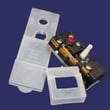
- Replace a failed thermostat with the correct part for this model, such as the thermostat 100108424 (when it matches your position and wiring)
Last updated: January 2026
Is a 4500 watt or 5500 watt water heater better?
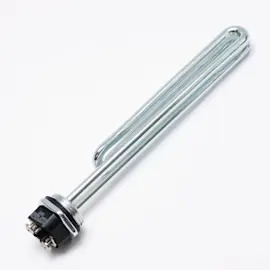
For a Kenmore 153320591HT Power Miser 12+ electric water heater, 5500 watts is better for faster hot-water recovery, but only if your home’s electrical supply is sized for it. This model’s lower element is designed to run at 3800 watts or be converted to 5500 watts; the upper element is 3800 watts (240V). See the owner's manual for the conversion requirements.
Higher wattage does not make the tank hold more hot water; it reheats the tank faster after showers, laundry, or dishwashing.
- 5500W: faster recovery, better for higher demand and back-to-back use
- 4500W: slower recovery, often used to reduce electrical load on some setups
- On this Kenmore design, the key choice is typically 3800W vs 5500W on the lower element (not 4500W)
Our manual for this model calls out specific requirements before converting the lower element to 5500W:
- 240V power supply
- 10-gauge (10 AWG) wiring rated for the application
- 30-amp breaker/fusing capacity
- Installation must follow the manual and local electrical codes
If your wiring or breaker is smaller, staying at the factory wattage prevents nuisance trips and overheating at connections.
| Option | Hot-water recovery speed | Electrical demand | Best for |
|---|---|---|---|
| 4500W element (general) | Medium | Medium | Moderate demand when 5500W is not supported |
| 5500W element | Fast | Higher | Larger households, heavy usage, faster reheats |
Wattage affects recovery time, breaker sizing, and wire heating. Matching the element wattage to your electrical circuit protects the water heater’s wiring connections and helps avoid repeated breaker trips.
If you are troubleshooting temperature swings or slow recovery, a failing thermostat can also be a factor; the thermostat 100108424 is one of the model-specific parts we list for this unit.
Last updated: January 2026
Is a 20 gallon water heater enough for a shower?
A 20-gallon tank can handle a single, average shower, but it runs out of hot water quickly if the shower is long, the flow rate is high, or someone uses hot water elsewhere. For the Kenmore 153320591HT electric water heater, keeping the thermostat near the factory setting (about 120°F) helps balance comfort and recovery time; see the owner's manual for temperature and operation guidance.
A 20-gallon electric water heater is best for light demand. It typically works well when only one person is showering and no other hot-water loads are running.
Common outcomes:
- 1 shower is usually fine if it is moderate length and moderate flow.
- Back-to-back showers often cause noticeable temperature drop.
- Cold incoming water (winter) reduces how long hot water lasts.
- Higher thermostat settings can make the shower feel hotter, but do not increase tank size.
| Household use pattern | 20-gallon tank result | Better fit |
|---|---|---|
| One person, short shower | Usually enough | 20-30 gallons |
| One person, long shower | Sometimes not enough | 30-40 gallons |
| Two people, back-to-back showers | Often not enough | 40-50 gallons |
| Family, multiple fixtures | Not enough | 50+ gallons |
- Set the thermostat to HOT (about 120°F) as a starting point (factory setting is about 120°F).
- Use a low-flow showerhead to reduce gallons per minute.
- Avoid running the dishwasher or clothes washer during showers.
- Let the heater recover between showers (electric recovery is slower than gas).
- If temperature swings occur, inspect the thermostat mounting and wiring; a failing control can shorten usable hot water.
If you suspect temperature control problems on this model, the thermostat 100108424 is a common replacement part.
Shower comfort depends on usable hot water, not just tank size. A small tank can feel “too small” when demand spikes, incoming water is colder, or the thermostat is not regulating correctly.
Last updated: January 2026
What is the downside of an electric water heater?
An electric tank water heater like the Kenmore 153320591HT has slower recovery after heavy hot-water use, can cost more to run where electric rates are high, and it stops heating during a power outage. For model-specific electrical and safety requirements, use the 153320591HT owner’s manual.
- Slower recovery: after multiple showers or laundry, you can run out of hot water and wait longer for reheating.
- Power-outage dependency: no electricity means no heating.
- Higher operating cost in some areas: electricity pricing drives monthly cost.
- Electrical capacity needs: some homes need a dedicated circuit, correct breaker size, and proper wire gauge.
- Finite supply (tank models): once stored hot water is used, recovery time matters.
The Kenmore 153320591HT is designed for one rated voltage; matching the rating plate voltage and following wiring and breaker guidance is essential. The manual also stresses turning power OFF before removing access panels or servicing.
| What you’re checking | Typical range for electric tank heaters | What to do |
|---|---|---|
| Supply voltage | 240V (most common) | Confirm the rating plate matches your supply |
| Breaker size | 20A to 30A | Use a dedicated circuit sized to the heater |
| Copper wire gauge | 12 AWG to 10 AWG | Follow local code and the manual’s chart |
If the complaint is not enough hot water, temperature swings, or long recovery, a control problem is common.
- Check for a tripped breaker or loose connections (power OFF first)
- Verify thermostat settings behind the access panels
- If temperature control is erratic, replace the thermostat 100108424 and recheck operation
- If you see seepage at an element opening, replace the water heater heating element gasket 100108379
Knowing the real limitations of electric water heaters helps you decide whether you need a usage change, an electrical correction, or a targeted repair such as a thermostat or gasket.
Last updated: January 2026