Owner’s manual
 Error Codes


What year did the Kenmore Elite come out?
Kenmore Elite launched as a premium Kenmore line in the late 1990s; the exact “first year” varies by product type, and your Kenmore Elite refrigerator model 59678572803 was manufactured later than that. For the most accurate age of your specific unit, match the serial number date code using the 59678572803 owner's manual.
We use the serial number (not the model number) to determine the build date.
- Look for the serial/model tag inside the fresh food compartment (often on a side wall near the crisper area).
- If not inside, check behind the toe grille or on the back panel.
- Write down the full serial number exactly as shown.
- Use the date-code format described in the 59678572803 owner's manual.
- If the label is damaged, take a clear photo and zoom in to capture every character.
| What you are dating | What it tells you | Best way to confirm |
|---|---|---|
| “Kenmore Elite” line introduction | When the Elite branding first appeared | General history (varies by category) |
| Your model 59678572803 | When your refrigerator was built | Serial number date code |
| Your specific unit’s “age in service” | How long it has been used | Purchase receipt or install date |
Knowing the manufacture date helps us choose the right repair approach for cooling, ice maker, and water system issues, and it helps you decide whether to replace wear items (like door gaskets and filters) as preventive maintenance.
- Door seal leaks and condensation (gasket wear)
- Ice maker slow production or no ice
- Water inlet valve flow problems
- Evaporator fan noise or weak airflow
- Drain tube clogs causing puddles
Last updated: January 2026
What is the average lifespan of a Kenmore Elite refrigerator?
A Kenmore Elite refrigerator like model 59678572803 typically lasts 10 to 15 years. With consistent care (cleaning, good door sealing, and stable temperatures), it’s common to reach the upper end of that range before major sealed-system or control issues become cost drivers.
Most refrigerators retire due to a few high-impact failures rather than “old age.”
- Sealed-system problems (compressor, refrigerant leak, restrictions)
- Cooling airflow failures (evaporator fan motor, iced-up evaporator)
- Water and ice issues (ice maker, inlet valve, frozen fill tube)
- Door sealing problems that cause warm temps and long run times
- Electronic control failures
The 59678572803 owner information includes a dedicated “Refrigerator care” section; following it consistently is the simplest way to extend service life. See the owner's manual for the exact care steps and intervals.
- Clean condenser area regularly (dust buildup raises compressor workload)
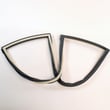
- Keep door gaskets clean and sealing flat
- Set stable temps (avoid frequent extreme adjustments)
- Keep vents inside the fresh food and freezer sections unblocked
- Address water leaks or puddles quickly to prevent icing and corrosion
Use this as a practical decision tool when the refrigerator is near the 10 to 15 year mark.
| Situation | Usually makes sense to | Why |
|---|---|---|
| Warm temps plus loud running, poor cooling | Diagnose cooling system first | Could be airflow, controls, or sealed system |
| Ice maker not producing but cooling is normal | Repair | Often a contained, lower-cost fix |
| Door not sealing, moisture, frost, sweating | Repair | Efficiency and temperature stability improve |
| Repeated sealed-system failures | Replace | Repairs can approach replacement value |
If you’re troubleshooting performance issues, these model-matched parts are often involved:
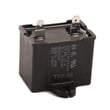
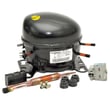
- Refrigerator compressor W10233960 (major cooling component)
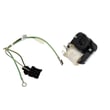
- Refrigerator evaporator fan motor W11024089 (moves cold air through the cabinet)
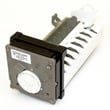
- Refrigerator ice maker D7824706Q (ice production problems)
A refrigerator that runs longer to hold temperature uses more energy and stresses the compressor. Simple care (cleaning, sealing, airflow) reduces run time, protects food temperatures, and helps the unit reach its full expected lifespan.
Last updated: January 2026
What are the common problems with Kenmore Elite refrigerators?
Common problems on the Kenmore Elite 59678572803 bottom-mount refrigerator include warm temperatures (often airflow or condenser-related), frost or moisture buildup (door seal or defrost-related), ice maker or water issues (valve or supply-related), and new or changing noises. Many symptoms are normal or fixable with basic checks in the owner's manual.
- Not cooling well or temperature swings: dirty condenser area, blocked vents, doors opened often, or the unit still stabilizing after installation (allow about 24 hours).
- Runs a lot: normal with high-efficiency compressors, especially in warm rooms or after loading groceries.
- Noises (buzzing, pulsating, hissing/rattling): often normal operation; buzzing can occur when the water valve fills the ice maker.
- Frost/icing or moisture: door not sealing, frequent door openings, or a defrost/drain issue.
- Ice maker not making ice: water supply issue, frozen fill tube, or a valve problem.
- Confirm the refrigerator is plugged into a grounded outlet and the controls are turned on.
- Give a new install or major temperature change a full 24 hours to stabilize.
- Make sure air vents inside the fresh food and freezer sections are not blocked by food packages.
- Listen for when the sound happens (during ice maker fill, during cooling, after door closes).
- Check door closing and sealing all the way around the gasket.
| Problem you notice | Most likely area | Typical fix |
|---|---|---|
| Warm fridge/freezer | Airflow or condenser area | Clear vents, clean condenser area, verify fans run |
| Buzzing at intervals | Water fill to ice maker | Normal; if no ice, check supply and valve |
| Frost or water puddles | Door seal or drain/defrost | Inspect gasket, clear drain path |
| No ice | Water supply/valve/ice maker | Check supply, then test components |
If troubleshooting points to a failed component, these model-matched parts are common suspects:
- Water not dispensing or no ice: refrigerator water inlet valve assembly WP2315576
- Ice production issues: refrigerator ice maker D7824706Q
- Warm temps from poor airflow: evaporator fan motor (commonly involved on bottom-mount designs)
Catching airflow, sealing, and water-supply problems early helps prevent food spoilage, reduces compressor run time, and avoids secondary issues like frost buildup and leaks.
Last updated: January 2026
Why is my Kenmore Elite refrigerator leaking water out of the bottom?
Water leaking from the bottom of your Kenmore Elite 59678572803 refrigerator is typically caused by a clogged or frozen defrost drain, a loose water supply connection, or a dispenser or ice maker water line drip. We use the steps below to pinpoint the source using the 59678572803 owner’s manual.
- Water under crisper drawers or inside the fresh food section: defrost drain issue is most likely.
- Water only on the floor near the front base grille: check dispenser tube and water line connections.
- Leak happens only during dispensing: dispenser tubing or normal post-dispense drip.
- Leak happens when ice maker fills: water inlet valve or supply line connection.
- Leak started after moving the refrigerator: kinked line or loosened compression fitting.
| Symptom | Most likely cause | What to do next |
|---|---|---|
| Water inside fridge, pooling under drawers | Clogged or frozen defrost drain | Clear ice, flush the drain path, clean the drain tube |
| Water on floor near base grille | Loose dispenser tube connection | Tighten and reseat tube connections |
| Slow drip at rear connection | Supply line or valve seep | Inspect fittings, tighten carefully, look for cracks |
| Drips right after dispensing | Normal drip or tube issue | Hold cup 2 to 3 seconds after releasing lever; check tubing |
The manual for this model notes that one or two drops after dispensing is normal, and that water on the floor near the base grille often points to dispenser tube connections that are not fully tightened. After a new installation or water filter change, flushing the water system can also help stabilize flow.
If the leak traces to the defrost drain path, we commonly inspect the refrigerator drain tube W10619951 for blockage, cracking, or poor routing.
Bottom leaks can damage flooring and often signal a defrost drainage problem that can lead to ice buildup and temperature swings.
Last updated: January 2026