Installation guide
 Owner’s manual


How do I tell what model my Kenmore dryer is?
Your Kenmore dryer’s model number is printed on the appliance’s ID label; on most Kenmore dryers it’s inside the door opening on the cabinet frame, and sometimes on the back panel. Once you have it (for example, 11062332510), we can match the correct parts and specifications using the 11062332510 owner's manual.
Where to look for the model number label
Check these common spots on Kenmore dryers:
- Inside the dryer door opening (on the cabinet frame near the door latch)
- On the back panel of the dryer cabinet
- Around the lint screen housing area (varies by design)
- Behind the lower access panel (on some styles)
What the model number looks like (and why it matters)
Kenmore model numbers are usually a long string of digits (often starting with 110 on many Kenmore-built/Whirlpool-style dryers). Use the full number exactly as shown on the label.
Quick guide
| What you see | What it tells us | What to do next |
|---|---|---|
| Full model number (example: 11062332510) | Exact dryer version and parts list | Use it to look up diagrams and parts |
| Only a partial number | Not enough to guarantee correct parts | Recheck the label for missing digits |
| Serial number only | Tracks production, not parts lookup | Keep it for service records, but find the model number |
Tips to avoid ordering the wrong part
When you’re shopping for common wear items like a drum belt or idler pulley, the model number is what ensures fit.
- Copy the model number character-for-character (no spaces)
- Take a clear photo of the label before it wears or fades
- Match parts by model, not by “looks similar”
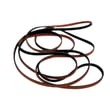
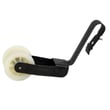
- If you’re replacing a broken belt, confirm the correct belt for your model (example part: belt 341241)
Why it matters
Kenmore dryers share similar cabinets and controls across many series, but internal components (belt length, heating element style, thermostat ratings, door switch type) can differ. Using the exact model number keeps repairs accurate and prevents returns.
Last updated: February 2026
How much does it cost to replace a heating element in a Kenmore dryer?
For Kenmore dryer model 11062332510, replacing the heating element typically costs $50 to $120 for the part and $150 to $350 total if you hire a technician (part plus labor). If you do it yourself, the cost is usually the part price plus basic tools.
Typical cost breakdown
- DIY parts-only: $50 to $120
- Service call and labor: commonly $100 to $250
- Total professional repair: commonly $150 to $350
- Extra parts sometimes needed: wire/terminal kit, thermal cut-off kit, or thermostat
- Time to replace (typical): 30 to 90 minutes for an experienced DIYer
| Scenario | What you pay for | Typical total |
|---|---|---|
| DIY replacement | Heating element only | $50 to $120 |
| DIY plus extras | Element + wiring/fuse kit | $70 to $180 |
| Professional repair | Element + labor | $150 to $350 |
Parts that commonly affect the final price
If the element failed due to overheating or poor airflow, we often see additional parts needed at the same time:
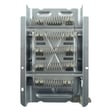
- Dryer heating element 279838 (the heater itself)
- Dryer heating element wire kit 279457 (burned terminals or brittle wiring)
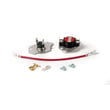
- Dryer thermal cut-off fuse kit 279816 (overheat protection that can open and stop heat)
- Lint screen or vent cleaning supplies (restricted airflow is a common root cause)
Why it matters
A dryer that heats poorly or not at all can be a simple element failure, but it can also be a symptom of restricted venting or a failed safety device. Fixing airflow issues during the repair helps prevent repeat failures and long dry times.
Before you replace the element
Use the troubleshooting and access steps in the 11062332510 owner's manual and follow the safety and setup guidance in the installation guide.
- Unplug the dryer (and shut off gas if you have a gas version)
- Check and clean the lint screen and exhaust duct
- Confirm the cycle and temperature settings are correct
- If the drum turns but there is no heat, test the element and thermal cut-off for continuity
Last updated: February 2026
What is the average lifespan of 11062332510?
A Kenmore dryer like model 11062332510 typically lasts about 13 years with normal household use. Regular vent cleaning, good airflow, and replacing wear items (belt, rollers, thermal fuse) on time are the biggest factors in reaching that lifespan.
What affects lifespan the most
- Vent restriction (overheating and long dry times)
- Lint buildup in the lint screen housing and blower area
- Worn drum support parts (rollers, idler pulley) that strain the motor
- Overheating events that trip safety fuses/thermostats
- Heavy use (multiple loads daily) versus light weekly use
Maintenance that adds years (high impact)
The manual emphasizes checking your vent system for good airflow and cleaning the lint filter before each load. Use these habits to reduce heat stress on the heating circuit and motor.
- Clean the lint screen every load
- Inspect and clean the entire vent run regularly (including the outside hood)
- Keep the vent run short and straight; limit elbows
- Avoid crushing or kinking the vent behind the dryer
- Use Auto Dry cycles when possible for better fabric care and energy savings
For model-specific operating and care guidance, use the 11062332510 owner's manual.
Parts that commonly determine “end of life” (and what they do)
| Symptom | Common wear area | Example part on this model page |
|---|---|---|
| Drum will not turn, squealing | Belt/roller/idler wear | Belt 341241 or dryer repair kit 4392065 |
| Runs but no heat | Heating circuit or safety devices | Dryer heating element 279838 or dryer thermal cut-off fuse kit 279816 |
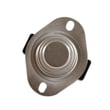
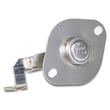
| Shuts off early, overheats | Airflow or thermostats | Dryer operating thermostat WP3387134 |
Why it matters
Knowing the typical lifespan helps you decide whether to invest in a repair (like a belt or heating element) or plan for replacement. On a 13-year timeline, airflow and routine maintenance often make the difference between a simple repair and repeated overheating failures.
Last updated: March 2026