Installation guide
 Owner’s manual


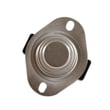
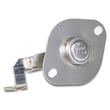
How do I know if my Kenmore dryer thermal fuse is blown?
If your Kenmore electric dryer model 11062332511 won’t start, or it runs but has no heat, a blown thermal fuse or thermal cut-off is a common cause. We confirm it by unplugging the dryer and checking the fuse with a multimeter for continuity (no continuity means it’s blown). See the 11062332511 owner’s manual for the model’s troubleshooting checks.
Quick symptoms to look for
A blown thermal fuse or thermal cut-off often shows up as one of these:
- Dryer will not run at all (no motor operation)
- Drum tumbles but there’s no heat (some electrical issues can look similar)
- Cycle stops early because the dryer overheats and a safety device opens
- You recently noticed restricted airflow (long dry times, very hot cabinet)
How we test it (safe, basic method)
- Unplug the dryer (electric shock risk).
- Access the thermal fuse/thermal cut-off area (typically on the blower housing or heater box).
- Remove at least one wire from the fuse so you don’t read through the circuit.
- Set a multimeter to continuity or lowest ohms.
- Test across the fuse terminals.
Reading guide
| Meter result | What it means | Next step |
|---|---|---|
| Beep or near 0 Ω | Fuse is good | Check power supply, door switch, timer, heat circuit |
| No beep or OL | Fuse is blown | Replace the safety device and fix the overheating cause |
Don’t skip the root cause (airflow and power)
A fuse usually blows because the dryer overheated. Before restarting, we address these common causes:
- Clean the lint screen and lint chute
- Inspect and clean the vent run; use 4-inch venting where possible
- Confirm the dryer has proper clearance and ventilation (especially in a closet)
- Verify the dryer has the correct 240-volt supply; electric dryers can tumble with a partial power loss but not heat
- Check both household fuses/breakers (electric dryers typically use two)
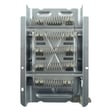
For heat-related failures on this model, the dryer thermal cut-off fuse kit 279816 is a common repair part.
Why it matters
The thermal fuse is a safety device; bypassing it can create an overheating hazard. Replacing the fuse without correcting airflow or power issues often leads to repeat failures and longer dry times.
Last updated: February 2026
How do I tell what model my Kenmore dryer is?
Your Kenmore dryer’s model number is printed on the appliance ID label (a sticker or metal plate). Once you find it, match that exact number (for example, 11062332511) when ordering parts or checking cycle features in the 11062332511 owner’s manual.
Where to look for the model number label
Check these common locations on Kenmore electric dryers:
- Inside the door opening on the cabinet frame
- On the back panel of the dryer
- Around the lint screen housing area (near the top opening)
- On the inside edge of the front panel (visible with the door open)
How to read the number (and why it matters)
Kenmore model numbers often start with a 3-digit prefix (such as 110 or 796). The full model number is what we use to confirm the correct parts list, wiring layout, and feature set.
Why it matters
Using the exact model number helps us:
- Confirm the correct replacement part fit
- Avoid ordering a similar-looking part that will not mount or wire correctly
- Match the right instructions for your control panel and cycles
Quick checklist before you order parts
Use this checklist to prevent mix-ups:
- Copy the model number exactly as shown (include all digits)
- Write down the serial number too (helpful for production variations)
- Compare your dryer’s door style and control panel layout to the manual
- If you’re troubleshooting a “won’t start” symptom, confirm the door closes and latches fully (a failed dryer door switch WP3406107 can prevent starting)
Model number vs. serial number
| Item | What it tells us | Used for |
|---|---|---|
| Model number | Design and parts fit | Parts lookup, manuals, diagrams |
| Serial number | Production run details | Verifying revisions, service history |
Last updated: February 2026
What is the PF code on a Kenmore dryer?
PF on a Kenmore dryer means Power Failure; the cycle was interrupted because the dryer lost power. On Kenmore model 11062332511, press Stop/Clear to remove the code, then restart the cycle once power is stable (see the 11062332511 owner's manual).
What to do when PF shows up
- Press Stop/Clear to clear the display.
- Re-select your cycle and press Start (some models require holding Start for about 3 seconds).
- Confirm the dryer door is fully closed.
- Check the home breaker/fuse for the dryer circuit.
- Make sure the dryer is plugged in firmly and the cord is not loose at the terminal block.
- Avoid using an extension cord with this dryer.
Quick power checks that prevent repeat PF codes
Power interruptions are often caused by a weak connection or an underpowered circuit. For this electric dryer, the installation requirements call for a dedicated supply and proper wiring.
| Check | What “good” looks like | What to fix if not |
|---|---|---|
| Circuit size | Dedicated 30-amp dryer circuit | Reset breaker, replace blown fuses, correct wiring |
| Supply type | 120/240V (or 120/208V if specified) | Have supply verified by a qualified electrician |
| Cord/wiring | Tight, secure connections | Replace damaged cord or correct loose terminal connections |
If your home was built after 1996 (or the circuit was remodeled after 1996), a 4-wire power supply connection is typically required; we cover the wiring options in the 11062332511 installation guide.
When a part replacement is likely
If the PF code appears along with obvious cord damage, overheating at the plug, or intermittent power when the cord is moved, replacing the cord is a common fix. Use the correct cord style for your outlet and installation.
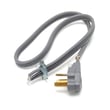
- If you need the correct replacement, match the cord type and rating to your setup; the power cord W11710615 is a listed option for this model.
Why it matters
A dryer that loses power mid-cycle can stop heating and tumbling, leaving clothes damp and increasing cycle time. More importantly, loose electrical connections can cause repeated shutdowns and unreliable operation.
Last updated: February 2026