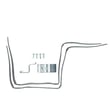
Owner’s manual


How to reset a Kenmore 11085091400 dryer?
To reset your Kenmore 11085091400 dryer, we recommend doing a simple power reset: unplug the dryer (or switch the breaker off) for 1 minute, restore power, then reselect a cycle and press and hold START for about 3 seconds. This clears many control glitches and restores normal operation.
Reset steps (safe, model-appropriate)
- Press PAUSE/CANCEL twice to stop the current cycle.
- Unplug the dryer (or turn both dryer breakers off) for 1 minute.
- Restore power.
- Close the door fully.
- Select a cycle and any options.
- Press and hold START for about 3 seconds to begin.
For control and cycle behavior details specific to this model, use the 11085091400 owner's manual.
If the controls are locked
This model uses a Control Locked feature that can make it seem like the dryer will not respond.
- Press and hold AUTO DRY LEVEL for 3 seconds.
- Confirm the Control Locked indicator turns off.
- Re-select the cycle.
- Press and hold START to run.
If the dryer still will not start after a reset
A reset will not fix a power supply or safety issue. Check these common causes first:
- Make sure the dryer is plugged into a grounded outlet.
- For electric setups, confirm you have a 240-volt supply.
- Check that both fuses are good or both breakers are on (many dryers use two).
- Confirm the door closes and latches securely.
- Make sure you did not wait more than 5 minutes after selecting a cycle (the dryer can shut off).
Quick symptom guide
| What you see | What it usually means | What to do next |
|---|---|---|
| Lights on, won’t start | Control locked or cycle not started | Unlock controls; press and hold START |
| Completely dead | Power supply issue | Check both breakers/fuses; outlet power |
| Stops and clears | PAUSE/CANCEL pressed twice | Re-select cycle and start again |
Why it matters
A proper reset restores the electronic control to a known state, but it also helps you separate a simple control glitch from issues like power supply problems, a door-latch problem, or a failed component.
Last updated: January 2026
Is it worth replacing the heating element in a dryer?
Yes, it’s usually worth replacing the heating element in a Kenmore dryer model 11085091400 when the dryer otherwise runs normally, tumbles, and has good airflow; the part cost is typically far less than replacing the whole dryer, and it restores proper heat and drying performance.
When replacing the heating element makes sense
Replace the heating element when the dryer runs but produces no heat and basic power checks pass.
- The drum tumbles and the timer advances, but clothes stay cold and damp
- You have proper power; many electric dryers use a 240-volt supply and can run but not heat if one leg is out
- Airflow is strong at the outside vent (poor airflow can overheat the heater circuit and cause repeat failures)
- The dryer is in otherwise good condition (drum, motor, and controls are working)
- You are prepared to inspect heat-safety parts at the same time
What to check before you buy parts
Our first goal is to confirm it’s truly a heat problem and not power or airflow.
- Check both house fuses or both circuit breakers; many dryers have two
- Run the dryer for about 5 minutes, then open the door and feel for heat
- Clean the lint screen and confirm strong vent airflow
- If the dryer is new to you or the element was just replaced, a brief “new heater” odor can be normal on first heat-up
Quick decision table
| What you observe | Most likely direction | Typical next step |
|---|---|---|
| Runs, tumbles, no heat | Heating circuit issue | Test/replace heater and safety devices |
| No start at all | Power/door/start issue | Check supply, door switch, start circuit |
| Heats but dries slowly | Airflow restriction | Clean venting and lint path |
Parts commonly replaced with the element
A failed heater can be related to overheating or a safety device opening. If you’re replacing the heater, we often recommend checking these at the same time.
Why it matters
A dryer that runs without heat wastes time and energy, and restricted venting can overheat the heater circuit. The manual also notes that using improper venting materials can create problems; following the venting requirements helps protect performance and reliability.
For model-specific operating checks and troubleshooting steps, use the 11085091400 owner’s manual.
Last updated: January 2026
How to test a dryer temperature switch?
To test a dryer temperature switch on Kenmore dryer model 11085091400, we unplug the dryer, access the switch, then use a multimeter on continuity/ohms to check whether the switch opens and closes correctly as temperature changes. Use the wiring diagram in the 11085091400 owner's manual to identify the correct terminals.
Safety first
- Unplug the dryer before removing any panels.
- If the dryer is hard-wired, turn off the breaker and verify power is off.
- Let the heater area cool completely before touching components.
- Avoid running the dryer with panels removed unless the manual specifically allows it.
What you need
- Digital multimeter (continuity and resistance/ohms)
- 1/4-inch nut driver or screwdriver (typical for dryer panels)
- Needle-nose pliers (for wire terminals)
- Phone camera (to record wire positions)
Step-by-step: how we test the temperature switch
- Disconnect power and open the access panel needed to reach the temperature switch (often on the blower housing or heater duct).
- Label and remove wires from the switch terminals (pull on the connector, not the wire).
- Set the meter to continuity (or lowest ohms).
- Test across the correct two terminals shown in the wiring diagram.
- Interpret the reading:
- If the switch is supposed to be closed at room temperature, we should read continuity (near 0 ohms).
- If it reads open at room temperature when it should be closed, the switch is failed.
- If the switch is temperature-activated, warm the sensing area carefully (per safe practices) and confirm it changes state (opens or closes) at the expected point.
How to read your meter results
| Meter result | What it usually means | Next step |
|---|---|---|
| 0 to 1 ohm (or beep) | Switch contacts are closed | Continue testing other components if heating issues remain |
| OL / no beep | Switch contacts are open | Confirm it should be closed at room temp; replace if failed |
| Reading jumps or is inconsistent | Intermittent contacts | Replace the switch |
Why it matters
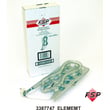
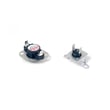
A bad temperature switch can cause no heat, overheating, or short cycling, and it can also lead to repeated thermal cut-off events. If you are troubleshooting a no-heat condition, we also commonly check the dryer heating element WP3387747 and the dryer thermal cut-off fuse kit 279973.
Related help
Last updated: January 2026
What are signs of a bad dryer heating element?
If your Kenmore dryer model 11085091400 runs and tumbles but you feel little to no heat after a few minutes, the heating element is a top suspect. You may also notice longer dry times, a hot or “electrical” odor, or repeated breaker trips; confirm basic power and cycle settings first using the 11085091400 owner’s manual.
Common symptoms you can notice
- Dryer tumbles normally but clothes stay damp or take much longer to dry
- No heat on heated cycles (heat works on none of them)
- Heat is inconsistent (warm sometimes, cool other times)
- Burning smell during operation (not the brief “first-use” odor)
- Circuit breaker trips during a heat cycle
Quick checks before replacing parts
These checks help separate a heating-element problem from airflow or power issues.
- Make sure you are not on an air-only or air-dry setting
- After about 5 minutes on a full heat cycle, open the door and feel for heat
- Check that the lint screen is clean and seated properly
- Verify strong airflow at the outside exhaust hood; weak airflow can mimic “no heat”
- Check your home electrical supply; many dryers use two fuses/breakers, and one can trip while the drum still turns
What else can cause “no heat” besides the element?
| What you observe | More likely cause | What to do next |
|---|---|---|
| Tumbles, no heat, breaker trips | Heating circuit short (element or wiring) | Inspect element area and wiring; replace failed part(s) |
| Tumbles, heat is weak, dry times long | Vent restriction or lint buildup | Clean lint screen and venting; confirm airflow |
| Tumbles, no heat, power issue suspected | One leg of power missing | Reset both breakers or replace both fuses if needed |
Parts that are commonly replaced for heating problems
If testing confirms the heater is open/failed, the correct replacement for this model is the dryer heating element WP3387747. Thermal protection parts can also open when airflow is restricted.
Why it matters
A dryer that runs without proper heat wastes time and energy, and restricted venting can overheat components. Restoring correct heat and airflow helps protect the heater circuit, fabrics, and drying performance.
Last updated: January 2026