View engine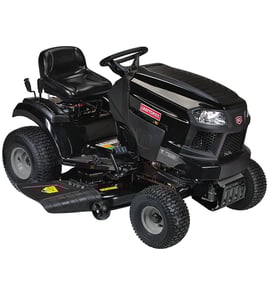


What brand engine does Craftsman use?
Craftsman riding mowers and lawn tractors (including model 917256490) are commonly equipped with engines supplied by major small-engine manufacturers, most often Briggs & Stratton, and sometimes Kohler or Kawasaki, depending on the specific tractor configuration and production run.
What you’ll typically see on Craftsman tractors
For Craftsman front-engine lawn tractors, the engine brand varies by model and year, but these are the most common suppliers:
- Briggs & Stratton (very common on many Craftsman tractors)
- Kohler (common on some higher-output configurations)
- Kawasaki (used on select models)
- Other suppliers may appear on certain model lines or years
How to confirm the engine brand on your 917256490
The fastest way is to read the engine identification label on the engine itself. Use these checks:
- Look for an engine shroud label or valve cover label showing the brand name
- Find the engine model-type-code (Briggs) or spec number (Kohler) tag
- Check near the starter, blower housing, or valve cover area for an ID plate
- Match the engine ID to the correct tune-up parts (air filter, oil filter, spark plug)
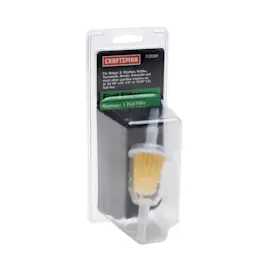
If you’re doing maintenance, our parts list for this model includes common engine-related items like the briggs & statton filter 394358S.
Why it matters
Engine brand determines the correct maintenance parts and specs (oil filter, air filter, spark plug, fuel system parts). Using the right parts helps starting, power, and engine life.
Quick guide: engine brand vs. what to look for
| Engine brand | What the ID tag often shows | Common use case |
|---|---|---|
| Briggs & Stratton | Model / Type / Code | Very common on Craftsman tractors |
| Kohler | Model / Spec / Serial | Common on some premium trims |
| Kawasaki | Model / Spec | Used on select models |
Last updated: February 2026
How to look up Craftsman model number?
On a Craftsman riding tractor like model 917256490, the model number is typically printed on a product ID label under the seat or on the rear fender or frame area. Once you find it, use that exact number to match the correct parts list and diagrams for your tractor.
Where to find the model number on a Craftsman tractor
Check these common label locations (wipe dirt and grass off first):
- Under the seat (lift the seat pan and look for a sticker or metal tag)
- Rear fender area near the seat
- Frame rail near the engine or battery compartment
- Near the footrest area on the frame
- On the mower deck shell (less common, but possible)
What to write down (so parts match correctly)
For the best match, record everything shown on the label:
- Model number (example: 917256490)
- Product number or serial number (if listed)
- Any engine model/type/code numbers (helpful for engine parts)
Quick checklist: model number vs. part number
| Item | What it identifies | Example |
|---|---|---|
| Model number | The tractor configuration | 917256490 |
| Part number / part ID | A specific replacement part | 532144200 |
| Serial number | Your exact unit’s build run | Varies |
Why it matters
Craftsman tractors often share similar frames and decks across multiple models, but belts, blades, mandrel parts, and electrical parts can differ. Using the exact model number helps ensure you get the right items, such as a lawn tractor drive belt 532144200 or a molded ignition key 532140403.
Last updated: February 2026
How to identify a lawn mower engine?
To identify the engine on your Craftsman 917256490 front-engine lawn tractor, locate the engine ID stamping or label on the engine itself and record the model, type, and code numbers. Those numbers let us match the correct tune-up and repair parts for your exact engine.
Where to look on the engine
Check these common locations first (clean the area if it is oily or dusty):
- On top of the engine near the valve cover or cylinder head
- On the blower housing (the plastic or metal shroud around the flywheel)
- Near the spark plug area on the cylinder head
- On the engine block above the starter motor
- On a metal tag or sticker near the muffler heat shield
What numbers to write down
Most riding mower engines use a multi-part ID. Write it exactly as shown.
- Model (the engine family)
- Type (the specific configuration)
- Code or date (build date and production info)
Quick reference table
| What you see | What it means | Why we need it |
|---|---|---|
| Model | Engine series/family | Identifies the correct parts breakdown |
| Type | Exact variant | Prevents ordering the wrong carburetor, starter, or filter |
| Code/Date | Production run info | Helps match mid-year design changes |
Why it matters
Craftsman tractors like model 917256490 were built with different engine options over time. Using the engine ID (not just the tractor model number) ensures the right maintenance parts, such as an oil filter or starter components, fit correctly.
Parts that often depend on the engine ID
These are common engine-related items that vary by engine model:
- Oil filter (example: briggs & statton filter 394358S)
- Starter motor
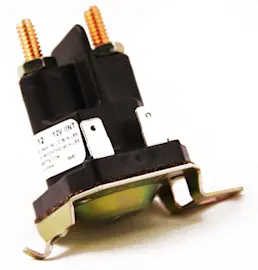
- Starter solenoid
- Air filter and pre-filter
- Spark plug
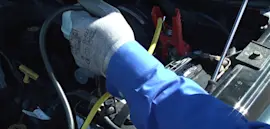
For more help diagnosing starting issues once you have the engine ID, use our DIY video: riding lawn mower engine clicks but doesnt turn over video.
Last updated: February 2026
What engine does Craftsman riding mower use?
The Craftsman riding mower model 917256490 uses a gasoline, single-cylinder riding mower engine (commonly a Briggs & Stratton-type setup on tractors in this class). For an exact engine model and spec label, match the engine’s ID tag to the engine parts list for 917256490.
How to identify the exact engine on model 917256490
Use the engine ID tag (usually on the blower housing, valve cover area, or near the muffler) and record the numbers exactly.
- Look for Model / Type / Code (common on Briggs & Stratton engines)
- Clean the tag area so every digit is readable
- Write down all characters, including dashes
- Compare the tag info to the engine section in the parts breakdown
- If the tag is missing, use the tractor’s serial/product label plus the engine’s visible features (air filter style, starter type)
Quick checks that confirm you have the right engine parts
These items often differ by engine family, so confirming them helps avoid ordering the wrong tune-up parts.
| What you check | What it tells you | Why it helps |
|---|---|---|
| Engine ID tag (Model/Type/Code) | Exact engine build | Best match for carb, starter, ignition |
| Air filter shape and cover | Engine series clue | Helps narrow filter and pre-filter |
| Starter style (electric) | Starting system | Helps match starter and solenoid |
| Oil filter presence | Lube system type | Confirms whether a spin-on filter is used |
Parts that commonly relate to the engine (and when to replace)
If you are doing a basic tune-up or chasing a no-start, these are common starting points.
- Oil filter: replace during oil changes if your engine uses one (see briggs & statton filter 394358S)
- Starter solenoid: replace if you hear a click but the starter will not crank (see solenoid 532146154)
- Ignition key: replace if worn, cracked, or intermittently loses contact (see molded ignition key 532140403)
Why it matters
Craftsman tractors can use different engine builds across production runs. Getting the exact engine ID ensures the right ignition, fuel, and starting parts fit correctly and prevents repeat no-start or hard-start problems.
Last updated: February 2026
Is it worth replacing a lawn mower engine?
Yes; replacing the engine on your Craftsman 917256490 front-engine lawn tractor is worth it when the chassis, deck, and drive system are in good shape and the total swap cost stays well below the cost of replacing the whole tractor. If multiple major systems are worn out, replacement is the better value.
Quick decision checklist
- Deck is solid (no rust-through, cracks, or bent mounting points).
- Transmission and drive system move smoothly and do not slip.
- Steering and front axle are tight enough to track straight.
- You can still get routine wear parts (belts, blades, electrical parts).
- Engine failure is truly internal, not a fuel, spark, or safety-interlock issue.
Cost and effort comparison
| Compare this | Engine swap makes sense when | It usually does not when |
|---|---|---|
| Overall condition | Deck, frame, steering are solid | Multiple systems are failing |
| Total cost | Under about 50% of replacement value | Near the cost of a replacement tractor |
| Time/labor | You can DIY or have low labor cost | Labor cost is high for the swap |
Before you commit: rule out common “no-start” causes
An engine swap is the last step; many “dead engine” complaints are starting-circuit problems.
- Battery cables clean and tight; battery fully charged.
- Brake and seat safety interlocks working.
- Starter circuit engaging; a bad solenoid can click but not crank.
If you hear clicking but no crank, use the steps in riding lawn mower engine clicks but doesnt turn over video.
Parts that often fix the symptom without an engine swap
- Solenoid 532146154 (clicking, no crank)
- Molded ignition key 532140403 (won’t start due to damaged key)
- Briggs & statton filter 394358S (tune-up maintenance that prevents hard starting)
Why it matters
A good tractor with a failed engine is a strong candidate for an engine replacement; a worn deck, transmission, or steering turns the same repair into money spent on a machine that still will not perform.
Last updated: February 2026