Owner’s manual
 Error Codes



What is the advantage of a bottom mount fridge?
A bottom-mount refrigerator like the KitchenAid KBFS25EWMS1 keeps the fresh-food compartment at eye and waist level, so you reach everyday items with less bending. The freezer stays in a pull-out drawer below, which helps organize frozen foods and improves access.
Key benefits you will notice day to day
- Easier access to fresh foods (produce, dairy, leftovers) because they sit higher
- Less bending and squatting compared with top-freezer designs
- Freezer drawer makes it simpler to see and sort frozen items
- French door style (common on bottom-mount units) gives wide shelf access for platters
- Better door swing planning during install when you follow the clearance guidance in the owner's manual
Installation and space planning (important for bottom-mount designs)
Bottom-mount models often need a little extra thought for door swing and rear clearance (especially if you have an ice maker water line). We recommend using these typical clearances as a starting point, then confirming your exact setup in the manual:
| Clearance area | Typical guidance | Why it helps |
|---|---|---|
| Top and back ventilation | About 1/2 inch | Helps airflow and cooling efficiency |
| Hinge-side wall clearance | About 2 1/2 inches minimum | Allows doors to open fully |
| Back space for water line (if equipped) | Extra space needed | Prevents kinks and leaks |
Why it matters
Most people open the refrigerator section far more often than the freezer. With a bottom-mount layout, the items you use most are positioned higher, which reduces strain and makes temperature management and organization easier.
Last updated: February 2026
How to remove bottom grill from KitchenAid refrigerator?
On the KitchenAid KBFS25EWMS1 bottom-mount refrigerator, you remove the bottom grille (base grille/toe kick) by gripping it firmly and pulling it straight toward you. It snaps into place, so a steady pull releases it without tools in most cases (see the owner's manual).
Steps to remove the bottom grille
- Open both refrigerator doors for better access.
- Place both hands near the left and right ends of the grille.
- Pull the grille straight toward you (do not pull upward).
- If it feels stuck, wiggle gently side to side while pulling forward.
- Set the grille aside where it will not get stepped on or warped.
Reinstalling the grille
- Line up the grille tabs/clips with the slots along the lower frame.
- Press evenly along the ends until it snaps fully into place.
- Confirm it sits flush so it does not rattle.
Why removing the grille matters
The base grille gives you access for common maintenance and adjustments, such as leveling the refrigerator so the doors close properly and cleaning the condenser area for efficient cooling.
What you can do once the grille is off
| Task | What to look for | Typical result |
|---|---|---|
| Leveling/door closing adjustment | Front leveling screw or roller adjustment screws | Doors close easier and seal better |
| Condenser area cleaning | Dust, pet hair, lint behind the grille | Better airflow and steadier temperatures |
| Quick inspection | Water drips, debris, unusual vibration | Helps spot issues early |
- If you are cleaning, use a vacuum with a soft brush on the grille and the open areas behind it.
- If you are adjusting leveling, make small, even changes side to side and recheck door closing.
Last updated: February 2026
What's the average lifespan of a KitchenAid refrigerator?
KitchenAid refrigerators typically last 12 to 15 years on average. For your KitchenAid KBFS25EWMS1 bottom-mount refrigerator, regular maintenance (cleaning, good airflow, and timely filter changes) is what most directly determines whether it lands closer to 10 years or pushes past 15.
Typical lifespan range (what to expect)
Most full-size KitchenAid refrigerators fall into this practical range:
- 10 to 12 years: common when maintenance is inconsistent or the unit runs hot (dusty condenser area, tight cabinet fit)
- 12 to 15 years: typical average lifespan for a well-maintained unit
- 15 to 17 years: achievable with good airflow, stable temperatures, and prompt repairs
What affects lifespan the most
These are the biggest real-world factors that shorten or extend refrigerator life:
- Condenser cleanliness and airflow (dust buildup makes the sealed system work harder)
- Door seal condition (air leaks cause long run times and temperature swings)
- Evaporator fan performance (poor circulation stresses cooling components)
- Water system upkeep (filter changes reduce restrictions and valve strain)
- Temperature settings and loading habits (overpacking blocks vents and reduces circulation)
Quick maintenance checklist (high impact)
Use this as a simple routine to help your KBFS25EWMS1 reach its full lifespan:
- Vacuum and brush the condenser area every 6 to 12 months
- Keep food from blocking interior air vents
- Confirm doors close fully and gaskets seal all the way around
- Replace the water filter on schedule (most households: about every 6 months)
- Address new noises early (fan rubbing, clicking, or buzzing)
Common “wear items” vs. “major repairs”
| Category | Examples | What it usually means |
|---|---|---|
| Routine maintenance | Water filter, cleaning, leveling | Helps prevent bigger failures |
| Wear items | Door gasket, fan motor, switches | Normal aging; often repairable |
| Major cooling issues | Compressor, condenser, sealed system | Higher-cost repair; prevention matters |
Why it matters
A refrigerator’s most expensive failures are usually tied to long run times and heat stress. Keeping airflow clear, seals tight, and temperatures stable reduces strain on the compressor and other sealed-system components referenced in the owner's manual.
Related DIY help: how to replace the water filter in a KitchenAid refrigerator.
Last updated: February 2026
What is the most common problem with KitchenAid refrigerators?
The most common KitchenAid refrigerator issues are ice maker and water dispenser problems, followed closely by cooling and temperature complaints. On your KitchenAid KBFS25EWMS1 bottom-mount refrigerator, these symptoms are often tied to airflow (evaporator fan), water supply and filtration, or control settings; our owner's manual troubleshooting section walks through the first checks.
Most common symptoms customers notice
- Ice maker not making ice, slow ice production, or small/hollow cubes
- Water dispenser flow is weak or stops
- Refrigerator section too warm or freezer too warm
- Frost buildup, moisture, or water puddles (often from a drain issue)
- Unusual noises (fan noise, buzzing, or rattling)
Quick checks that fix many “common problems”
Before replacing parts, we recommend these basics:
- Confirm the controls are turned on and allow 24 hours after a new install or major adjustment for temperatures to stabilize.
- Clean condenser coils and make sure airflow around the cabinet is not blocked.
- If water or ice is affected, replace the water filter and purge air from the water system.
- Make sure doors seal fully and gaskets are not torn or warped.
- Listen for the evaporator fan; if it is not running, cooling problems usually follow.
Parts that commonly solve these issues on KBFS25EWMS1
If troubleshooting points to a failed component, these model-matched parts are common fixes:
| Problem area | What fails | Example part for this model |
|---|---|---|
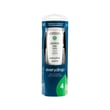
| Water and ice | Clogged filter | Refrigerator water filter EDR4RXD1 |
| Water and ice | Weak/no water fill | Refrigerator water inlet valve assembly WP12544124 |
| Cooling/airflow | Fan motor not running | Refrigerator evaporator fan motor W11024089 |
| Cooling/airflow | Damper stuck/icing | Refrigerator damper control assembly WPW10594329 |
| Temperature control | Board issues | Refrigerator electronic control WPW10317076 |
Why it matters
Ice maker and temperature problems usually get worse over time. A restricted water filter can reduce dispenser flow and ice production, and an airflow problem (fan, damper, frost restriction) can cause warm temperatures and food spoilage.
For step-by-step filter help, use our how to replace the water filter in a KitchenAid refrigerator guide.
Last updated: February 2026