 Owner’s manual


How can I tell what model washer I have?
For a Kenmore Elite washer, the model number is printed on the appliance’s rating label; for this unit, you’re looking for 79631512211. On most washers, that label is on the back of the control panel, on the cabinet (often low on a side panel), or around the lid or door opening; see the 79631512211 manual for label-location details and identification tips.
Check these common spots first:
- Back of the control panel (rear edge or underside)
- Left or right side of the main cabinet near the bottom
- Under the lid (top-load models), around the lid opening
- Behind the door or in the door jamb (front-load models)
- Rear panel of the washer cabinet
When you find the label, record the information exactly as shown:
- Model number (example: 79631512211)
- Serial number (helps confirm production run)
- Brand name (Kenmore)
- Electrical rating (useful for safe troubleshooting)
| Item on label | Example | Why it matters |
|---|---|---|
| Model number | 79631512211 | Ensures diagrams and parts match your washer |
| Serial number | Varies | Helps narrow revisions within a model |
| Brand | Kenmore | Guides correct troubleshooting info |
Kenmore model numbers can look similar, but small differences can change which parts fit (like a lid lock, drain pump, or water inlet valve). Using the exact model number helps us match the right Kenmore Elite washer parts and repair instructions the first time.
Last updated: January 2026
What are the most common issues with 79631512211?
The most common problems we see with the Kenmore Elite 79631512211 washer are draining failures, not filling or overfilling, lid lock errors, excessive vibration, and washplate or drive issues that reduce agitation or spinning. Many of these symptoms trace to a small set of serviceable parts and basic checks in the owner's manual.
- Washer will not drain or drains slowly: clogged pump or failing drain pump, kinked drain hose
- Won’t fill, fills slowly, or keeps filling: inlet valve issue, pressure switch or pressure hose problem
- Won’t start or stops mid-cycle: lid lock not engaging, control not sensing a safe lock
- Loud banging, walking, or out-of-balance: worn suspension rods, uneven load, leveling issues
- Poor agitation or weak spin: washplate/hub issues, shifter problems, motor sensing problems
| Symptom | Common part to check/replace | What it does |
|---|---|---|
| No drain / OE-type drain symptoms | Lg washer drain pump 5859EA1004P | Pumps water out during drain and spin |
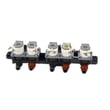
| No fill / slow fill | Lg washer water inlet valve assembly AJU73213301 | Opens to let hot/cold water into the tub |
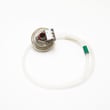
| Overfill / wrong water level | Lg washer water-level pressure switch 6501EA1001R and washer water-level pressure switch hose 5210FA3427J | Senses water level through an air hose |
| Won’t start / lid won’t lock | Washer lid lock EBF61674802 | Confirms lid is locked for safe operation |
| Excessive vibration | Washer suspension rod and spring assembly 4902EA1002E | Stabilizes the tub during spin |
- Unplug the washer for 2 minutes, then restore power to reset the control.
- Confirm both supply valves are fully open; clean inlet screen debris if flow is weak.
- Verify the drain hose is not kinked and is installed at a proper standpipe height.
- Run a small load to confirm the issue is not load size or distribution.
- Listen for the drain pump: a hum with no drain often points to a blockage or failing pump.
Drain, fill, and lid lock problems can stop a cycle completely; suspension and drive issues can cause repeated out-of-balance events that strain the tub, motor, and control system.
Last updated: March 2026
What is the average lifespan of a Kenmore washer?
A Kenmore washer typically lasts 10 to 15 years. For the Kenmore Elite 79631512211, real-world lifespan still depends most on load size, cycle frequency, water quality, and routine care; good maintenance is what usually pushes a washer toward the high end of that range.
- Overloading (stresses the drive system, suspension, and tub)
- Detergent overuse (causes residue, odors, and extra strain during drain/spin)
- Hard water (mineral buildup in valves, hoses, and internal passages)
- Poor leveling (increases vibration and wear)
- Skipping cleaning/maintenance cycles (buildup leads to odors and performance issues)
| Washer age | What’s common | What to do |
|---|---|---|
| 0 to 5 years | Minor adjustments, occasional hose or dispenser issues | Keep it level; follow routine cleaning |
| 6 to 10 years | Wear items start showing up (drain, fill, lock, vibration) | Address symptoms early; avoid repeated overloads |
| 11 to 15 years | More frequent repairs; multiple components may be tired | Compare repair cost vs. overall condition |
We recommend following the care steps in the 79631512211 washer manual and focusing on these basics:
- Run periodic tub-cleaning cycles (or the model’s cleaning routine)
- Leave the lid open between loads to reduce moisture and odor
- Use the correct detergent type and amount for your load size
- Check pockets and wash small items in a mesh bag to protect the pump
- Keep the washer level and stable to reduce out-of-balance wear
A washer that is maintained and kept level usually runs quieter, drains more reliably, and avoids the vibration-related wear that shortens the life of parts like the suspension and drive components.
Last updated: January 2026


