Owner’s manual
 Error Codes



How long do LG front loader washing machines last?
LG front-load washers typically last 10–15 years in normal household use. For your LG WM3488HW, the owner’s manual doesn’t list a single “expected lifespan” for the whole washer, but it does show long-life design features and maintenance steps that help you reach that 10–15 year range.
What we can confirm for LG WM3488HW
The WM3488HW manual highlights durability-focused features and care routines (Tub Clean, door seal care, drain pump filter cleaning) that directly affect long-term reliability.
Key model-specific items called out in the manual include:
- Inverter direct-drive motor design (fewer moving parts)
- Monthly Tub Clean routine
- Regular cleaning of the door seal
- Periodic cleaning of the drain pump filter
- Use of HE (high-efficiency) detergent
Typical lifespan vs. what influences it
| Item | Typical expectation | What changes it most |
|---|---|---|
| Front-load washer overall | 10–15 years | Maintenance, load habits, installation/leveling |
| High-wear systems | Varies | Drain clogs, oversudsing, vibration, leaks |
Simple maintenance schedule that protects lifespan
- Run Tub Clean monthly (more often if odors develop)
- Wipe the door seal and glass dry after use; leave the door slightly ajar
- Clean the drain pump filter area every 1–3 months
- Use HE detergent and avoid overdosing (excess suds strains the drain system)
- Keep the washer level to reduce vibration that can wear bearings and suspension
When replacing a part can extend washer life
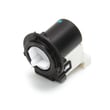
If WM3488HW drains slowly, won’t drain, or makes a loud buzzing during drain, the drain pump system is a common first check. A compatible replacement is the washer drain pump assembly 4681EA2001T.
Why it matters
Most “short lifespan” failures in front-load washers come from preventable issues: residue buildup, mold at the gasket, chronic oversudsing, and drain restrictions. Staying on top of these helps you avoid major repairs and keep performance consistent.
Last updated: January 2026
What is the downside of a washer/dryer combo?
For the LG WM3488HW, the main downside is that the washer can handle a larger load than it can dry effectively. If you want to wash and dry in one sequence, you typically need to plan on a smaller load for the dry portion, which increases total laundry time.
Model-specific limitations for WM3488HW
The WM3488HW owner’s manual notes that drying capacity is lower than washing capacity, and effective drying requires reducing the load size.
- Drying works best when the load is reduced for airflow and tumbling
- Wash+Dry is intended for a small load that can be tumble dried
- One drum means you cannot wash and dry at the same time
- Mixed fabric weights can dry unevenly (light items dry first)
- Longer start-to-finish time is common compared with separate units
How to plan loads (wash-only vs wash+dry)
Use this quick comparison to decide how to run laundry on a combo unit.
| Goal | Best approach on WM3488HW | Tradeoff |
|---|---|---|
| Finish a small load in one step | Use Wash+Dry | Longer single cycle |
| Wash a full load | Wash only, then dry in smaller batches | More handling/time |
| Reduce wrinkles | Remove items promptly at end of dry | Requires attention |
Tips to reduce the downsides
- Use the Wash+Dry cycle only for smaller loads that can tumble freely
- For larger loads, wash first and then dry in smaller batches
- Sort by fabric weight (towels separate from lightweight shirts)
- Avoid overloading; overdrying and wrinkles are more likely
- Follow cycle and drying option guidance in the WM3488HW owner’s manual
Why it matters
Washer/dryer combos save space, but throughput is lower. If you regularly wash bulky items or do multiple loads back-to-back, the reduced drying capacity and longer cycle times can make laundry days take longer.
Last updated: January 2026
What is the most common problem with LG dryers?
The most common LG dryer complaints are not heating well (long dry times) and noisy operation. Even though your LG WM3488HW is a washer/dryer combo, the “dryer side” issues are usually tied to airflow restrictions, lint buildup, or a heating circuit problem; see the WM3488HW manual.
Most common symptoms and what they usually mean
- Clothes still damp after a full cycle: restricted airflow, overloaded drum, or a heating component issue
- Dry cycle stops early: moisture sensing or temperature safety control opening
- Burning or musty odor: lint on the heater/ducting or residue buildup
- Rattling or thumping: loose items, load imbalance, or worn rotating components
- No heat at all: heater circuit fault (element, thermostat, fuse, wiring)
Quick checks you can do on WM3488HW
- Reduce the load size for drying: this model’s manual notes drying capacity is about half the wash capacity.
- Run a timed dry test: if timed dry also performs poorly, it points more toward airflow or heat generation.
- Check for lint buildup in the combo’s internal airflow path (more critical than on many vented dryers).
- Confirm cycle selection: use the Dry button options (LOW TEMP, NORMAL, MORE, timed 30/60/90/120).
Parts that commonly relate to “no heat” or poor drying (WM3488HW)
If troubleshooting points to a heating circuit problem, these model-compatible parts are commonly involved:
| Symptom | Likely area | Example compatible part |
|---|---|---|
| No heat, stops for safety | Overheat protection | Washer/dryer combo heater safety thermostat 6931FR3108A |
| Weak or no heat | Heating element | Washer dryer heating element 5301FR2076G |
Why it matters
Poor drying is often caused by airflow and lint issues first; fixing those early helps prevent overheating, nuisance shutdowns, and repeat failures of heater safety components.
Last updated: January 2026