

How to fix rubber seal on KitchenAid dishwasher?
On KitchenAid dishwasher model KUDP01ILBL2, fixing a rubber seal usually means reseating or replacing the door gasket so it sits fully in the channel with no twists or gaps. Press it in evenly all the way around, then keep the door closed for several hours so the gasket relaxes into shape.
Quick checks before you replace anything
- Unplug the dishwasher or switch off the breaker.
- Inspect the gasket for tears, hardening, or flattened sections.
- Clean the channel and gasket with warm water and mild dish soap; remove grease and debris.
- Confirm the gasket is not pinched by the door or blocked by a rack.
- Check for leaks at the bottom corners first; that is where mis-seating shows up most.
How to reseat the door gasket (most common fix)
- Start at the top center of the tub opening.
- Press the gasket barb into the channel using your fingers (work a few inches at a time).
- Continue down both sides, keeping the gasket centered and untwisted.
- Close and latch the door; keep it closed for 2 to 6 hours.
If the gasket keeps popping out
Use a small amount of warm water to soften the rubber, then press it back in. If the channel is damaged or the gasket is stretched, replacement is the lasting fix.
Parts that commonly relate to sealing and leaks
If you are chasing a leak, these parts are often involved on dishwashers like KUDP01ILBL2:
| Leak location | Common cause | Example part to check |
|---|---|---|
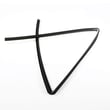
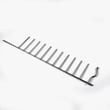
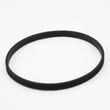
| Around door perimeter | Door gasket not seated or worn | Gasket W11196317 |
| Bottom of door area | Door seal or alignment issue | Seal W10864081 |
| Moisture at vent area | Vent gasket leaking | Dishwasher vent gasket WP8269259 |
Why it matters
A properly seated door gasket prevents leaks that can damage flooring and cabinets, and it also helps the dishwasher maintain correct wash pressure for better cleaning.
Last updated: February 2026
What's the average lifespan of a KitchenAid dishwasher?
A KitchenAid dishwasher like model KUDP01ILBL2 typically lasts 10 to 14 years with normal household use. Lifespan depends most on water quality, how often it runs, and whether small issues (leaks, draining problems, poor cleaning) are fixed before they strain the pump, motor, and seals.
What affects dishwasher lifespan the most
- Hard water and scale buildup can reduce wash performance and stress the circulation system.
- Overloading can block spray arms and cause poor cleaning, leading to repeat cycles.
- Small leaks can damage components and wiring if ignored.
- Drain restrictions (clogs, kinks, high-loop issues) can overwork the drain system.
- Worn seals and gaskets can cause chronic leaking and door moisture.
Quick maintenance that helps you reach the 10 to 14 year range
- Run a monthly cleaning cycle using a dishwasher cleaner.
- Rinse heavy food off dishes and keep the sump area clear.
- Check that spray arms spin freely and holes are not clogged.
- Inspect the door area for moisture and replace worn seals early.
- If you see standing water, address draining right away.
Common “life-extending” repairs for KUDP01ILBL2
These are typical wear items that can prevent bigger failures when replaced promptly:
| Symptom | Common cause | Example part for this model |
|---|---|---|
| Water on floor at door | Worn door seal or gasket | Gasket W11196317 |
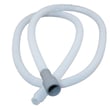
| Not draining well | Restricted or leaking drain hose | Dishwasher drain hose 8269144A |
| Loud grinding, poor wash | Worn chopper or circulation components | Dishwasher chopper assembly W10083957V |
| Dead/no power | Blown internal fuse | Fuse 8193762 |
Why it matters
A dishwasher usually does not fail all at once; it loses performance first (not cleaning, not draining, leaking). Fixing those early protects high-cost assemblies like the pump and motor and helps your KitchenAid dishwasher reach its normal service life.
For troubleshooting help tied to KitchenAid dishwashers, use our KitchenAid he dishwasher error codes reference to narrow the problem before ordering parts.
Last updated: February 2026
What is the most common problem with a KitchenAid dishwasher?
The most common issues we see on KitchenAid dishwashers like model KUDP01ILBL2 are poor cleaning (food left on dishes) and draining problems (water left in the tub). These usually trace back to restricted water flow, a clogged drain path, or a worn wash system component.
Most common symptoms and what they usually mean
- Dishes still dirty or gritty: spray arm holes blocked, chopper area clogged, or weak circulation
- Standing water after the cycle: drain hose restriction, drain path blockage, or pump issue
- Leaks at the door: worn door seal or vent gasket
- No start or dead control: power supply issue, door latch problem, or a blown thermal fuse
- Poor drying: venting issue or cycle/option selection
Quick checks we recommend first (fast, no parts)
- Confirm the spray arms spin freely and the rack is not blocking them.
- Clean out visible debris in the sump area at the bottom of the tub.
- Check the sink drain and garbage disposer inlet for clogs (a common cause of slow draining).
- Inspect the drain hose routing for kinks and make sure it has a high loop.
- Run hot water at the sink for 30 to 60 seconds before starting the cycle.
Parts that commonly fix these problems on KUDP01ILBL2
If the basic checks do not help, these model-matched parts are common next steps:
- Dishwasher drain hose 8269144A
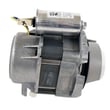
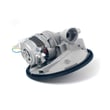
- Dishwasher pump and motor assembly W10782773
- Dishwasher chopper assembly W10083957V
- Fuse 8193762
- Gasket W11196317
Symptom-to-part cheat sheet
| Symptom | Most likely area | Common model-matched part |
|---|---|---|
| Not draining | Drain path | Dishwasher drain hose 8269144A |
| Loud grinding, poor wash | Chopper or circulation | Dishwasher chopper assembly W10083957V |
| Weak spray, poor cleaning | Circulation system | Dishwasher pump and motor assembly W10782773 |
| No power or shuts off | Electrical protection | Fuse 8193762 |
| Water at bottom of door | Door sealing | Gasket W11196317 |
Why it matters
Poor cleaning and draining are usually flow problems. Fixing restrictions early helps prevent pump strain, repeat clogs, odors, and leaks that can damage cabinets and flooring.
For display diagnostics and fault patterns, we also use the KitchenAid-specific code references: KitchenAid he dishwasher error codes and KitchenAid microclean he dishwasher error codes.
Last updated: February 2026