Owner’s manual
 Error Codes


How to identify a Kenmore washer model?
Your Kenmore washer model number is printed on the serial plate; on Kenmore model 41740412700 it’s located at the top, inside the door opening. Write down the full model number (and serial number) so we can match the correct parts, diagrams, and service information.
Where to look on Kenmore washers
For Kenmore washers, the model tag is usually in one of these spots:
- Front-load washers: inside the door opening (often at the top edge)
- Top-load washers: under the lid, around the rim of the opening
- Some models: on the back panel near the power cord or control area
For this specific washer, the 41740412700 owner's manual describes the serial plate location inside the door opening.
What the model number looks like (and why it matters)
The model number is typically a longer string of numbers (and sometimes letters). For Kenmore, the first three digits often indicate the manufacturing source; for example, many Kenmore front-load models start with 417.
Why it matters
Using the exact model number helps us:
- Confirm the correct replacement part fits your washer
- Pull the right exploded-view diagrams
- Avoid ordering look-alike parts that mount differently
- Match electrical components (like a door lock) correctly
Quick checklist before ordering parts
Use this checklist to prevent common mix-ups:
- Copy the model number exactly as shown (all digits)
- Record the serial number too (helps with revisions)
- Compare your washer’s symptoms to the right troubleshooting steps
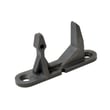
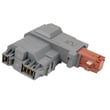
- If the door won’t lock or the cycle won’t start, check the door lock switch 131763256 as a common fit-related part to verify by model
Model vs. serial number (simple guide)
| Item | What it identifies | Used for |
|---|---|---|
| Model number | The washer design and parts list | Correct parts lookup |
| Serial number | The specific unit and production run | Version changes, service history |
Last updated: February 2026
What is the average lifespan of a Kenmore washer?
A Kenmore washer typically lasts 10 to 15 years. For the Kenmore 41740412700 washer, consistent care (correct loading, proper draining, and routine cleaning) helps you reach the high end of that range; chronic overloading and poor maintenance shorten it.
What affects lifespan the most
- Load size and balance: Overloading strains the motor, shocks, and tub bearings.
- Drain and fill setup: A correctly installed drain standpipe helps prevent siphoning and repeat drain issues.
- Routine cleaning: Keeping the door area and dispenser clean reduces odor, residue, and leaks.
- Cycle habits: Frequent heavy-duty cycles and hot washes increase wear.
- Early symptom response: Fixing small leaks or vibration early prevents bigger failures.
Quick maintenance checklist (high impact)
- Use the loading and cycle guidance in the 41740412700 owner's manual.
- Leave the door slightly open between loads to help the tub dry.
- Check pockets and avoid washing heavy items alone (they cause imbalance).
- Verify the drain standpipe height is at least 23.6 in (60 cm) to prevent siphoning.
- If the washer overheats and stops, allow the built-in cool-down period (up to about 30 minutes) before restarting.
Common wear items and what they look like
| Symptom | Most likely area | What you typically notice |
|---|---|---|
| Door will not lock or cycle will not start | Door lock | Clicking, flashing, or door stays unlocked |
| Excessive shaking or banging | Suspension/shocks | Tub thumps during spin, frequent out-of-balance |
| Water left in tub | Drain system | Slow drain, standing water, wet loads |
If the door will not latch consistently, the door lock switch 131763256 is a common fix on this platform.
Why it matters
A washer that is maintained and installed correctly runs with less vibration, better draining, and fewer overload events. That reduces stress on the drive system and tub components, which are the repairs that most often decide whether a washer reaches 15 years.
Last updated: February 2026
How do I troubleshoot my 41740412700?
For Kenmore washer model 41740412700, we troubleshoot by matching the symptom (no start, no spin, leaking, not filling, not draining, vibration) to a short set of checks you can do safely first. Use the 41740412700 owner's manual for the exact symptom chart and operating steps.
Quick checks first (most common fixes)
- Confirm the power cord is fully seated in the outlet.
- Reset the breaker or replace a blown fuse (do not increase fuse size).
- Turn both water supply faucets fully on.
- Close the washer door firmly until it latches.
- Make sure the cycle selector is set correctly; move the indicator slightly clockwise and pull out the knob.
- Pause and redistribute the load if it is bunched to one side.
Symptom-based troubleshooting
| Symptom | What to check | What to do next |
|---|---|---|
| Washer does not start | Power, breaker/fuse, cycle knob position | Restore power, set cycle correctly |
| Won’t spin or load too wet | Door fully closed, load too small/out of balance, overload | Add 1 to 2 similar items, rearrange, reduce load |
| Won’t fill or fills slowly | Faucets not fully open, kinked inlet hoses, low water pressure | Fully open valves, straighten hoses, avoid other water use |
| Won’t drain or drains slowly | Kinked/clogged drain hose, house drain clog | Straighten/clean hose; clear standpipe/drain |
| Leaks | Loose fill hose connections, oversudsing, drawer left open | Tighten hoses, use less detergent, close drawer |
| Vibration/noise | Washer not level, shipping bolts/foam not removed, uneven load | Level the legs; remove shipping hardware; redistribute |
Parts that commonly relate to these symptoms
If your checks point to a failed component, these model-matched parts are common suspects:
- No spin or door won’t lock: door lock switch 131763256
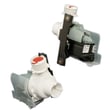
- Not draining: washer drain pump 137108000
- Leaks at the back or standpipe issues: electrolux washer drain hose 134592700
- Excess vibration: level shock 5304485917
Why it matters
Correcting basics like leveling, hose routing, and load balance prevents repeat problems such as out-of-balance shutdowns, slow draining, and leaks that can damage the washer base and surrounding flooring.
Last updated: March 2026