Owner’s manual





What is the biggest problem with front-load washers?
The biggest problem we see with front-load washers like the GE GFW450SPM1DG is odor caused by mold and mildew growth from trapped moisture and detergent residue, especially around the door seal and dispenser area. Regular cleaning and proper “air-out” habits prevent most of it.
Why front-load washers get moldy or smelly
Front-load designs seal tightly for water efficiency, but that tight seal can also hold moisture in places that do not dry quickly.
Common odor contributors include:
- Moisture trapped in the door gasket folds
- Detergent or softener buildup in the dispenser drawer
- Leaving the door closed between loads
- Using too much HE detergent (oversudsing leaves residue)
- Skipping monthly tub cleaning
For GE GFW450SPM1DG care steps and the Tub Clean procedure, follow the GFW450SPM1DG owner’s manual.
Best prevention steps (quick routine)
These habits work well on the GFW450SPM1DG and most GE front-load washers:
- Leave the door slightly open after the last load of the day
- Wipe the door gasket dry, especially the lower fold
- Remove wet laundry promptly
- Use only HE detergent and measure carefully
- Run the Tub Clean cycle at least monthly
- Rinse and clean the dispenser drawer once or twice a month
What to do if you already have a strong odor
Start with cleaning, then move to parts inspection if needed.
| Symptom | Most likely cause | What to check next |
|---|---|---|
| Musty smell | Residue in tub/gasket | Run Tub Clean; wipe gasket folds |
| Sour smell | Standing water/debris | Clean pump filter area |
| Visible black spots on seal | Mold on door boot | Clean thoroughly; replace if damaged |
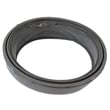
If the door seal is torn, warped, or permanently stained and won’t clean up, replacing the GE washer door boot WH08X23479 is often the long-term fix.
Why it matters
Odor and mildew are not just unpleasant; they can transfer smells to clothing, reduce wash performance, and lead to leaks if the door seal gets damaged over time.
Last updated: January 2026
What is the life expectancy of a GE front load washer?
A GE front-load washer like model GFW450SPM1DG typically lasts 10 to 14 years with normal household use and basic maintenance. Consistent cleaning (especially the door gasket and pump filter) and avoiding chronic overloading are the biggest factors in reaching the high end of that range.
What affects lifespan the most
- Load size and frequency: multiple heavy loads daily shortens life faster than a few loads per week.
- Overloading: strains the drive system, bearings, and suspension.
- Moisture and residue control: leaving the door closed and skipping cleaning promotes odor and gasket issues.
- Drain system care: coins, lint, and small items can clog the pump filter and overwork the drain pump.
- Vibration control: an unlevel washer increases wear on shocks and suspension.
Maintenance habits that extend life (best practices)
Use the care and cleaning steps in the GFW450SPM1DG owner’s manual as your baseline. For most owners, these habits make the biggest difference:
- Run the Tub Clean cycle at least monthly.
- Wipe the door gasket and check for trapped debris.
- Clean the pump filter periodically (especially if you wash small items).
- Use HE detergent and avoid oversudsing.
- Keep the washer level to reduce vibration during spin.
Quick “what to do” schedule
| Task | How often | Why it matters |
|---|---|---|
| Tub Clean cycle | Monthly | Reduces residue, odor, and buildup |
| Wipe door gasket | Weekly | Prevents leaks, mildew, and tears |
| Clean pump filter | Every 1 to 3 months | Prevents drain problems and pump strain |
| Check leveling/vibration | As needed | Protects shocks, springs, and tub support |
Why it matters
A front-load washer’s most expensive wear points are usually tied to water management (gaskets, drain system) and high-speed spin forces (suspension/shocks). Keeping those systems clean and stable is the simplest way to avoid early failures.
Last updated: January 2026
How do I find the model number on my GFW450SPM1DG?
Your GE washer’s model number is printed on the appliance ID label. On the GFW450SPM1DG, you’ll find that label on the side of the washer; many units also have it inside the washer door opening. Use that exact model number when ordering parts.
Where to look (fastest checks first)
- Open the washer door and look around the door opening (cabinet front) for a sticker/plate
- Check the left or right side panel of the washer cabinet for the ID label
- Write down both the model and serial numbers; they are often listed together
- Take a clear photo of the label so you can zoom in on small print
- Match every character exactly (letters, numbers, and any dashes)
What the label typically includes
| Label item | What it’s used for | Why you need it |
|---|---|---|
| Model number | Identifies the exact washer design | Ensures diagrams and parts fit correctly |
| Serial number | Identifies your specific production unit | Helps confirm version-specific details |
Why it matters
GE uses similar-looking front-load washer platforms across the GFW series; the model number is what ties your washer to the correct parts list, wiring, and troubleshooting information in the owner's manual.
Tip for parts lookup
If you are replacing a common wear item (like a door seal or drain component), confirm the model number first, then cross-check the part description against the diagram before ordering.
Last updated: March 2026