Installation guide
 Owner’s manual
 Error Codes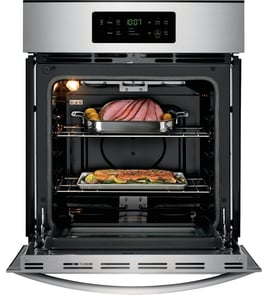



What was the size of the Kenmore 79040453802 oven?
For Kenmore model 79040453802, the installation guide lists 24-inch (61 cm) wall oven dimensions. The guide shows the oven body at about 23 7/8 in wide and 25 1/2 in deep; height depends on whether it is a single or double oven configuration (and cabinet cutout). See the installation guide for the exact dimension chart.
Model sizes shown in the installation guide
The installation instructions provide product dimensions for a 24-inch wall oven in both single-oven and double-oven layouts.
- Width (A): 23 7/8 in (60.6 cm)
- Depth (D): 25 1/2 in (64.8 cm)
- Door-open clearance: allow at least 19 3/8 in (49.2 cm)
- Cabinet base support: 150 lb (single) or 300 lb (double) capacity is referenced in the guide
Single vs. double oven: quick comparison
| Configuration | Height shown (B) | What it means |
|---|---|---|
| Single oven | 31 7/16 in (79.9 cm) | Approximate overall oven height for a single unit |
| Double oven | 51 1/16 in (129.7 cm) | Approximate overall oven height for a double unit |
Cutout and fit notes (what to measure)
To confirm the “size” for your installation, we recommend measuring the cabinet opening and comparing it to the cutout requirements in the installation guide. Pay special attention to:
- Cabinet cutout width (the guide calls out a 24 in minimum cabinet width)
- Cutout height range (some models allow height adjustment with an extension panel)
- Cutout depth and junction box location
- Trim fit (the guide notes a critical dimension so the decorative trim butts against the cabinet)
Why it matters
Wall ovens are sized by the cabinet opening they fit and the trim they cover. Using the installation dimensions for model 79040453802 helps prevent heat buildup, ensures proper ventilation, and avoids a door that hits nearby cabinetry when opened.
Last updated: February 2026
What is the lifespan of a Kenmore stove?
A Kenmore electric oven like model 79040453802 typically lasts 13 to 15 years with normal use and basic maintenance. Keeping the oven clean, protecting wiring connections, and replacing wear items (like light bulbs) on time helps you reach that expected service life.
Typical lifespan by oven type
Most households see these averages:
| Appliance type | Typical lifespan | Notes |
|---|---|---|
| Electric oven / electric wall oven | 13 to 15 years | Heating elements and controls are common wear points |
| Gas oven | 15 to 17 years | Burners and igniters are common service items |
What shortens an oven’s life fastest
These issues cause the most premature failures in electric wall ovens:
- Repeated heavy spillovers that bake onto the oven bottom and create excess heat stress
- Running self-clean too often (high heat can stress door locks, wiring, and sensors)
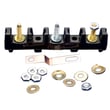
- Loose or overheated power connections at the terminal block
- Slamming or forcing the door (stresses hinges, latch, and door lock parts)
- Ignoring temperature problems (overheating can trip safety devices)
Maintenance that helps your 79040453802 reach 13 to 15 years
We recommend these practical habits (all are consistent with normal care guidance in the owner's manual):
- Wipe up major spillovers after the oven cools to reduce smoke and heat stress
- Keep the oven vent area clear so heat can exit properly
- Avoid using foil in ways that block airflow or contact heating surfaces
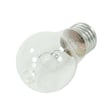
- Replace failed cavity lights promptly using the correct bulb, such as the range oven light bulb 316538904
- If baking temperatures seem off, use the oven temperature adjustment procedure in the manual before replacing parts
Why it matters
Knowing the expected lifespan helps you decide whether to repair or replace. For a 79040453802 that is still heating well and has a solid door seal, replacing common service parts (light bulb, temperature sensor, bake element) is often the most cost-effective way to extend usable life.
Last updated: February 2026
Why is my Kenmore electric oven not working?
If your Kenmore electric wall oven model 79040453802 does not power on or will not heat, the most common causes are a power supply problem (breaker, wiring, or clock not set after an outage) or a failed heating or sensing component. Start with power and control settings, then test heat-related parts.
Quick checks first (no parts needed)
- Confirm the display is on; after a power interruption the display can flash and the oven will not program until the clock is set (see the 79040453802 owner's manual).
- Check the house circuit breaker or fuses; re-seat the breaker fully.
- Make sure the oven is not in a canceled or locked-out state; press CANCEL/OFF and try a basic BAKE cycle.
- If the oven was recently installed or moved, confirm the electrical connection at the junction box is secure (installation wiring issues can stop operation).
- If the oven stopped right after installation, recheck that the breaker did not trip immediately.
What to test next (most common failed parts)
If the oven has power but will not heat, these parts are frequent culprits:
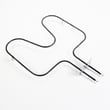
- Bake heat problem: a failed lower bake element such as the range bake element 318255101
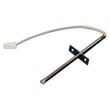
- Temperature regulation problem: a failed sensor such as the frigidaire range oven temperature sensor 316217002
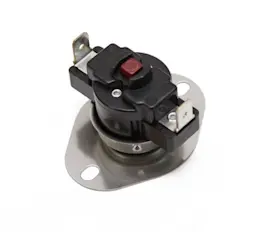
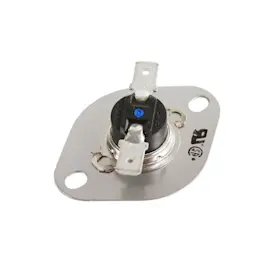
- Overheat protection trip: a safety device such as the wall oven safety thermostat 5303302280
Symptom-to-part guide
| Symptom | Most likely direction | What we recommend |
|---|---|---|
| No display, no response | Power supply, wiring, breaker | Verify breaker/fuse and junction box connection; review the 79040453802 installation guide |
| Display works, no heat in bake | Bake circuit | Inspect and test the range bake element 318255101 |
| Oven heats but temps are off | Sensing/control | Test the frigidaire range oven temperature sensor 316217002 |
| Oven shuts down mid-cycle | Overheat protection | Check airflow and test the wall oven safety thermostat 5303302280 |
Why it matters
Power interruptions and wiring issues can prevent the control from operating normally, and a failed bake element or temperature sensor can make the oven appear “dead” even when the display and lights still work. Checking in the right order prevents unnecessary part replacement.
Last updated: February 2026
What are the parts of an electric oven?
An electric wall oven like Kenmore model 79040453802 is built around a heating system (bake and broil elements), temperature sensing and electronic controls, plus airflow and lighting parts that make cooking accurate and safe. Your 79040453802 owner's manual shows the main features and where they sit in the oven cavity.
Core parts you will find in most electric wall ovens
- Bake element: the lower heating element used for most baking and roasting
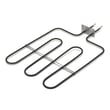
- Broil element: the upper heating element used for broiling and top browning
- Electronic oven control (clock/timer): sets temperature, modes, and timing
- Oven temperature sensor: tells the control board the actual oven temperature
- Oven vent and trim: routes hot air out through the upper trim for proper airflow
- Cooling blower (some models): helps keep internal electrical components cooler
- Oven light system: bulb, socket, and lens/shield for visibility
- Oven racks: adjustable supports for cookware
- Door and handle: glass door, hinges, and handle to seal heat and allow access
Parts on this model that commonly come up in repairs
If you are troubleshooting heat, lighting, or self-clean issues on 79040453802, these parts are frequently involved:
| Symptom | Common part involved | Example part on this model |
|---|---|---|
| Oven not heating evenly or temp seems off | Temperature sensing | Range oven temperature sensor 316217002 |
| No bake heat | Lower heating circuit | Frigidaire range bake element 318255101 |
| No broil heat | Upper heating circuit | Range broil element 318255606 |
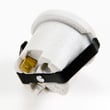
| Oven light out or flickers | Bulb or socket | Range oven light bulb 316538904, range oven light socket 316116400 |
| Light cover missing or damaged | Lens/shield | Range oven light lens 5304524341 |
Why it matters
Knowing the major oven parts helps you narrow a problem fast. For example, if the control is set to Bake and the lower element never glows red, the bake element circuit is the first place we check; if temperature swings are large, the sensor is a top suspect.
Quick safety notes before inspecting parts
- Turn off power at the breaker before removing panels or touching wiring
- Let the oven cool completely before checking elements or the light cover
- Keep the glass light shield/lens in place whenever the oven is in use
- Use the wiring diagrams and access steps in the installation guide
Last updated: February 2026
Are wall ovens hardwired or plug-in?
Kenmore electric wall ovens like model 79040453802 are designed to be hardwired (direct-wired) to a junction box, not plugged into a standard receptacle. The installation instructions also specify the correct supply type and grounding requirements for safe operation; see the installation guide.
What “hardwired” means for this oven
A hardwired wall oven connects to your home wiring inside an approved junction box using a listed conduit connector. There is no cord-and-plug connection, and you should not use an extension cord.
Typical electrical requirements you will see
- Dedicated 120/240V or 120/208V, 60 Hz AC supply
- Single-phase circuit, fused/breaker protected on both hot legs
- Neutral is not fused
- Proper equipment grounding (bare or green ground wire)
Quick checklist before you install or replace an oven
- Shut off power at the breaker before touching any wiring.
- Confirm you have a junction box in the cabinet cutout area.
- Verify the circuit size matches the oven’s watt rating.
- Use a UL-listed (or CSA-listed) conduit connector at the junction box.
- Make sure the oven is grounded per code.
Circuit size guidance (from the installation instructions)
Use the oven’s nameplate watt rating to choose the recommended circuit.
| Oven watt rating | Recommended circuit (240V) | Recommended circuit (208V) |
|---|---|---|
| Less than 4800W | 20A | Less than 4100W: 20A |
| 4800W to 7200W | 30A | 4100W to 6200W: 30A |
| 7200W to 9600W | 40A | 6200W to 8300W: 40A |
| 9600W and up | 50A | 8300W and up: 50A |
Why it matters
Wall ovens draw high current, and a plug-in connection can overheat or loosen over time. A direct-wired junction box connection helps ensure a secure, code-compliant installation and reliable baking and broiling performance.
Last updated: February 2026