Owner’s manual
 Error Codes



How to adjust door height on Kenmore 79578022312 refrigerator?
On Kenmore model 79578022312, you adjust door height by leveling the refrigerator first, then aligning the doors at the top hinge so the gap is even. This corrects most “one door higher” issues and helps the doors close smoothly (see the owner's manual).
Step 1: Level the refrigerator (this sets the door height baseline)
We recommend leveling before touching hinges because cabinet tilt changes how the doors sit.
- Unplug the refrigerator before working around hinges or wiring.
- Use an 11/16-inch wrench or a flat-blade screwdriver (as specified for leveling legs).
- Turn the leveling leg left to raise that side.
- Turn the leveling leg right to lower that side.
- Keep the front slightly higher than the rear to improve door closing.
- Recheck door closing after each small adjustment.
Step 2: Align the doors at the top hinge (evens the gap)
If the space between the doors is uneven after leveling, align the doors using the top hinge.
- Remove the top hinge cover screws.
- Lift the cover using a flat-head screwdriver at the hook area.
- Loosen the top hinge bolts using a 10 mm (or 13/32-inch) socket/open-end wrench.
- Have a helper hold the door until the gap between doors is even.
- Retighten the top hinge bolts, then reinstall the hinge cover.
Quick reference: which adjustment to use
| Symptom you see | Most likely fix | What you adjust |
|---|---|---|
| Doors do not close easily | Cabinet tilt is off | Leveling legs |
| One door sits higher than the other | Door alignment is off | Top hinge bolts |
| Door looks even but swings open/creaks | Cabinet not stable or hinge wear | Leveling legs; inspect hinge parts |
Why it matters
Proper leveling and door alignment prevent warm air leaks, reduce frost buildup, and help your Kenmore Elite bottom-mount refrigerator maintain steady temperatures with less compressor run time.
Last updated: February 2026
What are the common problems with Kenmore 79578022312 refrigerators?
Common issues we see with the Kenmore Elite refrigerator model 79578022312 include warm temperatures (often from blocked airflow, frequent door openings, or control settings), ice maker not producing ice until the freezer is cold enough, water/ice dispensing problems, door sealing or alignment issues, and fan-related noise or poor cooling. For model-specific operating details, use the owner's manual.
Most common symptoms and what to check first
Start with the quick checks below before replacing parts:
- Confirm the temperature controls are set correctly and cooling is turned ON (not OFF or demo mode).
- Allow up to 24 hours after installation or moving the refrigerator for temperatures to stabilize.
- Make sure air vents are not blocked by food packages.
- Reduce long or frequent door openings; warm, humid air raises temps and can cause frost.
- Check that doors close fully; clean sticky gaskets and the surfaces they touch.
- If the door is hard to open right after closing, wait about a minute for pressure to equalize.
Cooling problems (refrigerator or freezer too warm)
The troubleshooting guide for this model points to a few repeat causes: blocked vents, frequent door openings, hot room conditions, and recent installation. If you still have warm temps after the basics, the next common suspects are airflow and sensing components.
| Symptom | Likely area | Example part on this model page |
|---|---|---|
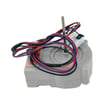
| Fresh food warm, freezer OK | Airflow in refrigerator section | Lg refrigerator evaporator fan motor 4681JB1027C |
| Both sections warm | Cooling system not running as expected | Refrigerator temperature sensor 6500JB2002X |
| Noisy or intermittent cooling | Fan motor or mounting vibration | Refrigerator condenser fan motor damper 5040JA2004A |
Ice maker and water supply problems
On this model family, the ice maker will not start making ice until it reaches about 15°F (-9°C) or colder in the ice maker area, and the ice maker power switch is ON.
- Verify the freezer temperature is cold enough for ice production.
- Check for leaks at the water line connections.
- Confirm household water pressure is in a typical working range (the guide lists 40 to 120 psi).
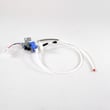
- If the ice maker is not cycling or filling, the water inlet valve is a common failure point.
Helpful parts to consider:
Why it matters
Catching airflow, door seal, and water supply issues early helps prevent food spoilage, excessive frost, and strain on major components like the compressor and control board.
Last updated: February 2026
How do I know what model Kenmore refrigerator I have?
To know what Kenmore refrigerator model you have, locate the model and serial number on the identification label inside the fresh food (refrigerator) compartment. For Kenmore Elite model 79578022312, the label is on the interior liner of the refrigerator compartment; the exact location is shown in the owner's manual.
Where to look for the model number label
We typically see the model/serial label in one of these spots on bottom-mount refrigerators like Kenmore Elite 79578022312:
- Inside the refrigerator compartment on a side wall (interior liner)
- On the ceiling area inside the fresh food section
- Behind or beside the crisper drawers
- Near the door opening frame (still inside the fresh food section)
- Occasionally behind a removable trim piece near the lower bins
What to write down (and why)
Record these details exactly as printed; they are what we use to match parts like a door switch, temperature sensor, or ice maker assembly.
| Item to record | Example format | Why it matters |
|---|---|---|
| Model number | 79578022312 | Ensures the parts list matches your exact refrigerator |
| Serial number | Letters and numbers | Helps confirm production run and correct revisions |
| Date of purchase (if known) | Month/Year | Useful for maintenance history and warranty paperwork |
Quick tips to avoid common mix-ups
- Use the full model number (all digits); do not stop at “795.7802” or similar family numbers.
- If the label is hard to read, take a clear photo and zoom in; one wrong digit can pull the wrong parts diagram.
- If you are comparing manuals, this refrigerator family is covered under model groups like 795.7802* in the documentation.
Why it matters
Kenmore model numbers are the fastest way to get the right replacement parts and troubleshooting steps for your exact configuration (bottom-mount, ice maker, digital sensor control, door bins, and drawers). Using the correct model number prevents ordering a part that does not fit.
Last updated: February 2026
What is the average lifespan of a Kenmore 79578022312 refrigerator?
A Kenmore Elite 79578022312 bottom-mount refrigerator typically lasts 10 to 15 years. With steady maintenance (cleaning condenser coils, keeping door seals tight, and fixing cooling or ice maker issues early), many units reach the upper end of that range.
Typical lifespan and what affects it
Most refrigerators in this class land in the 10 to 15 year window; real-world lifespan depends on operating conditions and how hard the sealed system and fans have to work.
Common factors that shorten lifespan:
- Dirty condenser coils causing longer compressor run time
- Door gasket leaks leading to warm air intrusion and frost
- Poor airflow around the cabinet (tight enclosure, blocked vents)
- Frequent door openings and overloading with warm food
- Water/ice issues that go uncorrected (leaks, slow fill, freezing)
What “normal operation” looks like (so you do not chase non-problems)
Your 79578022312 may run longer than older refrigerators; modern designs often run more to maintain stable temperatures efficiently. The troubleshooting section in the owner's manual also notes that clicking, gurgling, whooshing, and sizzling sounds can be normal during cycling and defrost.
| Symptom | Often normal? | When it points to a problem |
|---|---|---|
| Compressor runs a lot after power outage | Yes | Still not cold after ~24 hours |
| Clicking during cycles/defrost | Yes | Repeated rapid clicking with no cooling |
| Whooshing (fan airflow) | Yes | Fan noise stops and temps rise |
| Gurgling | Yes | Cooling is weak and frost builds up |
Maintenance that helps you reach 15 years
We recommend these habits for Kenmore bottom-mount models:
- Vacuum condenser coils and the toe-kick area every 6 to 12 months
- Keep doors aligned and confirm they close on their own
- Clean door gaskets; replace if torn or permanently deformed
- Keep vents inside the refrigerator and freezer clear
- Change water filters on schedule (if equipped)
Why it matters
Most “end of life” failures are expensive because they involve the sealed system or compressor. Preventive cleaning and quick fixes for airflow, fan, and water supply problems reduce compressor stress and help the refrigerator hold temperature with less run time.
Last updated: February 2026
How to raise a refrigerator off the floor?
To raise your Kenmore Elite refrigerator model 79578022312 off the floor, adjust the two front leveling legs. On this model, turning a leveling leg to the left raises that side; turning it to the right lowers it. Follow the leveling steps in the owner's manual.
Raise the refrigerator using the front leveling legs (recommended)
Tools: 11/16-inch wrench or a flat-blade screwdriver.
- Pull the refrigerator forward enough to reach the front leveling legs.
- Have someone push backward against the top of the cabinet to take weight off the legs.
- Turn the leveling leg to the left to raise that side.
- Turn the leveling leg to the right to lower that side.
- Adjust both legs as needed so the cabinet is stable and the doors close easily.
Set the correct tilt after raising
Kenmore specifies a slight front-to-back tilt for good door closing.
- Keep the refrigerator level side-to-side.
- Set the front slightly higher than the rear.
- Recheck door closing after each adjustment.
| What you want | What to do | Result |
|---|---|---|
| Raise the front corner | Turn leveling leg left | Cabinet height increases on that side |
| Lower the front corner | Turn leveling leg right | Cabinet height decreases on that side |
If you are raising it to move the refrigerator
For moving, raise the front only enough so it rolls easier, then secure shelves and tape doors shut as described in the owner's manual.
Why it matters
Proper leveling reduces noise and vibration, improves door sealing, and helps prevent temperature swings caused by warm air leaking into the refrigerator.
Last updated: February 2026