Installation guide
 Owner’s manual
 Error Codes
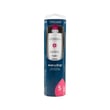


What is the price of Whirlpool refrigerator GD2LHGXLQ00?
We do not list a single purchase price for the Whirlpool GD2LHGXLQ00 refrigerator because the model page is for replacement parts and repair help; the total cost depends on whether you are buying the appliance used, or pricing out a repair using specific parts for this model.
How to estimate your cost for GD2LHGXLQ00
Use the parts list for your Whirlpool side-by-side refrigerator to total up what you actually need for the repair.
- Identify the symptom (no ice, no water, warm temps, leaking, door not closing)
- Match the symptom to the most likely part category (ice maker, water system, cooling, door hardware)
- Price only the parts you need (plus any fittings or tubing)
- Confirm compatibility by model number GD2LHGXLQ00 before ordering
- Follow the safety and access steps in the owner's manual
Common part prices you might be comparing
These are examples of parts shown for GD2LHGXLQ00; your total depends on which components you replace.
| Repair area | Example part for this model | What it affects |
|---|---|---|
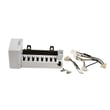
| Ice maker | Ice maker assembly - refrigerator ice maker by Whirlpool 4317943 | Ice production and harvesting |
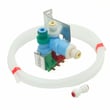
| Water supply | Refrigerator inlet valve W10408179 | Water to dispenser and ice maker |
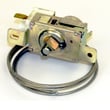
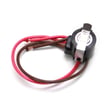
| Temperature control | Refrigerator thermostat WP2198202 | Cooling control and cycling |
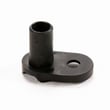
| Door closing | Refrigerator door cam (black) WP2182179 | Door alignment and closing feel |
Why it matters
Pricing the whole refrigerator (especially for an older model) can vary widely, but repair pricing is straightforward: once we identify the failed component, you can compare the part cost to the value of restoring ice, water dispensing, and proper cooling.
Last updated: February 2026
How many cubic feet is a side-by-side refrigerator?
Most side-by-side refrigerators hold about 21 to 25 cubic feet total; the exact capacity varies by brand and model. For your Whirlpool GD2LHGXLQ00, the precise cubic-foot rating is listed in the specifications section of the GD2LHGXLQ00 owner's manual.
Typical capacity ranges (what you can expect)
Side-by-side refrigerator capacity is usually grouped like this:
- Compact: ~18 to 20 cu. ft.
- Standard: ~21 to 25 cu. ft.
- Large: ~26 to 30 cu. ft.
- Capacity changes with features like an ice maker, in-door dispenser, and thicker insulation
- Shelf layout (glass shelves, bins, and drawers) affects usable space even when total cu. ft. is the same
How to estimate capacity if you do not have the spec handy
If you are comparing models or planning a replacement, these quick checks help:
- Measure the width, height, and depth of the cabinet (not including door handles)
- Note that in-door ice and water features reduce usable space
- Compare interior layout: number of shelves, crisper/meat pan size, and door bin capacity
- Allow installation clearance; the manual calls for 1/2 inch space at the sides and top, and 2 inches minimum next to a fixed wall (door swing clearance varies by setup)
Capacity vs. size: quick comparison
| What you are comparing | What it tells you | Why it can be different |
|---|---|---|
| Cubic feet (cu. ft.) | Total interior volume | Dispenser and ice maker hardware take space |
| Exterior dimensions | Fit in your kitchen | Same outside size can have different insulation thickness |
| Usable storage | How much food fits | Shelf and bin design changes real-world capacity |
Why it matters
Cubic feet helps you shop and plan food storage, but usable space is what you feel day to day. If you are troubleshooting temperature swings or airflow issues, keeping vents clear and allowing proper installation clearance can make a noticeable difference in performance.
Last updated: February 2026
Is side-by-side better than a French door?
A side-by-side is “better” than a French door when you want easy freezer access at eye level, more door storage, and a narrower door swing; a French door is “better” when you want wider fresh-food shelves and more flexible refrigerator storage. For your Whirlpool GD2LHGXLQ00, the best choice depends on how you use the refrigerator and freezer most.
Quick comparison (what most owners notice)
| Feature | Side-by-side (like GD2LHGXLQ00) | French door |
|---|---|---|
| Fresh-food shelf width | Narrower | Wider (better for platters/pizza boxes) |
| Freezer access | Eye-level, organized | Lower drawer, can hold bulky items |
| Door storage | Usually more usable bins | Good, but often less than side-by-side |
| Space to open doors | Narrower swing | Wider swing (can be tight in small kitchens) |
| Ice and water dispenser | Very common | Common, varies by model |
Choose a side-by-side if you want
- Faster access to frozen foods without bending
- More vertical organization (bins and shelves in both sections)
- Better fit in tighter aisles because doors are typically narrower
- Strong door-bin storage for condiments and drinks
- A layout that pairs well with frequent ice and water dispenser use
Choose a French door if you want
- Wider refrigerator shelves for large trays and party platters
- More customizable fresh-food storage (often more flexible shelf layouts)
- A freezer drawer that can handle bulky frozen items more easily
- A “fresh food first” design if you use the refrigerator more than the freezer
Why it matters
The layout affects everyday convenience more than cooling performance. If you constantly store wide items (sheet cakes, large casserole dishes), French door wins; if you grab frozen foods daily and want everything visible, side-by-side wins.
Model-specific tip for GD2LHGXLQ00 owners
If you are comparing features like water filtration, ice maker operation, and door bin setup, we recommend checking the feature sections in the GD2LHGXLQ00 owner's manual so you can match the layout to how your current refrigerator is designed.
Last updated: February 2026
Can I replace fridge parts myself?
Yes. On your Whirlpool GD2LHGXLQ00 side-by-side refrigerator, we recommend DIY replacement for many non-sealed-system parts (bins, shelves, bulbs, ice maker components, and some water system parts) as long as you unplug the refrigerator first and follow the steps in the owner's manual. For sealed refrigeration system repairs (compressor, evaporator, condenser, tubing), use a qualified technician.
Good DIY repairs vs. repairs to leave to a pro
Many repairs are straightforward because they involve accessible parts and basic hand tools; others involve electrical shock risk or refrigerant handling.
Good DIY candidates
- Replacing a dispenser light bulb such as the dispenser bulb WP22002263
- Swapping an ice maker such as the ice maker assembly 4317943
- Replacing a water inlet valve such as the refrigerator inlet valve W10408179
- Replacing door hardware pieces such as the refrigerator door cam (black) WP2182179
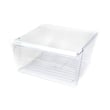
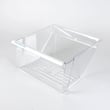
- Replacing storage parts such as the refrigerator door bin WP2156022 or refrigerator crisper pan WP2188656
Leave these to a pro
- Sealed system work (compressor, evaporator, condenser, dryer, connecting tubing)
- Any repair requiring refrigerant recovery/charging
- Complex electrical diagnosis beyond basic checks
Safety and prep checklist (do this first)
- Unplug the refrigerator before removing panels, bulbs, switches, or wiring connectors.
- Turn off the household water supply if you are opening any water line or valve.
- Protect the water dispenser tubing when removing doors; the manual notes the tubing stays attached to the freezer door and must be fed through the bottom hinge carefully.
- Support doors during hinge work; do not rely on door magnets to hold doors in place.
- Reconnect ground wires and wiring plugs exactly as shown when reinstalling hinges.
Quick decision table
| Repair type | Typical DIY difficulty | Common symptoms |
|---|---|---|
| Light bulb, bins, pans, shelves | Easy | No light, broken bin/pan, cracked shelf |
| Ice maker assembly | Medium | No ice, small cubes, jammed mechanism |
| Water inlet valve / water tubing | Medium | No water at dispenser, slow fill, leaks |
| Sealed system (compressor/evaporator) | Pro-only | Warm fridge/freezer, poor cooling, long run times |
Why it matters
Choosing the right DIY repair protects you from electrical shock hazards and prevents water line damage; it also helps you avoid spending money on parts when the real issue is a sealed-system cooling problem.
Last updated: February 2026
What is the most common problem with Whirlpool refrigerators?
The most common Whirlpool refrigerator problem is poor cooling (warm fridge or freezer), usually caused by restricted airflow or heat not being released properly. On the Whirlpool GD2LHGXLQ00 side-by-side, we most often see this tied to dirty condenser coils, an evaporator fan issue, or a defrost problem; check the owner's manual for model-specific operating and care steps.
Quick checks we recommend first
- Make sure the temperature controls were not bumped warmer.
- Confirm vents inside the fresh food and freezer sections are not blocked by food packages.
- Clean condenser coils and the area around the condenser fan (unplug the refrigerator first).
- Listen for the evaporator fan in the freezer; it should run when the compressor is running.
- Check door closing and sealing; a poor seal causes long run times and warm temps.
Common symptoms and the parts that often fix them
| Symptom | Most common cause | Parts on this model that may help |
|---|---|---|
| Fridge warm, freezer OK | Airflow problem from freezer to fridge | Evaporator fan blade, thermostat |
| Both sections warm | Heat not being removed, sealed system not running right | Condenser motor, compressor |
| Frost buildup on freezer back wall | Defrost system issue | Defrost bi-metal |
| No ice or slow ice | Water supply or ice maker issue | Inlet valve, ice maker assembly |
If you’re troubleshooting cooling, these model-matched parts are frequently involved: refrigerator thermostat WP2198202, refrigerator defrost bi-metal WPW10225581, and condenser motor W10822259.
Why it matters
Cooling problems can quickly lead to food spoilage and can also overwork the compressor. Catching airflow, defrost, or door-seal issues early often prevents bigger repairs.
A model-specific note for water and ice issues
If the “problem” is actually the ice maker or dispenser, verify your home water supply is within typical operating range. For this Whirlpool platform, the documentation lists a water pressure range of 30 to 120 psi; low pressure can cause slow fill and small cubes.
For step-by-step help on ice and water symptoms, use how to prevent water dispenser and ice maker problems.
Last updated: February 2026