Owner’s manual
 Error Codes


Why is my refrigerator not getting cold at the bottom?
If your Kenmore Elite refrigerator model 79574029412 is warm at the bottom, the most common causes are restricted airflow (blocked vents or overpacked shelves), dirty condenser coils, or a door that is not sealing so warm air keeps entering. Use the 79574029412 owner's manual to confirm control settings and airflow locations.
Quick checks that fix many “warm bottom” complaints
- Make sure food packages are not blocking air vents in the fresh food section.
- Reduce long or frequent door openings; warm, humid air raises compartment temperature.
- Confirm doors close fully and do not pop open after you shut them.
- If you recently loaded a lot of groceries or added hot food, allow time for temps to stabilize.
- After a defrost cycle, wait about 30 minutes and recheck temperatures.
Clean the condenser area (common cause)
On bottom-mount refrigerators, dust and pet hair around the condenser area can reduce cooling performance and make the lower section feel warmer.
Basic steps
- Unplug the refrigerator.
- Vacuum dust from the grille and condenser area.
- Restore power and let the unit run several hours to recover.
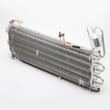
If the condenser coil itself is damaged or heavily corroded, replacement may be needed; for this model, see the refrigerator condenser coil ACG73645004.
Control settings and “normal” temperature swings
The manual notes several conditions that temporarily raise temperatures:
| Situation | What you’ll notice | What to do |
|---|---|---|
| Doors opened often | Bottom area warms first | Open less, close promptly |
| Large load of food | Slow recovery | Give it time, avoid hot food |
| Defrost just finished | Slight temp rise, possible condensation | Wait 30 minutes, recheck |
Why it matters
When the bottom of the fresh food compartment runs warm, food safety and shelf life can drop quickly. Restoring airflow and heat removal (condenser cleaning) usually brings temperatures back to normal without replacing major parts.
Last updated: January 2026
Why is my Kenmore Elite refrigerator leaking water out of the bottom?
On Kenmore Elite refrigerator model 79574029412, water leaking from the bottom is most often caused by a clogged or frozen defrost drain; meltwater cannot flow to the drain pan, so it overflows inside the cabinet and runs out onto the floor. Use the steps below to clear the drain and stop repeat leaks.
Most common causes (and what to check first)
- Frozen or clogged defrost drain (water backs up and leaks from the freezer or fresh-food floor)
- Door left ajar or bad door seal (extra frost creates more defrost water than the drain can handle)
- Water filter or water line seepage (leak shows up near the front or under the filter area)
- Ice maker fill tube splash or freeze-up (water ends up under the freezer drawer)
- Drain pan shifted or cracked (water reaches the floor even though the drain is clear)
Quick fix: clear a frozen/clogged defrost drain
- Unplug the refrigerator.
- Remove the freezer drawer/bins as needed to access the back wall.
- Melt any ice around the drain trough and drain hole using warm water (not boiling) and a turkey baster.
- Flush until water flows freely down the drain.
- Dry the area, reinstall drawers, and restore power.
Helpful tools
| Tool | Why we use it | Safer alternative |
|---|---|---|
| Turkey baster | Pushes warm water through the drain | Large syringe or squeeze bottle |
| Towels | Protects flooring and catches meltwater | Shallow pan |
| Hair dryer (low) | Speeds ice melt | Warm, wet cloths |
If the leak is near the filter or dispenser
A slow drip can come from a filter that is not fully seated or from a damaged filter head O-ring.
- Reseat the filter and check for cracks.
- Replace the filter if it is overdue or damaged.
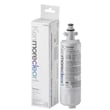
If you need the correct replacement, use the refrigerator water filter 9690 AGF80300801.
Why it matters
Leaks are not just messy; repeated water pooling can refreeze into thick ice, block airflow, and cause warm temperatures in the freezer or fresh-food section. Clearing the drain early prevents recurring ice buildup and protects internal components.
For model-specific access points and safety notes (including avoiding the bottom air vents), follow the 79574029412 owner's manual.
Last updated: January 2026
What are the common problems with Kenmore Elite refrigerators?
Common problems on the Kenmore Elite 79574029412 bottom-mount refrigerator include warm temperatures (often airflow or sealed-system related), frost or ice buildup (defrost or door sealing issues), water or ice dispenser problems (filter, ice maker, or chute door issues), and unusual noises (fan or compressor-related). Use the 79574029412 owner's manual troubleshooting guide to match symptoms to checks.
Most common symptoms and what usually causes them
- Not cooling or weak cooling: dirty condenser coil, blocked vents, failed evaporator fan, or sealed-system/compressor issue
- Frost buildup or freezer icing: defrost sensor/heater problem, door left ajar, torn door gasket, or clogged drain
- Ice maker not making ice: restricted water supply, clogged water filter, ice maker failure, or freezer temp too warm
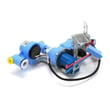
- Water dispenser slow/no water: clogged filter, kinked water line, low house water pressure
- Noises (buzzing, clicking, rattling): fan hitting ice, loose panels, compressor start issues, or normal defrost sounds
Quick checks we recommend before replacing parts
- Confirm settings: most bottom-mount units run best around 37°F fresh food and 0°F freezer.
- Clean airflow paths: keep packages from blocking return vents and fan covers.
- Clean the condenser area: dust buildup raises temps and run time.
- Check doors: verify the doors close fully and seals are clean and making full contact.
- If the dispenser is weak, replace the water filter first.
| Symptom | Best first check | Common next step |
|---|---|---|
| Warm fridge/freezer | Condenser cleanliness, vent blockage | Test fans; sealed-system diagnosis if fans run |
| Heavy frost | Door seal, drain, defrost pattern | Check defrost components |
| No ice | Freezer temp, water supply | Replace ice maker if supply and temp are good |
| Slow water | Filter age, line kinks | Replace filter; inspect inlet valve |
Parts that commonly solve these issues on this model
- For dispenser flow and taste issues: genuine Kenmore refrigerator water filter 9690 AGF80300801
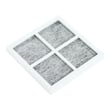
- For odors and stale air: lg refrigerator air filter ADQ73214408
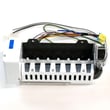
- For ice production problems: lg refrigerator ice maker AEQ73130004
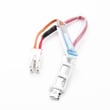
- For frost/defrost symptoms: refrigerator defrost sensor assembly 6615JB2005R
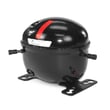
- For loud sealed-system symptoms (advanced repair): refrigerator compressor TCA38091801
Why it matters
Catching airflow, filter, and defrost problems early helps prevent food spoilage, reduces energy use, and can keep minor issues (like icing or restricted water flow) from turning into bigger repairs.
Last updated: January 2026
What size is Kenmore refrigerator model 79574029412?
Kenmore Elite bottom-mount refrigerator model 79574029412 is part of the 795.7402_/7404 series; the exact exterior dimensions and capacity are listed in the specifications section of the 79574029412 owner's manual. Use those published measurements for cabinet fit, door swing, and airflow clearance.
Where to find the exact size in the manual
Look for the sections typically labeled “Refrigerator Installation” and “Specifications”.
- Overall width, height, and depth (often shown with and without handles)
- Clearance requirements for sides, top, and back
- Door swing and freezer drawer clearance guidance
- Electrical and water line placement notes
How to measure your refrigerator (to match the manual)
Measure in three ways so your numbers line up with the spec sheet.
- Width: widest point of the cabinet (include hinge covers if they protrude)
- Height: floor to top of hinge cover; note leveling legs can change height
- Depth: record two numbers (cabinet only, then with handles)
- Check doorway width on the delivery path before moving the unit
Typical “33-inch class” bottom-mount sizing (for planning only)
Use this only as a rough planning range; rely on the manual for exact fit.
| Measurement | Planning range | Notes |
|---|---|---|
| Width | 32 3/4 to 33 1/2 in. | trim and hinge caps vary |
| Height | 67 to 70 in. | leveling legs affect final height |
| Depth | 31 to 35 in. | handles and door clearance change depth |
Why it matters
Correct sizing prevents doors hitting cabinets, freezer drawer binding, and restricted airflow that can reduce cooling performance and shorten compressor life.
Last updated: January 2026