



How do I tell what model my Kenmore dryer is?
Your Kenmore dryer’s model number is printed on a rating label (sticker or metal plate) on the dryer itself. Once you find it, match the full model number exactly (for example, 11086610100) so we can pull the correct parts list and diagrams for your dryer.
Where to look for the model number label
Check these common locations on Kenmore electric dryers:
- Inside the door opening on the front panel (most common)
- On the back panel of the dryer cabinet
- On the door frame area near the latch
- Behind the lint screen housing area (some designs)
What the model number looks like (and why it matters)
Kenmore model numbers are usually all digits and often start with a prefix such as 110 or 796. Use the entire number, not just the first three digits.
| What you see | What it means for parts lookup | What to do |
|---|---|---|
| Full model number (example: 11086610100) | Exact match to the correct parts diagrams | Search parts by the full model number |
| Only a partial number (example: 110) | Not enough to guarantee correct parts | Keep looking for the full label |
| Serial number | Identifies production run, not parts catalog | Record it, but prioritize the model number |
Quick tips to avoid ordering the wrong part
- Write the model number exactly as shown (all digits, no spaces)
- Take a clear photo of the label before ordering
- If the label is worn, look for a second label on the back panel
- Use the model number to confirm fit before buying common wear items like a belt or thermal fuse
Why it matters
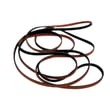
Kenmore dryers share similar styling across many years, but internal components can differ. Using the exact model number ensures the right fit for items like the belt 341241 and the fuse WP3392519.
Last updated: February 2026
Is it worth repairing an old Kenmore dryer?
Yes, repairing an older Kenmore electric dryer like model 11086610100 is usually worth it when the failure is a common wear item (belt, thermal fuse, door switch) and the cabinet and drum are still in good shape; these repairs are typically straightforward and cost-effective.
When repair is the better choice
Repair makes the most sense when you have one clear symptom and the fix targets a single part.
- Drum will not turn but motor runs: likely a worn belt or idler issue
- Dryer will not start: often a door switch or thermal fuse problem
- Loud thumping or scraping: drum support or blower wheel wear
- Door will not stay closed: latch/strike wear
- You want to extend life with minimal cost and downtime
Common, cost-effective parts for this model
- Belt 341241
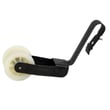
- Dryer idler pulley WP691366
- Fuse WP3392519
- Dryer door switch W10820036
- Dryer blower wheel WP694089
When replacement is the better choice
Replacement is the better value when multiple major components are failing or the dryer has heat-related damage and repeated shutdowns.
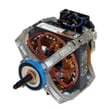
- Motor failure or repeated overheating after cleaning the venting
- Multiple worn drum support components plus a damaged drum
- Burnt wiring at the power connection (needs careful electrical repair)
- Rusted cabinet, damaged drum seals, or chronic lint leakage inside the cabinet
Quick cost-to-value guide
| Repair type | Typical situation | Usually worth it? |
|---|---|---|
| Wear-item repair | Belt, idler, door switch, thermal fuse | Yes |
| Airflow repair | Blower wheel, lint screen, vent cleaning | Yes |
| Major mechanical | Motor, drum, multiple supports | Depends |
Why it matters
A dryer that tumbles and heats correctly but has a single failed wear part can run for years after repair. Fixing airflow and safety-related items (like a thermal fuse) also helps prevent repeat failures and long dry times.
Last updated: February 2026
What are common problems with Kenmore dryers?
For Kenmore electric dryers like model 11086610100, the most common problems are no heat, long dry times, the drum not turning, and unusual noises. These issues usually trace back to airflow restrictions (lint buildup) or normal wear on drive parts and safety components.
Most common symptoms and likely causes
- Dryer runs but won’t heat: heating circuit problem, wiring issue, or a blown thermal safety device such as the fuse WP3392519
- Long drying times: restricted venting, clogged lint screen, or lint buildup in the lint chute; a damaged screen W10874409 can also reduce airflow
- Drum won’t turn: broken belt, seized idler pulley, or failed motor (common wear items include the belt 341241 and dryer idler pulley WP691366)
- Loud squealing or thumping: worn drum support components, a slipping belt, or a blower wheel issue such as the dryer blower wheel WP694089
- Dryer won’t start: door switch or door latch alignment problems (check the dryer door switch W10820036 and door strike)
Quick checks we recommend first (fast, no parts)
- Clean the lint screen before every load and confirm it seats flat.
- Inspect the vent hose for kinks, crushing, or heavy lint.
- Run a timed dry cycle and verify strong airflow at the outside vent hood.
- Listen for a steady motor hum versus a squeal/grind (helps separate motor vs. belt/idler issues).
- Confirm the door closes firmly and the switch clicks.
Symptom-to-part cheat sheet
| Symptom | What to inspect first | Common related part(s) for this model |
|---|---|---|
| Runs, no heat | Thermal safety device, heater wiring | Fuse, heating element wire kit |
| Drum not turning | Belt path, idler tension, motor | Belt, idler pulley, motor |
| Loud noise | Blower wheel, belt/idler | Dryer blower wheel, belt, idler pulley |
| Won’t start | Door switch, latch/strike | Dryer door switch, strike |
Why it matters
Airflow problems can cause overheating, repeated shutdowns, and longer dry times; worn drive parts can stop the drum and strain the motor. Catching the root cause early helps prevent multiple part failures.
For electronic-control Kenmore 110-series units, use our Kenmore 110 series electronic control model dryer error codes guide when an error code appears.
Last updated: February 2026
What size is Kenmore model 11086610100?
Kenmore electric dryer model 11086610100 is a full-size, 27-inch-class dryer. Most dryers in this Kenmore 110 series footprint measure about 27 inches wide, 27 to 29 inches deep, and 43 to 44 inches tall (height varies most with leveling legs and top panel style).
Typical dimensions you can expect
Use these as planning numbers for a laundry alcove, pedestal clearance, or side-by-side fit.
- Width: ~27 inches
- Depth: ~27 to 29 inches (deeper if you include the exhaust elbow and cord)
- Height: ~43 to 44 inches (can change slightly when you level the cabinet)
- Door swing clearance: plan extra space in front for loading and unloading
How to measure your dryer accurately
We recommend measuring the cabinet itself and then adding clearance for hookups.
- Measure width across the front of the cabinet (left to right)
- Measure height from floor to the highest point on the top
- Measure depth from the back panel to the front edge (exclude the door handle if you want “cabinet depth”)
- Add 1 to 3 inches behind the dryer for the vent connection and power cord bend radius
- Leave at least 1 inch on each side for airflow and vibration clearance
Quick planning table
| Measurement | Cabinet only (typical) | With hookups/clearance (typical) |
|---|---|---|
| Width | ~27 in. | ~28 to 29 in. |
| Depth | ~27 to 29 in. | ~30 to 34 in. |
| Height | ~43 to 44 in. | ~43 to 44 in. |
Why it matters
Correct sizing prevents crushed venting (slow drying), pinched power cords, and door clearance problems. If you are stacking, recessing into a closet, or replacing an older unit, these extra inches are usually what cause fit issues.
If you are also planning a repair while you have the dryer pulled out, common wear items for this model include the belt 341241 and dryer idler pulley WP691366.
Last updated: February 2026








