Installation guide
 Owner’s manual


What's the average lifespan of a KitchenAid dishwasher?
Most KitchenAid dishwashers, including model KDTE254EBL1, typically last 10 to 14 years with normal household use. Consistent cleaning, correct detergent and rinse aid use, and fixing small issues early help the pump, motor, racks, and controls reach that lifespan.
- Water quality (hard water speeds up mineral buildup)
- How often you run it (daily use wears moving parts faster)
- Maintenance habits (filter cleaning, spray arm checks)
- Drying setup (rinse aid use reduces spotting and buildup)
- Early leak or drain problems (addressing them prevents bigger failures)
We recommend following the care steps in the KDTE254EBL1 owner’s manual. For this KitchenAid design, rinse aid is important for drying performance and controlling hard water deposits.
- Clean the filter area regularly and remove debris
- Run hot water at the sink before starting a cycle (improves wash performance)
- Use rinse aid consistently for better drying and fewer deposits
- Avoid overloading; keep spray arms and feed tubes unobstructed
- If the door will not latch or the cycle will not start, check the latch alignment and door closure
| Component | Typical outcome over time | What you notice first |
|---|---|---|
| Circulation system (pump, motor) | Wear from heavy use and debris | Poor cleaning, unusual noise |
| Drain system | Clogs or pump wear | Standing water, slow drain |
| Heating and drying | Reduced heating efficiency | Wet dishes, longer dry time |
| Racks and adjusters | Coating wear, broken clips | Rust spots, rack won’t roll/adjust |
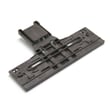
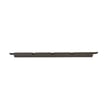
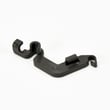
If your upper rack stops adjusting smoothly, replacing the dishwasher dishrack adjuster WPW10546503 is a common fix.
Knowing the 10 to 14 year average helps you decide whether to maintain and repair (often cost-effective for a mid-life dishwasher) or plan for replacement when multiple major parts start failing.
Last updated: February 2026
How to fix rubber seal on KitchenAid dishwasher?
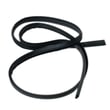
On KitchenAid dishwasher model KDTE254EBL1, a loose rubber door seal is usually fixed by pressing the gasket fully into the door channel evenly all the way around, then keeping the door closed for several hours so the seal “sets” in place. Use the steps in the KDTE254EBL1 owner’s manual.
- Turn off power at the breaker before working around the door area.
- Let the dishwasher cool; avoid touching the heating element during or right after a cycle.
- Do not sit, stand, or lean on the open door.
- Open the door and inspect the full perimeter of the tub opening and door channel.
- Clean the channel with a damp cloth; remove detergent residue and food debris.
- Starting at the top center, press the seal into the channel using your fingers.
- Work down both sides, pressing small sections in evenly so it does not twist.
- Finish along the bottom; confirm the seal is fully seated with no gaps or bulges.
- Close and latch the door; keep it closed for several hours.
- Look for sharp utensils or rack items that can snag and pull the seal.
- Check for a warped door or misalignment; the door should close and latch smoothly.
- Confirm the door is not “dropping” or springing open; incorrect door tension can affect sealing.
| What you notice | Most likely cause | What to do next |
|---|---|---|
| Drips at the corners | Seal not fully seated or twisted | Re-seat the gasket evenly, corner to corner |
| Leak at the bottom center | Lower edge not seated or door not closing square | Re-seat bottom section; verify door closes flat |
| Door feels heavy or won’t stay in position | Door spring tension needs adjustment | Follow the KDTE254EBL1 installation guide door-tension adjustment steps |
A properly seated door seal prevents leaks, protects the floor and cabinets, and helps the dishwasher maintain correct wash pressure for better cleaning and drying.
Last updated: February 2026
What is the most common problem with KitchenAid dishwashers?
On the KitchenAid KDTE254EBL1 dishwasher, the most common issues we see are poor cleaning (often tied to spray-arm or filter blockage), not starting or stopping mid-cycle (door not fully latched or Start/Resume sequence), and drain problems that leave standing water. Use the KDTE254EBL1 owner’s manual troubleshooting steps first.
- Dishes still dirty: clogged filter, blocked spray arms, or items blocking the wash system (especially at the back of the tub)
- Won’t start: door not closed and latched, Start/Resume light blinking, or the door not closed before the countdown ends
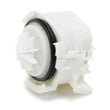
- Standing water: drain path restriction (air gap or disposer connection), kinked hose, or a weak drain pump
- Leaks: door seal wear, lower door seal issues, or installation leveling problems
- Not drying well: heater circuit issue, rinse aid problems, or cycle selection
- Confirm the door is fully closed and latched; if the Start/Resume light is blinking, close the door and press Start/Resume.
- Reload to prevent interference: large casserole dishes and tall items can block spray arms or the wash system.
- Clean and maintain: remove debris from the filter area and check spray-arm holes.
- Check draining basics: verify the drain hose routing is high-looped and not kinked.
- If you suspect a latch problem, inspect the dishwasher door latch WPW10653840 for damage or looseness.
| Symptom | Most likely area | Example part for KDTE254EBL1 |
|---|---|---|
| Won’t start, Start/Resume blinking | Door latch/door closure | Door latch assembly |
| Standing water after cycle | Drain system | Drain pump or drain hose |
| Not filling or fills slowly | Water supply | Water inlet valve |
| Poor cleaning, weak spray | Wash system | Pump and motor assembly (if circulation is weak) |
These problems often look “electronic,” but on KDTE254EBL1 they frequently come down to door-latch engagement, loading interference, or restricted water flow. Fixing the root cause improves cleaning, prevents cycle interruptions, and reduces repeat clogs.
For installation-related causes (leveling, anchoring, hose routing), follow the KDTE254EBL1 installation guide.
Last updated: February 2026
How much to replace control panel on KitchenAid dishwasher?
Replacing the control panel on a KitchenAid KDTE254EBL1 dishwasher costs the price of the correct control-panel/console assembly plus labor. Most service calls bill 1 to 2 hours for this repair, so the total depends mainly on which assembly your dishwasher needs and local labor rates.
A “control panel” repair can mean different parts on KDTE254EBL1. Use the model’s parts diagram and the KDTE254EBL1 owner’s manual to match the symptom to the correct assembly.
- Control panel/console assembly (the buttons and user interface you touch)
- Possible electronic control board (if the panel is fine but won’t respond)
- Labor time to remove the inner door panel, swap parts, and test cycles
- A diagnostic/service call fee (often separate from labor)
| Item | Typical expectation | What changes it |
|---|---|---|
| Labor time | 1 to 2 hours | Built-in access, corrosion, stripped screws, wiring repairs |
| Service call/diagnostic | Commonly charged | Sometimes credited toward the repair |
| Parts cost | Varies by exact assembly | Color/finish, availability, whether console vs. control board |
Before ordering a control panel, we recommend these quick checks:
- Reset power at the breaker for 1 minute, then retry Start/Resume.
- Confirm the door closes firmly and latches; a door that is not “seen” as closed can look like a dead panel.
- Look for flashing lights or a stored fault; use KitchenAid he dishwasher error codes to narrow the failure.
- If buttons respond but the dishwasher will not start, focus on door-close and Start/Resume behavior described in the manual.
If the dishwasher will not run because the door is not registering as closed, the latch is a common fix: dishwasher door latch WPW10653840.
Control-panel and console assemblies are among the higher-cost dishwasher parts; confirming the failure first prevents replacing a good user interface when the real issue is a latch, wiring, or control fault.
Last updated: February 2026