 Error Codes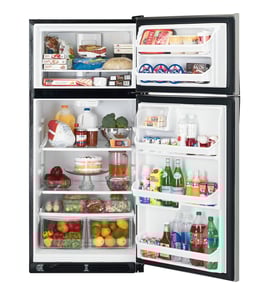



What is the life expectancy of a GE Monogram refrigerator?
Most GE Monogram refrigerators typically last 15 to 20 years with normal home use and basic maintenance; standard refrigerators are usually closer to 10 to 15 years. If your GE GTS18DBMBRWW is cooling well and the doors seal tightly, it can often stay reliable for many years.
Refrigerator longevity depends heavily on compressor run time, airflow, and door seal condition.
| Refrigerator type | Typical life expectancy | Notes |
|---|---|---|
| Standard top-mount (like GE GTS18DBMBRWW) | 10 to 15 years | Simple design; fewer electronics to fail |
| Premium or luxury built-in (often Monogram) | 15 to 20 years | Higher-end components; more complex systems |
These are the most common wear drivers we see on top-mount refrigerators:
- Dirty condenser area causing high heat and long compressor run time
- Weak door gasket letting warm air leak in and creating frost and moisture
- Fan problems that reduce airflow across the evaporator or condenser
- Temperature control issues that cause wide temperature swings
- Power interruptions or loose wiring that stress electrical components
If your refrigerator is otherwise in good shape, replacing a failed wear part is often the difference between “replace the fridge” and “keep it running.” Common examples for GE GTS18DBMBRWW include:
- Refrigerator door gasket WR24X10186 (helps stop air leaks and frost)
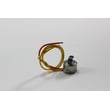
- Refrigerator temperature control WR09X26874 (helps stabilize fresh food temps)
- Condenser motor WR60X10170 (supports heat removal at the condenser)
- Capacitor WR55X24064 (supports compressor starting and running)
A refrigerator that is forced to run hot (poor airflow, dirty condenser, bad gasket) usually has a shorter compressor life and higher energy use. Keeping airflow clear and the doors sealing correctly is the simplest way to reach the upper end of the expected lifespan.
Last updated: February 2026
Is GE Cafe considered high end?
Yes. GE Café is considered a high-end (premium) line within the GE brand; it is positioned above standard GE appliances with upgraded design, finishes, and feature sets compared with typical top-mount refrigerators like model GTS18DBMBRWW.
GE organizes products into different tiers; GE Café sits in the premium tier, while many “GE” branded models focus on value and everyday reliability.
- GE Café: premium styling and feature upgrades
- GE (standard): mainstream features and pricing
- GE Monogram: luxury tier with the most premium materials and built-in options
High-end appliances typically emphasize a mix of performance, design, and convenience features.
- More premium exterior finishes and coordinated handles
- More advanced temperature management features (varies by model)
- Quieter operation targets (varies by model)
- More configuration options and matching suite aesthetics
- Higher typical price point than standard lines
| GE line | Market position | Typical focus |
|---|---|---|
| GE (standard) | Mainstream | Practical features, value |
| GE Café | High-end / premium | Design-forward, upgraded features |
| GE Monogram | Luxury | Built-in styling, top-tier materials |
If you are deciding between GE lines, “high end” affects what you pay for and what you get: premium aesthetics and feature upgrades versus straightforward refrigeration. For repairs and maintenance on your GE GTS18DBMBRWW, the most important factor is still matching parts to your exact model number.
If you need help confirming the correct replacement part for your refrigerator, start with the model tag and use our guide: how to find your appliance model number (and what it means for parts).
Last updated: February 2026
How to read GE appliance model numbers?
GE model numbers identify the product type and key design series; for your GE GTS18DBMBRWW top-mount refrigerator, the model number is the primary code we use to match the correct replacement parts and diagrams. For the most accurate parts match, always copy the model number exactly as shown on the rating label.
On most GE top-mount refrigerators like model GTS18DBMBRWW, the rating label is typically located in one of these spots:
- Inside the fresh food compartment on a side wall
- Along the ceiling of the fresh food compartment near the light
- On the cabinet frame behind the crisper drawers
- On the door frame area (fresh food door)
GE model numbers are built in sections. While the exact meaning of every character varies by product line, this quick guide helps you read what you are looking at.
| Section | What it usually tells you | Example on GTS18DBMBRWW |
|---|---|---|
| Prefix letters | Product family/type | GTS (top-mount refrigerator family) |
| Numbers | Size/series identifier | 18 (series/capacity class) |
| Middle letters | Feature/package or design series | DBM |
| Suffix letters | Color/finish code | BRWW |
We use the model number to select parts; the serial number is mainly used to identify production details such as manufacturing date codes.
- Model number: selects the correct parts list (example: GTS18DBMBRWW)
- Serial number: helps identify the unit’s production run
- If one character is off, you can end up with the wrong door gasket, thermostat, or light socket
GE often uses similar-looking parts across multiple refrigerators, but small differences matter (mounting tabs, wiring connectors, gasket profile, shelf supports). Using the exact model number helps ensure the part fits and functions correctly.
If you are ordering common items for this model, match by model number first, then confirm by part ID, for example:
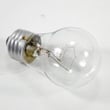
- Refrigerator light bulb 40A15 (interior light)
- Refrigerator temperature control WR09X26874 (temperature control thermostat)
- Refrigerator door gasket WR24X10186 (door seal)
- Terminal socket WR2X9391 (light socket)
- Write the model number exactly: GTS18DBMBRWW
- Confirm the part name and part ID match your diagram
- Compare your original part’s connectors, mounting holes, and dimensions
- If replacing an electrical part, unplug the refrigerator first
Last updated: February 2026
How to find GE appliance parts?
To find the right GE parts, we match parts to your exact model number; for this refrigerator, use GTS18DBMBRWW to pull the correct diagrams and parts list, then choose the replacement part by name and ID (for example, a refrigerator light bulb 40A15).
- Confirm the model number on the appliance data tag is GTS18DBMBRWW (letter and number mix-ups are common).
- Open the model’s parts list and select the section that matches your repair (lights, doors, cooling, shelves).
- Use the part name plus the part ID to confirm you have the right item.
- Compare your original part’s shape, wire connectors, and mounting points to the listing.
- If multiple similar parts appear (like gaskets or handles), match by location (fresh food door vs freezer door) and color.
- Order the part and keep the packaging until the repair is complete.
| Symptom or need | Part to check | Example part on this model |
|---|---|---|
| Interior light out | Bulb or socket | Refrigerator light bulb 40A15, terminal socket WR2X9391 |
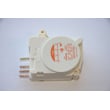
| Warm refrigerator or freezer | Airflow and controls | Evaporator fan blade WR60X10205, refrigerator defrost control WR9X502, refrigerator temperature control WR09X26874 |
| Door not sealing, moisture, frost | Door gasket | Refrigerator door gasket WR24X10186 or refrigerator door gasket WR24X10187 |
| Noisy or hot at back | Condenser fan motor | Condenser motor WR60X10170 |
Using the exact model number and the exact part ID prevents ordering a look-alike part that does not fit your GE top-mount refrigerator, which saves time and avoids repeat repairs.
Last updated: February 2026
What is the most common problem with a GE refrigerator?
The most common GE refrigerator problem is not cooling properly, usually caused by airflow issues (frosted evaporator), a failed fan motor, dirty condenser area, or a temperature control problem. On the GE GTS18DBMBRWW top-mount, these same cooling-system basics are the first things we check.
- Fresh food warm, freezer cold: restricted airflow or evaporator fan issue
- Both sections warm: condenser fan, compressor start components, or power issue
- Heavy frost on freezer back wall: defrost system problem
- Clicking, then no start: compressor start components (overload/capacitor)
- Lights out but unit runs: bulb or socket problem
- Confirm controls are set to a normal mid-range setting.
- Make sure vents inside the refrigerator and freezer are not blocked by food packages.
- Clean dust from the condenser area (unplug first).
- Listen for the evaporator fan in the freezer when the door switch is held closed.
- Check door sealing with the paper-strip test (paper should drag when pulled).
| Problem area | What fails most often | Example part for this model |
|---|---|---|
| Defrost system | Defrost control/timer | Refrigerator defrost control WR9X502 |
| Air circulation | Evaporator fan motor | Evaporator motor WR60X10172 |
| Temperature regulation | Cold control thermostat | Refrigerator temperature control WR09X26874 |
| Door sealing | Worn/torn gasket | Refrigerator door gasket WR24X10186 |
| No light | Burned bulb or bad socket | Refrigerator light bulb 40A15, terminal socket WR2X9391 |
When a refrigerator is not cooling, food safety and compressor run time are the big concerns. Fixing airflow, defrost, or door-seal problems early helps the GE GTS18DBMBRWW cool evenly and prevents the compressor from running nonstop.
Last updated: February 2026





