Installation guide
 Owner’s manual
 Error Codes


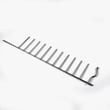
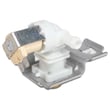
What is the code F4E1 on a dishwasher?
On the Kenmore Elite dishwasher model 66516919001, error code F4E1 points to a communication problem between the main control and the circulation pump (wash pump). We focus first on wiring connections; if those check out, the circulation pump assembly is the most common fix.
What to check first (fast, no-parts steps)
- Reset power: turn the breaker off for 1 minute, then back on.
- Confirm the door closes and latches fully (a poor latch can interrupt operation).
- Inspect the wiring harness plugs to the circulation pump for a loose fit.
- Look for pinched, rubbed-through, or wet connectors under the unit.
- If the dishwasher will not run at all, verify the breaker is on and water supply is turned on.
Likely repair if the code returns
If the harness and connectors are secure and undamaged, the next step is typically replacing the circulation pump assembly because the control and pump are not communicating reliably.
- Recommended part to consider: dish pump WPW10757217
Safety steps before any inspection
The installation instructions for this model emphasize electrical safety. Before accessing wiring or components:
- Disconnect electrical power at the breaker.
- Shut off the water supply.
- Wear gloves and safety glasses.
- Do not use an extension cord; use a properly grounded connection.
For model-specific installation and safety details, use the installation guide.
Quick decision guide
| What you observe | Most likely cause | What we recommend |
|---|---|---|
| Code appears after moving the dishwasher or recent service | Loose connector or pinched harness | Reseat connectors, inspect harness routing |
| Code returns immediately after reset | Failed circulation pump electronics | Replace the circulation pump assembly |
| Intermittent operation, then code | Weak connection, moisture at plug, failing pump | Inspect/clean/dry connections; replace pump if recurring |
Why it matters
The circulation pump drives wash action. When the control cannot communicate with it, cycles can stop mid-wash, dishes stay dirty, and the dishwasher may drain without properly washing.
Last updated: February 2026
What model is my Kenmore 66516919001 dishwasher?
Your Kenmore Elite dishwasher model number is printed on the appliance’s rating label. On model 66516919001, you’ll typically find that label on the inside edge of the door opening; it lists both the model number and serial number for parts lookup and service records (see the owner's manual).
Where to find the rating label
Check these common spots on Kenmore Elite dishwashers like 66516919001:
- Inside the door, along the left or right inner edge of the tub opening
- Around the door frame near the latch area
- On the side wall of the tub opening (visible when the door is open)
- Occasionally on the top edge of the inner door panel
What to write down (and why)
Record the information exactly as shown on the label:
- Model number (example format: 665.16919xx)
- Serial number (unique to your unit)
- Series information (helps match the correct manual and parts diagrams)
Why it matters
Kenmore model numbers can look similar across the 665 series, but small differences change which parts fit (for example, a door seal, inlet valve, or circulation pump). Using the exact model number prevents ordering the wrong replacement part.
Quick check: model number vs. serial number
| Item | What it tells us | Used for |
|---|---|---|
| Model number | The exact dishwasher design and parts list | Ordering correct parts, matching diagrams |
| Serial number | Your unit’s production identity | Service history, manufacturing details |
If the label is hard to read
- Wipe the label gently with a damp cloth and mild soap; dry it fully
- Use a flashlight and take a close-up photo to zoom in
- If the door label is damaged, confirm the model format in the owner's manual and match it to your control panel and features
Last updated: February 2026
How to hard reset a Kenmore 66516919001 dishwasher?
To hard reset your Kenmore Elite 66516919001 dishwasher, we recommend canceling the current cycle and clearing the control indicators using the Cancel/Drain function, then selecting a new cycle and pressing START. This resets the cycle logic and gets the control ready for a fresh start (see the owner's manual).
Reset options that work on this model
Use the method that matches what your dishwasher is doing:
- Stuck mid-cycle or acting unresponsive: press Cancel/Drain and let the 2-minute drain run (if needed)
- Need to clear lights/indicators before starting: press Cancel/Drain before starting a new cycle
- Controls won’t respond because Lock is on: press and hold AIR DRY for 4 seconds to turn Lock off
- Cycle won’t start after changes: close the door firmly until it latches, then press START
Step-by-step: “hard reset” using Cancel/Drain
- Press Cancel/Drain.
- Let the dishwasher drain for up to 2 minutes (the light turns off when done).
- Check and refill detergent as needed.
- Close the door.
- Select your cycle and options.
- Press START.
Lock vs. reset (quick comparison)
| What you see | What it means | What to do |
|---|---|---|
| LOCK ON lit | Buttons are disabled | Hold AIR DRY 4 seconds to unlock |
| Cycle won’t change, lights stay on | Cycle/indicators need clearing | Press Cancel/Drain, then reselect cycle |
| Water sitting in tub | Drain needed before restart | Press Cancel/Drain and let it finish |
Why it matters
A Cancel/Drain reset clears the current cycle state, drains if necessary, and prevents starting a new wash with leftover water or incorrect indicator status. Unlocking the controls first also prevents “false” no-response symptoms.
Last updated: February 2026
What does E09 mean on a Kenmore dishwasher?
On a Kenmore Elite dishwasher model 66516919001, an E09 code is most commonly tied to a heating problem (the dishwasher is not heating water as expected). Start by resetting power, then focus troubleshooting on the heater circuit and temperature sensing.
What to check first (fast, no-tools steps)
- Turn off power at the breaker for 1 minute, then restore power and retry a cycle.
- Make sure the cycle and options selected actually call for heated water (some light/quick cycles heat less).
- Run hot water at the sink until it is hot, then start the dishwasher.
- Confirm the dishwasher is filling to a normal level (low fill can prevent proper heating).
- Check for standing water or slow drain; poor draining can cause odd behavior in some cycles.
Parts that commonly relate to heating symptoms
Heating complaints are usually caused by a failed heater, a temperature control issue, or a control/safety interruption. For this model, these parts are common suspects:
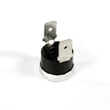
- High-limit temperature control: Dishwasher thermostat WP661566
- Circulation and wash performance (can affect heating results): Dish pump WPW10757217
- Safety interruption if the unit overheats or shorts: Fuse 8193762
Quick symptom-to-likely-cause guide
| What you notice | What it usually points to | What we do next |
|---|---|---|
| Dishes are cold and wet at end | Water not heating | Check thermostat, heater circuit, wiring |
| Cycle runs unusually long | Heater not raising temp | Check heating circuit and wash pump performance |
| Error returns after reset | Hard fault in heating system | Test thermostat, fuse, control outputs |
Why it matters
Your dishwasher relies on heat to dissolve detergent, control water temperature during the wash, and improve drying. When heating is weak or absent, you will typically see poor cleaning, longer cycles, and wet dishes.
Where to find model-specific troubleshooting steps
We recommend following the diagnostic and troubleshooting steps in the owner's manual and confirming installation requirements in the installation guide.
Last updated: February 2026
Is it worth repairing a Kenmore dishwasher?
Yes, repairing a Kenmore Elite dishwasher like model 66516919001 is usually worth it when the fix is a common wear item (seal, valve, hose, switch) and the total repair cost stays well below the price of a replacement. It is especially worthwhile when the issue is a leak or a no-start problem you can pinpoint quickly using the troubleshooting steps in the owner's manual.
Quick way to decide (cost, age, and symptom)
Use these practical checkpoints before you buy parts:
- Age: Dishwashers typically last 10 years; repairs make the most sense when you are under that mark.
- Repair cost: If parts plus labor are under about 50% of replacement cost, repair is the better value.
- Leak location: Door-edge leaks often point to a worn door seal; tub leaks are a different category.
- Performance issues: Poor cleaning can be maintenance-related (filters, loading, detergent) before it is a pump.
- No-start: Often a door latch/switch or a blown fuse, not the main control.
Common repairs that are usually worth doing on 66516919001
These are frequent, high-value fixes because they are targeted and restore normal operation:
- Replace a leaking door gasket with the dishwasher door seal W10542314
- Fix fill problems (won’t fill, fills slowly) with the inlet valve WP8531669
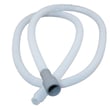
- Fix drain problems (won’t drain, backs up) with the dishwasher drain hose 8269144A
- Fix intermittent starting by checking the latch and replacing the dishwasher door switch WP8269209 if it tests bad
- Restore heating performance by testing and replacing the dishwasher thermostat WP661566 if needed
When replacement makes more sense
Replacement is the better call when the repair is expensive and the dishwasher is already near end-of-life.
| Situation | What it usually means | Typical direction |
|---|---|---|
| Major motor/pump failure | High parts cost, more labor | Replace if older |
| Multiple symptoms at once | Could be several parts or wiring | Diagnose first |
| Repeated leaks after seal/hoses | Possible door alignment or tub issue | Consider replacement |
Why it matters
A targeted repair can extend the life of your Kenmore Elite dishwasher and avoid the cost and hassle of replacement. Also, your manual outlines warranty coverage details (including coverage periods for certain components), which can affect whether paying for a repair makes sense for your situation.
Last updated: February 2026