Owner’s manual
 Error Codes



Which is better, top mount or bottom mount refrigerator?
A bottom-mount refrigerator like the KitchenAid KBFS20ETSS01 is usually better for everyday convenience because fresh foods sit at eye level and you bend less. A top-mount is usually better for lower upfront cost and simpler layout; both can be efficient when properly installed and maintained.
Quick comparison
| Feature | Top-mount (freezer on top) | Bottom-mount (freezer on bottom) |
|---|---|---|
| Most-used section | Refrigerator is lower | Refrigerator is higher (more convenient) |
| Freezer access | Easier (less bending) | More bending, often a pull-out drawer |
| Organization | Often simpler | Often better fresh-food organization |
| Typical price | Lower | Higher |
| Best for | Budget, frequent freezer use | Frequent fresh-food use |
How to choose for your kitchen and habits
- Choose bottom-mount if you use the refrigerator section most and want easier access to produce, dairy, and leftovers.
- Choose top-mount if you use the freezer most and want the simplest, most cost-effective design.
- Measure door swing and clearance; many kitchens need extra hinge-side space for doors to open fully.
- Plan for ventilation space at the top and behind the cabinet for steady cooling performance.
- If you want an ice maker or water features, confirm you have a nearby cold-water supply and room for the water line.
Installation details that matter (applies to both styles)
For reliable cooling and fewer service issues, we follow the spacing and setup guidance in the KBFS20ETSS01 owner’s manual. Key points include leaving ventilation space and avoiding hot locations (near ovens or radiators), plus ensuring the unit is stable and level so doors close properly.
Why it matters
The “better” refrigerator is the one that matches how you cook and store food. Layout affects daily comfort (bending and reaching), while proper clearance and leveling affect temperature stability, door sealing, and energy use.
Last updated: January 2026
Are bottom mount fridges good?
Yes. A bottom-mount refrigerator like the KitchenAid KBFS20ETSS01 is a strong choice because it keeps fresh-food shelves at eye level, improves day-to-day access, and typically offers wide freezer drawer storage for bulk items.
What you get with a bottom-mount design
- Easier access to refrigerated foods (less bending for milk, produce, leftovers)
- Large pull-out freezer drawer that holds bulky packages well
- Better organization with full-width shelves and bins in the fresh-food section
- More stable temperature for fresh foods because the refrigerator compartment is used most
Trade-offs to consider
Bottom-mount models are still “good”, but these are the common downsides:
- You bend more to reach freezer items
- Freezer drawers can feel heavy when fully loaded
- If the refrigerator is not level, doors may not close as smoothly (leveling matters)
Quick comparison
| Feature | Bottom-mount refrigerator | Top-mount refrigerator |
|---|---|---|
| Fresh-food access | Best (eye level) | Good (lower shelves require bending) |
| Freezer access | Requires bending | Best (freezer at top) |
| Organization | Strong (bins, shelves, drawers) | Varies by model |
| Space for bulky frozen items | Strong (drawer format) | Varies (shelves) |
Setup tips that make a big difference
A bottom-mount refrigerator performs best when it has proper clearance and is leveled correctly.
- Leave ventilation space at the top and behind the refrigerator
- Leave hinge-side clearance so doors can swing open fully
- Level the cabinet so doors close easily and seals contact evenly
- Avoid installing next to strong heat sources (like an oven)
For model-specific installation clearances and leveling steps, use the KBFS20ETSS01 owner’s manual.
Why it matters
Most “bottom mount fridge problems” customers notice (warm spots, moisture, doors not closing, frost) trace back to airflow, door sealing, or leveling. Getting those basics right protects food quality and reduces compressor run time.
Last updated: January 2026
What is the most common problem with a KitchenAid refrigerator?
For the KitchenAid KBFS20ETSS01 bottom-mount refrigerator, the most common issues we see are ice maker problems (no ice, slow ice, small cubes) and cooling complaints (warm fresh food section or freezer). These are usually tied to airflow, frost buildup, or water supply and filtration.
Most common symptoms (and what they usually point to)
- Ice maker not making ice: water supply issue, frozen fill tube, or a failing ice maker
- Slow ice production: restricted water flow, clogged filter, or freezer temperature too warm
- Fresh food section warm but freezer cold: airflow restriction or a damper problem
- Frost buildup in freezer: defrost system issue that can also reduce cooling
- Noisy operation: fan-related noise or airflow obstruction
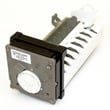
If you suspect the ice maker itself is failing, the model-compatible replacement is the whirlpool refrigerator ice maker (D7824706Q) D7824706Q.
Quick checks we recommend first
Use these steps before replacing parts:
- Confirm the refrigerator is powered and controls are set correctly (the KBFS20ETSS01 owner's manual walks through control use and troubleshooting).
- Make sure the freezer is cold enough for ice production (ice makers typically need about 0°F to 5°F).
- Check the shutoff arm or ice maker switch is in the ON position.
- Verify the water supply valve is fully open and the supply line is not kinked.
- If cubes are small or hollow, replace the filter or install a bypass plug if you are testing water flow.
Common causes and likely fixes (at a glance)
| Problem you notice | Most likely cause | What usually fixes it |
|---|---|---|
| No ice | No water to ice maker or failed ice maker | Restore water flow; replace ice maker if needed |
| Warm refrigerator section | Damper not opening or airflow blocked | Clear vents; inspect damper |
| Frost buildup | Defrost system problem | Diagnose heater/defrost circuit |
| Runs a lot | Dirty condenser, warm room, frequent door openings | Clean coils; improve airflow around unit |
For airflow-related cooling issues, the refrigerator damper control WPW10196393 is a common suspect when the freezer is cold but the fresh food section is warm.
Why it matters
Ice maker and cooling problems often share the same root causes: temperature stability, airflow, and water flow. Fixing those basics first prevents repeat failures and helps protect food quality.
Last updated: January 2026
What is the average lifespan of a KitchenAid refrigerator?
Most KitchenAid refrigerators last 14 to 17 years on average, and a typical overall lifespan range is 10 to 20 years with normal use and maintenance. For your KitchenAid KBFS20ETSS01 bottom-mount refrigerator, consistent cleaning, airflow, and door-seal care are the biggest factors in reaching the high end of that range.
What you can expect over time
Many refrigerators run reliably for years, then need a few common wear-item repairs. Here are typical “lifespan stage” patterns we see:
- Years 1 to 5: Minor adjustments, occasional ice maker or water system issues
- Years 6 to 10: Higher chance of fan, sensor, or defrost-related repairs
- Years 11 to 20: Sealed-system and door-seal wear becomes more common; repair vs. replace decisions come up more often
Maintenance that extends refrigerator life
These steps reduce compressor run time, prevent frost buildup, and protect food temperatures:
- Clean condenser area regularly (dust buildup raises operating temps)
- Keep door gaskets clean and sealing flat (no gaps, no tears)
- Avoid overpacking; leave space for airflow at vents
- Replace water filters on schedule if your model uses one
- Keep freezer drawers closing fully; misalignment causes warm air leaks
Quick “repair vs. replace” guide
Use this as a practical decision check when a major part fails.
| Situation | Usually makes sense to repair | Usually makes sense to replace |
|---|---|---|
| Unit age | Under ~10 years | Over ~15 years |
| Problem type | Fan, damper, sensor, ice maker | Sealed-system or repeated cooling failures |
| Cost trend | One-time fix, stable temps after | Multiple repairs, temps still unstable |
Why it matters
A refrigerator’s lifespan is mostly about how hard the sealed system has to work. Good airflow, clean coils, and tight door seals reduce run time, which helps protect major components like the compressor and evaporator.
Helpful model resources
- Use the KBFS20ETSS01 owner's manual for care intervals, temperature recommendations, and warranty coverage details.
- If ice production is a recurring issue, the common refrigerator ice maker problems and solutions guide helps narrow down whether the cause is water supply, freezing, or the ice maker assembly.
Last updated: January 2026