 Installation guide
 Owner’s manual
 Error Codes



Are Bosch dishwashers a standard size?
Yes. Bosch dishwashers like model SHE3AR76UC are built to fit a standard 24-inch cabinet opening. For this model, the installation guide calls for an opening at least 34 inches high and about 23 5/8 inches wide, which matches typical built-in dishwasher cutouts. See the installation guide for the exact enclosure checklist.
Standard opening guidelines (what to measure)
Before you buy or install, we recommend measuring the cabinet opening and nearby clearances:
- Width: about 24 inches (this guide specifies 23 5/8 inches)
- Height: 34 inches minimum (adjustable legs often fine-tune fit)
- Depth: standard built-in depth to sit flush with cabinetry
- Door clearance: confirm the door clears cabinet hardware if installed in a corner
- Plumbing reach: water line and drain hose must reach the sink plumbing
- Drain hose routing: keep a high loop with part of the hose at least 20 inches off the floor
Quick fit check table
| What you’re checking | Typical built-in dishwasher | SHE3AR76UC install guide calls out |
|---|---|---|
| Opening width | 24 in class | 23 5/8 in (60 to 61 cm) |
| Opening height | 34 in minimum | 34 in (87 cm) minimum |
| Drain hose high loop | Required | 20 in (508 mm) minimum above floor |
Why it matters
A “standard size” dishwasher still needs the right opening height and correct drain hose routing. If the opening is too short or the drain hose is too low, you can end up with poor draining, leaks, or a door that rubs the cabinets.
If your opening is tight or unusual
These steps usually solve most fit issues:
- Remove trim pieces or adjust the leveling legs to gain height
- Verify the unit is enclosed on the top and both sides by cabinetry (built-in requirement)
- Re-route the drain hose to maintain the 20-inch high loop
- Confirm the electrical supply is a dedicated 120V, 60 Hz circuit (common install requirement)
Last updated: February 2026
How can I force my Bosch dishwasher to drain?
To force your Bosch dishwasher model SHE3AR76UC to drain, start a cancel/reset drain: turn the dishwasher on, then press and hold Cancel/Reset until the current cycle cancels and the drain pump runs. This is the standard way to pump out standing water.
Fast steps to force a drain
- Press On/Off to power the dishwasher on.
- Press and hold Cancel/Reset until you hear the cycle cancel.
- Listen for the drain pump running; draining usually starts within seconds.
- If the tub does not empty, remove standing water (cup or wet/dry vac) so you can check the filter area.
- Check the drain path for a blockage (filter, sump inlet, hose, air gap if you have one).
For model-specific button behavior and indicator lights, follow the cycle cancel instructions in the installation guide.
If it still will not drain: the most common causes
A forced drain fails when the dishwasher cannot move water through the drain path or the pump cannot run.
- Clogged filter or sump area (food debris, glass)
- Kinked or restricted drain hose
- Improper drain hose routing (missing high loop)
- Failed drain pump
- Check valve stuck (backflow or restriction)
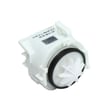
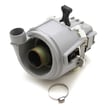
Helpful parts for this model include the drain pump 00611332, dishwasher drain hose 00668108, and dishwasher check valve 00611320.
Drain hose routing requirements (high loop)
Your installation matters because Bosch specifies a drain hose loop for proper draining.
| Item | What to look for | Why it matters |
|---|---|---|
| High loop height | Loop in drain hose, minimum 20 in. off the cabinet floor | Prevents poor draining and backflow |
| Loop max height | Up to 43 in. | Helps maintain correct flow |
| Hose length | Avoid excessive extensions | Too long can reduce drain performance |
Why it matters
Cancel/reset draining is designed to safely stop a wash cycle and pump water out. If the dishwasher still holds water after a reset drain, the issue is almost always a restriction (filter, hose, check valve) or a drain pump problem.
Last updated: February 2026
What does E07 mean on a Bosch dishwasher?
E07 on a Bosch dishwasher typically points to a drying system airflow problem (most often the drying fan circuit or fan area). On your Bosch SHE3AR76UC, we treat E07 as a “drying fan or airflow” fault first, then check for moisture intrusion and wiring issues using the owner's manual.
What to check first (safe, fast steps)
- Reset power: turn the breaker off for 5 minutes, then restore power and try a cycle.
- Let the unit dry: if the error appeared after a leak or heavy steam event, leave the door cracked open for several hours.
- Check for standing water in the tub and sump area; drain issues can contribute to moisture where it should not be.
- Confirm the dishwasher is installed correctly; a poor drain hose routing can cause draining problems (the installation guide calls for a high loop at least 20 inches off the cabinet floor). See the installation guide.
- If the unit will not drain, inspect the drain path and consider the drain pump 00611332 if the pump is not running.
Why E07 happens
E07 is most commonly triggered when the control does not see the expected airflow or electrical feedback from the drying fan system. Moisture in the wrong area, a blocked vent path, or a failing fan circuit can all lead to the same code.
Parts that commonly relate to E07 symptoms
| Symptom you notice | What it often points to | Example part on this model |
|---|---|---|
| Dishes stay wet, error appears late in cycle | Drying airflow issue | (Fan parts vary by configuration; use the parts list for your exact build) |
| Water remains in tub, musty odor | Drain problem contributing to moisture | Drain pump 00611332 |
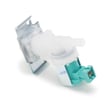
| Unit fills slowly or not at all (other codes may appear) | Water supply issue | Dishwasher water inlet valve 00622058 |
Why it matters
When the dishwasher cannot manage drying airflow correctly, it can leave dishes wet and can also cause the control to stop the cycle to protect components. Fixing the underlying airflow, drain, or moisture issue prevents repeat E07 errors.
For code lookups and code-specific checks, use our Bosch dishwasher error codes guide alongside the manual.
Last updated: February 2026
What's the most common problem with a Bosch dishwasher?
The most common Bosch dishwasher problems are poor cleaning and water-handling issues: clogged filters or spray paths that reduce wash performance, and drain or fill problems caused by restrictions in the drain path or water supply. For model Bosch SHE3AR76UC, start with cleaning and basic checks from the owner's manual.
Most common symptoms we see (and what they usually mean)
- Dishes come out dirty: filter area needs cleaning, spray arms are blocked, or water temperature is too low.
- Not draining: food debris in the sump/filter area, a kinked/blocked drain hose, or a failing drain pump.
- Not filling or fills slowly: shutoff valve not fully open, inlet screen clogged, or a weak inlet valve.
- Bad odors: buildup in the filter/sump area or standing water from partial draining.
- Leaks at the door: door seal is worn, dirty, or not seated correctly.
Quick checks before replacing parts
- Clean the filter and sump area (this fixes a large share of cleaning, odor, and draining complaints).
- Confirm the drain hose routing: no kinks; high loop or air gap as required by your installation.
- Run hot water at the sink first so the dishwasher starts with hotter incoming water.
- Check the door seal for debris, tears, or flattening; wipe it clean and inspect for gaps.
- Reset power: turn the breaker off for 1 minute, then back on.
Common parts that solve these problems on SHE3AR76UC
| Symptom | Likely part area | Example part for this model |
|---|---|---|
| Won’t drain, hums, or leaves water | Drain system | Drain pump 00611332 |
| Won’t fill or fills slowly | Water supply | Dishwasher water inlet valve 00622058 |
| Door leaks | Door sealing | Sealing 00645141 |
| Drain issues or installation-related draining | Drain hose | Dishwasher drain hose 00668108 |
Why it matters
Poor cleaning and odors usually come from restricted water flow and trapped food soil; drain and fill problems can stop a cycle mid-stream. Fixing the root cause (cleaning, hose routing, or a worn valve/pump/seal) restores normal wash performance and helps prevent repeat issues.
For model-specific operating steps and care intervals, follow the owner's manual.
Last updated: February 2026





